Chromatography
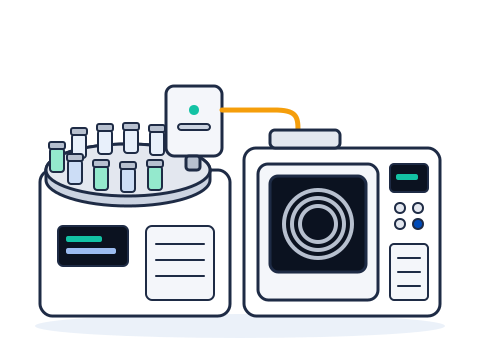
GC Headspace Sampler
Heats a sealed vial containing the sample so volatile compounds move into the gas above it, then injects a portion of that gas into the GC. The standard way to test residual solvents without putting the sample matrix into the GC.
- Pharmaceutical
- Packaging
- Food & beverage
- Environmental
- Forensic
TROUBLESHOOTING
Common problems, causes and fixes
Low or variable peak areas
Likely causes
- • Vial not sealed properly or septum punctured
- • Equilibration time too short
- • Inconsistent fill volume or sample weight
What to do
- • Recrimp with a new cap and check the crimper setting
- • Extend equilibration time to the plateau
- • Use calibrated pipettes and weigh accurately
Carry-over in blank
Likely causes
- • Loop or transfer line too cold so analytes condense
- • Contaminated needle
- • High-concentration sample run just before
What to do
- • Keep loop and line hotter than the vial oven
- • Purge or clean the needle
- • Add blank vials after high samples
Solvent peaks in blank
Likely causes
- • Contaminated vials, septa or diluent
- • Laboratory air contaminated with solvent
What to do
- • Use fresh headspace-grade diluent and baked vials
- • Prepare vials away from solvent-handling areas
Pressure or leak error
Likely causes
- • Worn needle seal
- • Loose transfer-line fitting
- • Bent needle
What to do
- • Replace the seal
- • Tighten the fitting and leak-check
- • Replace the needle
Broad early peaks
Likely causes
- • Split ratio too low for 1 mL gas injection
- • Transfer line dead volume
- • Inlet liner unsuitable
What to do
- • Increase split ratio within method allowance
- • Check connections and use a narrow-bore liner
- • Use the liner type the method specifies
Response falls over the sequence
Likely causes
- • Vials waiting too long in a heated oven
- • Gas supply pressure dropping
What to do
- • Use timed overlap so each vial gets the same heating time
- • Check the cylinder and regulator
In LimsPulse · Calibration Management
Keep every Headspace in control: usage logs, calibration and maintenance schedules, and automatic blocking of overdue instruments.