Chromatography
GC Headspace Sampler
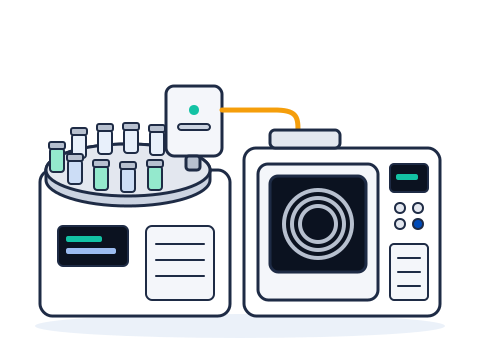
Heats a sealed vial containing the sample so volatile compounds move into the gas above it, then injects a portion of that gas into the GC. The standard way to test residual solvents without putting the sample matrix into the GC.
- Pharmaceutical
- Packaging
- Food & beverage
- Environmental
- Forensic
Follow your site SOP
This is a typical operating sequence for learning. Your instrument model and approved SOP take precedence.
STAGE 1
Before you start
- 1Confirm both the headspace sampler and GC are qualified and within calibration due date.
- 2Use clean vials; if blanks show solvent peaks, bake vials and septa as your SOP allows.
- 3Prepare standards and samples in the same diluent and volume, in the same type of vial.
- 4Crimp each vial immediately after adding diluent, and check the cap cannot be turned by hand.
- Residual solvent standards are volatile; keep stock solutions capped and cold, and prepare dilutions quickly.
STAGE 2
Set-up
- 1Set oven, loop and transfer-line temperatures from the method (e.g. 80, 85 and 90 °C, the loop and line slightly hotter than the oven).
- 2Set equilibration time, shaking, pressurisation time and pressure, loop fill and injection times.
- 3Match the GC inlet split ratio and oven programme to the method.
- 4Run a blank vial (diluent only) to check the system is clean.
- Do not set the vial temperature near the diluent boiling point; vial pressure rises and septa can fail.
STAGE 3
Running samples
- 1Load the sequence: blank, sensitivity or Class 1 solution if required, system suitability standards, then samples with bracketing standards.
- 2Use overlapping (prep-ahead) mode if available so the next vial equilibrates while the previous one is running.
- 3Check system suitability before reporting results.
- Never open a hot vial: the contents are under pressure and may spray hot solvent.
STAGE 4
Shutdown
- 1Remove vials and let them cool before decapping and disposal as solvent waste.
- 2Set the sampler to standby temperatures and keep a carrier purge through the loop as the manufacturer recommends.
- 3Complete the usage log.
In LimsPulse · Calibration Management
Keep every Headspace in control: usage logs, calibration and maintenance schedules, and automatic blocking of overdue instruments.