Elemental Impurities by ICP-MS
Measures trace levels of toxic elements in an API after dissolving it completely by closed-vessel microwave digestion. Results are compared with permitted concentrations derived from ICH Q3D permitted daily exposures (PDEs) and the control threshold.
- ICP-MS after closed-vessel microwave digestion
- ICP-MS
- Analytical balance
- Fume hood
- Lab water system
Reference: Typical procedure based on USP <233> and ICH Q3D(R2); limits from USP <232> / ICH Q3D. Always follow your validated procedure and the current chapters.
Why this method works
ICH Q3D sets a permitted daily exposure (PDE) for each element by route of administration and groups elements into classes by toxicity and likelihood of occurrence: Class 1 (As, Cd, Hg, Pb) are always assessed; Class 2A (Co, Ni, V) have a relatively high chance of being present; Class 2B (e.g. Ag, Au, Ir, Os, Pd, Pt, Rh, Ru, Se, Tl) are assessed only if intentionally added; Class 3 (e.g. Ba, Cr, Cu, Li, Mo, Sb, Sn) have low oral toxicity. The sample is digested in nitric acid (with hydrochloric acid to keep Hg and platinum-group elements in solution) in sealed vessels, diluted and measured by ICP-MS against standards prepared at the target concentration J, with internal standards to correct for matrix effects and drift.
Instruments used
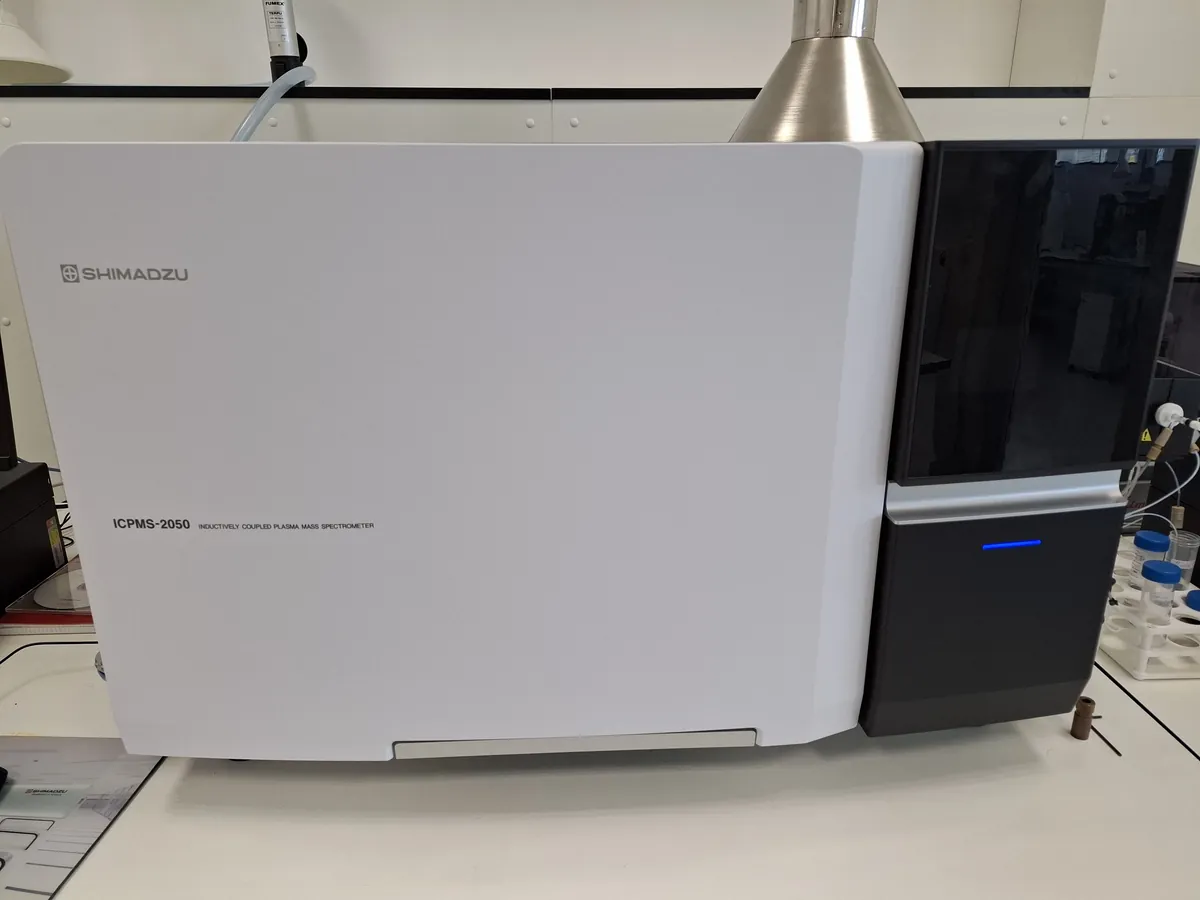

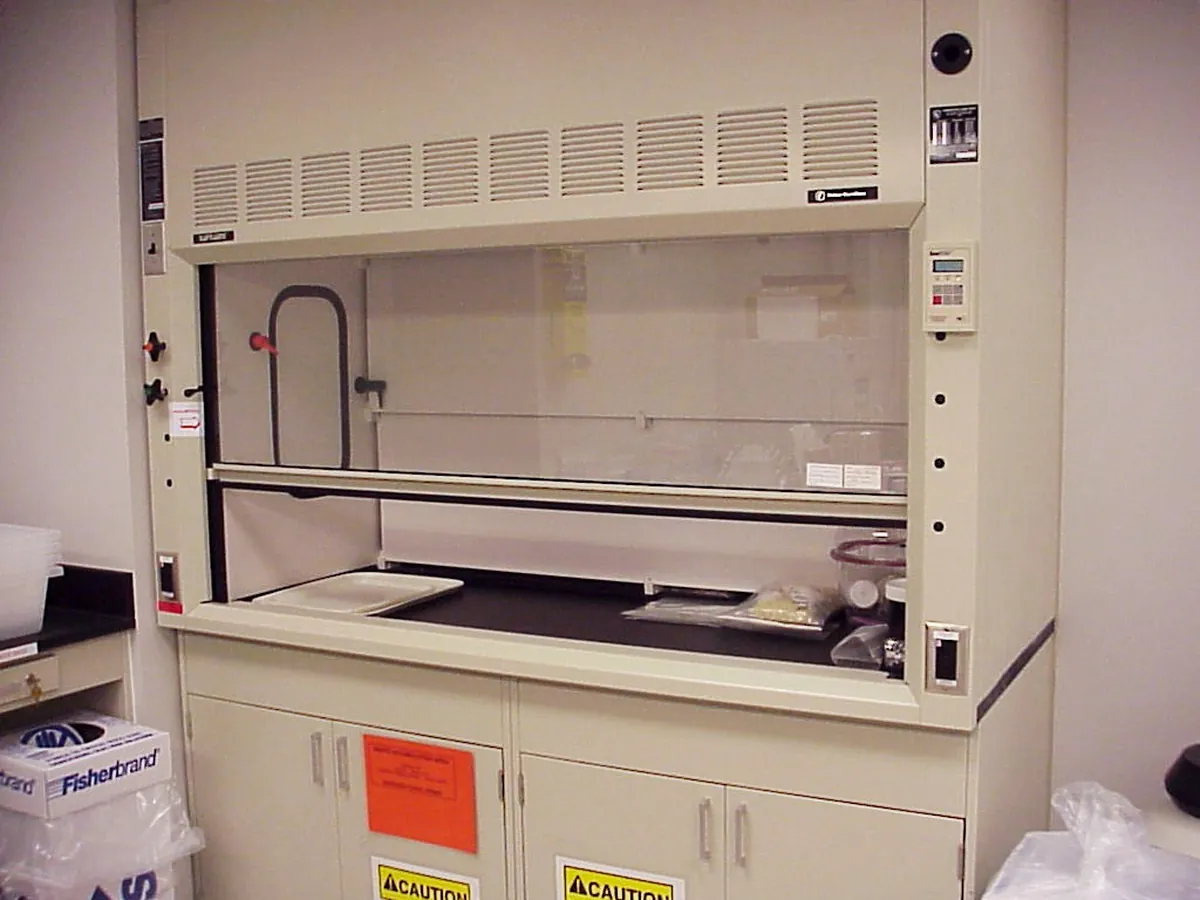
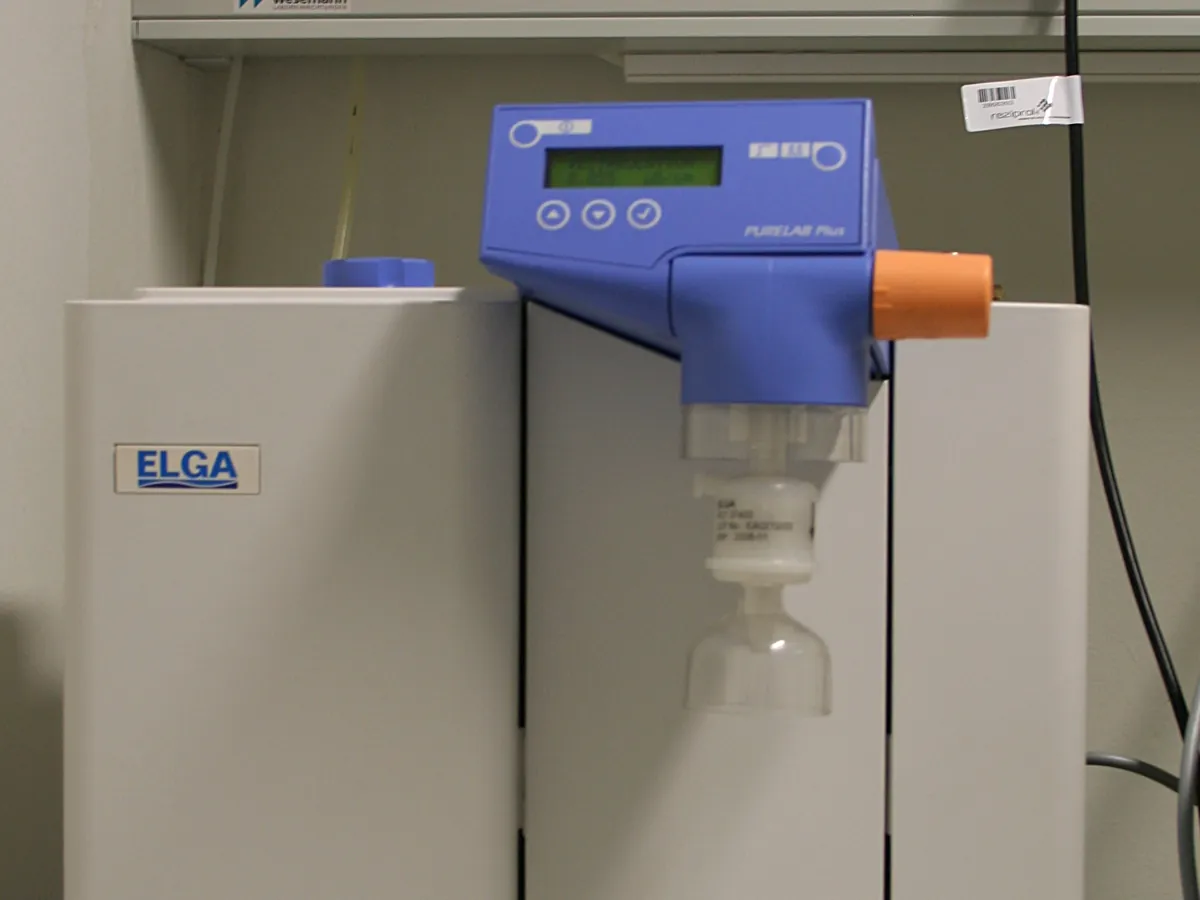
Reagents & standards
| Reagent | Grade / specification |
|---|---|
| Nitric acid | Ultrapure / trace-metal grade, concentrated |
| Hydrochloric acid | Ultrapure / trace-metal grade (stabilises Hg and platinum-group elements) |
| Water | Type 1 ultrapure water (resistivity 18.2 MΩ·cm) |
| Element standards | Certified single- or multi-element standard solutions, traceable |
| Internal standard solution | e.g. Sc, Ge, Rh, In, Tb, Bi chosen to bracket the masses of the analytes |
| Tuning solution | Manufacturer's tuning mix (e.g. Li, Co, Y, Ce, Tl) |
Preparing the sample
- 01
Weigh
Weigh about 0.25 g of API into a clean PTFE/TFM microwave vessel.
- 02
Add acid
Add nitric acid and a small volume of hydrochloric acid; let any reaction subside.
- 03
Digest
Seal and run the microwave programme (ramp to about 200 °C and hold).
- 04
Cool & transfer
Cool, vent in a fume hood, transfer quantitatively and make up to 50 mL.
- 05
Dilute
Dilute 5.0 mL to 10.0 mL with diluent acid (internal standard added on-line).
- 06
Measure
Analyse by ICP-MS in helium collision mode against standards at J.
Procedure
- 1Accurately weigh about 0.25 g of the API into an acid-cleaned microwave digestion vessel. Prepare a reagent blank vessel with acids only.
- 2Add about 5 mL of concentrated nitric acid and about 0.5–1 mL of concentrated hydrochloric acid (volumes as in your validated procedure). Swirl and allow any initial reaction to subside before sealing.
- 3Seal the vessels and digest using a validated microwave programme (for example ramp to about 200 °C and hold 15–20 minutes) until a clear solution is obtained.
- 4Allow the vessels to cool fully, then vent them in a fume hood. Transfer the digest quantitatively to a 50 mL plastic volumetric tube or flask, rinsing with ultrapure water, and make up to volume.
- 5Pipette 5.0 mL into a 10 mL tube and make up to 10.0 mL with the diluent acid (final solution about 2.5 g of sample per litre).
- 6For the accuracy (spike) check, prepare a second portion of the sample spiked with the target elements at J before digestion, and treat it in the same way.
Standard preparation
- 1Prepare a multi-element intermediate standard from certified stock solutions in the same acid matrix as the samples (nitric acid with a little hydrochloric acid).
- 2Prepare standardisation solutions at 1.5 J and 0.5 J (per the USP <233> approach), plus a calibration blank. Additional levels may be added to cover the working range.
- 3For lead in the worked example, J = 6.25 µg/L, so the standards are 9.375 µg/L (1.5 J) and 3.125 µg/L (0.5 J).
- 4Add internal standard to all blanks, standards and samples at the same concentration, usually on-line through a mixing tee.
Notes for analysts
- Worked spike recovery: a second portion spiked with Pb at J before digestion read 7.31 µg/L (blank-corrected) in the measured solution. Recovery = (7.31 − 1.20) ÷ 6.25 × 100 = 97.8%, within 70–150%.
- ICH Q3D oral PDEs for the Class 1 elements: Cd 5, Pb 5, As 15 and Hg 30 µg/day. Parenteral and inhalation PDEs are lower; always take values from the current guideline.
- Use plastic (PFA, PP) ware cleaned in acid; glass can release elements such as B, Na, Al and Pb.
- Mercury is volatile and sticks to surfaces: keep hydrochloric acid (or gold) in solutions and rinses, and never open hot vessels.
- Arsenic at m/z 75 suffers from ⁴⁰Ar³⁵Cl⁺ interference when HCl is present; helium collision mode removes most of it.
- Digested sample concentration in the example (2.5 g/L) keeps total dissolved solids around 0.25%, near the usual ICP-MS tolerance.
- Many companies use a risk-based approach under ICH Q3D and test only when the risk assessment requires it; the method is also used to generate data for that assessment.
Method parameters (typical)
| Instrument | Quadrupole ICP-MS with collision/reaction cell |
|---|---|
| RF power | About 1.5 kW (as per tune) |
| Cell mode | Helium collision mode (kinetic energy discrimination) for most elements |
| Isotopes (examples) | ⁷⁵As, ¹¹¹Cd, ²⁰²Hg, ²⁰⁸Pb (or sum of ²⁰⁶,²⁰⁷,²⁰⁸Pb), ⁵⁹Co, ⁵¹V, ⁶⁰Ni |
| Internal standards | e.g. ⁷²Ge for As/Co/V/Ni, ¹⁰³Rh or ¹¹⁵In for Cd, ¹⁵⁹Tb or ²⁰⁹Bi for Hg/Pb |
| Replicates | 3 readings per solution |
| Rinse | Dilute nitric acid with hydrochloric acid between samples (reduces Hg memory) |
| Sample uptake | About 0.3–0.4 mL/min via peristaltic pump |
System suitability & sequence
| Parameter | Limit |
|---|---|
| Tune check | Sensitivity, oxide and doubly charged ratios meet the daily tune limits |
| Standardisation drift | Standard measured before and after the samples: drift typically not more than 20% for each element (per USP <233> approach) |
| Internal standard recovery | Within the range set in your procedure (e.g. 70–130% of the calibration blank) |
| Spike recovery | Spiked sample recovery typically 70–150% of the added amount |
Typical sequence
- 1Calibration blank
- 2Standardisation solutions (0.5 J and 1.5 J)
- 3Independent check standard
- 4Reagent (digestion) blank
- 5Sample preparation(s)
- 6Spiked sample preparation (at J)
- 7Standard re-run for drift check
Calculation with a worked example
Where
- C
- Concentration of the element in the API (µg/g)
- Cmeas
- Concentration read by the ICP-MS in the measured solution (µg/L)
- Cblank
- Concentration in the reagent blank carried through the same steps (µg/L)
- V
- Volume the digest was made up to (L)
- DF
- Further dilution factor of the digest before measurement
- m
- Mass of sample digested (g)
Given
- Element
- Lead (Pb), oral PDE 5 µg/day (ICH Q3D)
- Assumed maximum daily intake of the API
- 2 g/day (illustrative)
- m
- 0.2500 g
- V
- 50 mL = 0.050 L
- DF
- 2 (5.0 mL diluted to 10.0 mL)
- Cmeas
- 1.25 µg/L
- Cblank
- 0.05 µg/L
Working
- Permitted concentration = PDE ÷ daily intake = 5 µg/day ÷ 2 g/day = 2.5 µg/g
- Control threshold = 30% × 2.5 µg/g = 0.75 µg/g
- Sample in measured solution = 0.2500 g ÷ (0.050 L × 2) = 2.5 g/L, so J = 2.5 µg/g × 2.5 g/L = 6.25 µg/L
- Blank-corrected reading = 1.25 − 0.05 = 1.20 µg/L
- C = 1.20 µg/L × 0.050 L × 2 ÷ 0.2500 g = 0.48 µg/g
- As a fraction of the permitted concentration: 0.48 ÷ 2.5 × 100 = 19.2% (same as 1.20 ÷ 6.25)
Lead = 0.48 µg/g, which is 19.2% of the permitted concentration and below the 30% control threshold (0.75 µg/g)
What result passes
- Each element not more than its permitted concentration derived from the ICH Q3D / USP <232> PDE for the route and the maximum daily dose, as set in your specification.
- Results consistently below the control threshold (30% of the PDE-based limit) generally support the conclusion in the risk assessment that no additional routine controls are needed; follow your risk assessment and specification.
Validation parameters (ICH Q2(R2))
| Parameter | Typical requirement |
|---|---|
| Specificity | Each element measured free of interference (isotope choice, collision mode, checked with spiked matrix) |
| Accuracy | Spike recovery typically 70–150% at levels such as 50%, 100% and 150% of J (USP <233> approach) |
| Repeatability | Six independent samples spiked at J: RSD typically not more than 20% |
| Intermediate precision | Different day, analyst or instrument: RSD typically not more than 25% |
| Range / linearity | Covers at least the range of the spike levels, e.g. 0.5 J to 1.5 J |
| Limit of quantitation | Shown to be well below J, typically confirmed by meeting the accuracy criteria at the lowest level |
Run this method in LimsPulse: specifications and STPs under version control, results calculated and checked against limits, and a signed Certificate of Analysis.