Fume hood
A ventilated enclosure that draws air away from the user to capture and remove harmful vapours, gases and dusts while working with chemicals.
- Pharmaceutical
- Chemicals
- Universities and research
- Environmental testing
- Food testing
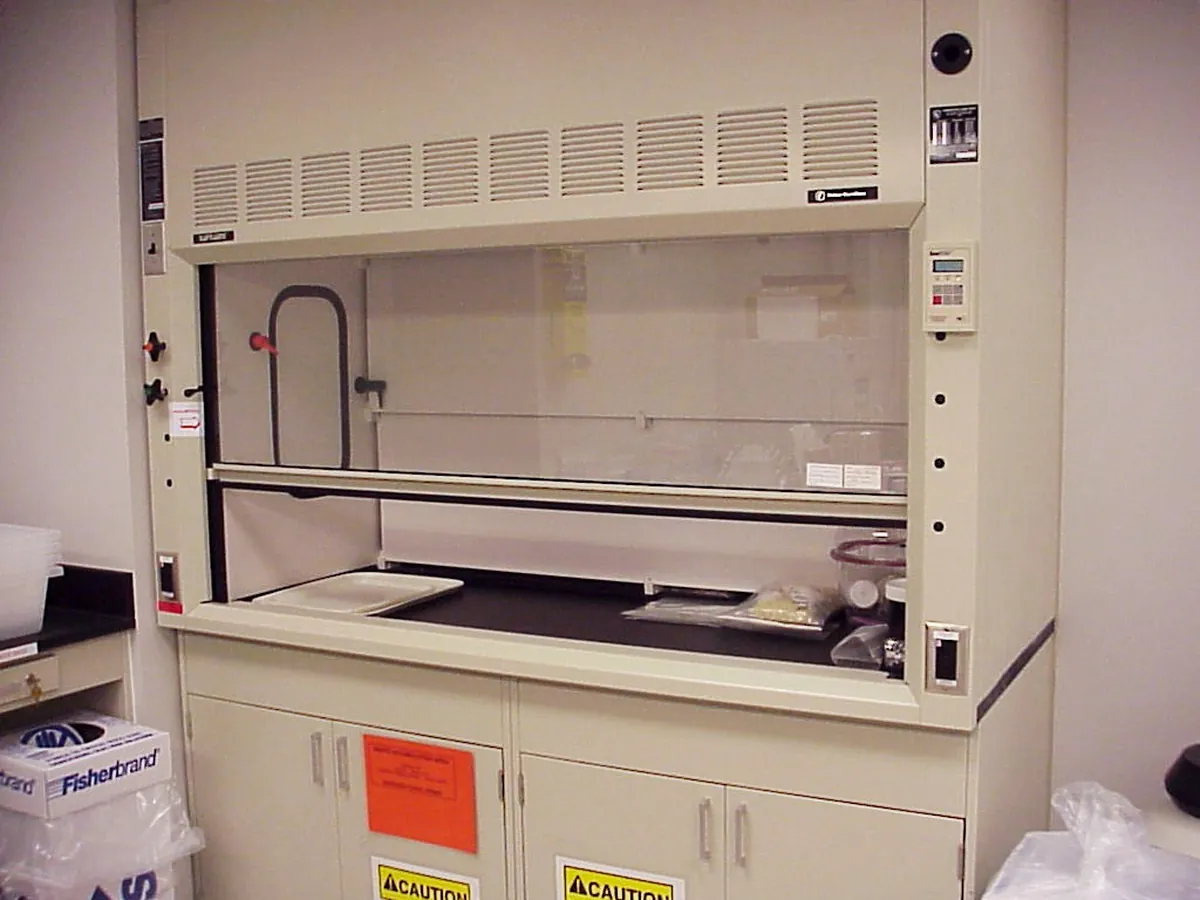
Test your Fume hood knowledge
Multiple-choice questions
Pick an answer to see whether you are right and why.
Q1. What does a fume hood protect?
basicQ2. What is a typical face velocity for a laboratory fume hood?
basicQ3. How far inside the sash opening should work be done?
intermediateQ4. Why is too high a face velocity also a problem?
intermediateQ5. Which standards describe fume hood containment testing?
advanced
Viva questions
Think of your answer first, then open it to compare.
1. List three good practices when working in a fume hood.
Check the airflow indicator first; keep the sash as low as practical and work at least 15 cm inside; keep the hood uncluttered and do not use it as storage; keep your head outside; close containers when finished.
2. How is fume hood face velocity measured?
With the sash at its working height, a calibrated anemometer is held at a grid of points across the opening. The average and the individual readings are compared with the site limits, and airflow is often visualised with smoke.
Keep every Fume hood in control: usage logs, calibration and maintenance schedules, and automatic blocking of overdue instruments.