Fume hood
A ventilated enclosure that draws air away from the user to capture and remove harmful vapours, gases and dusts while working with chemicals.
- Pharmaceutical
- Chemicals
- Universities and research
- Environmental testing
- Food testing
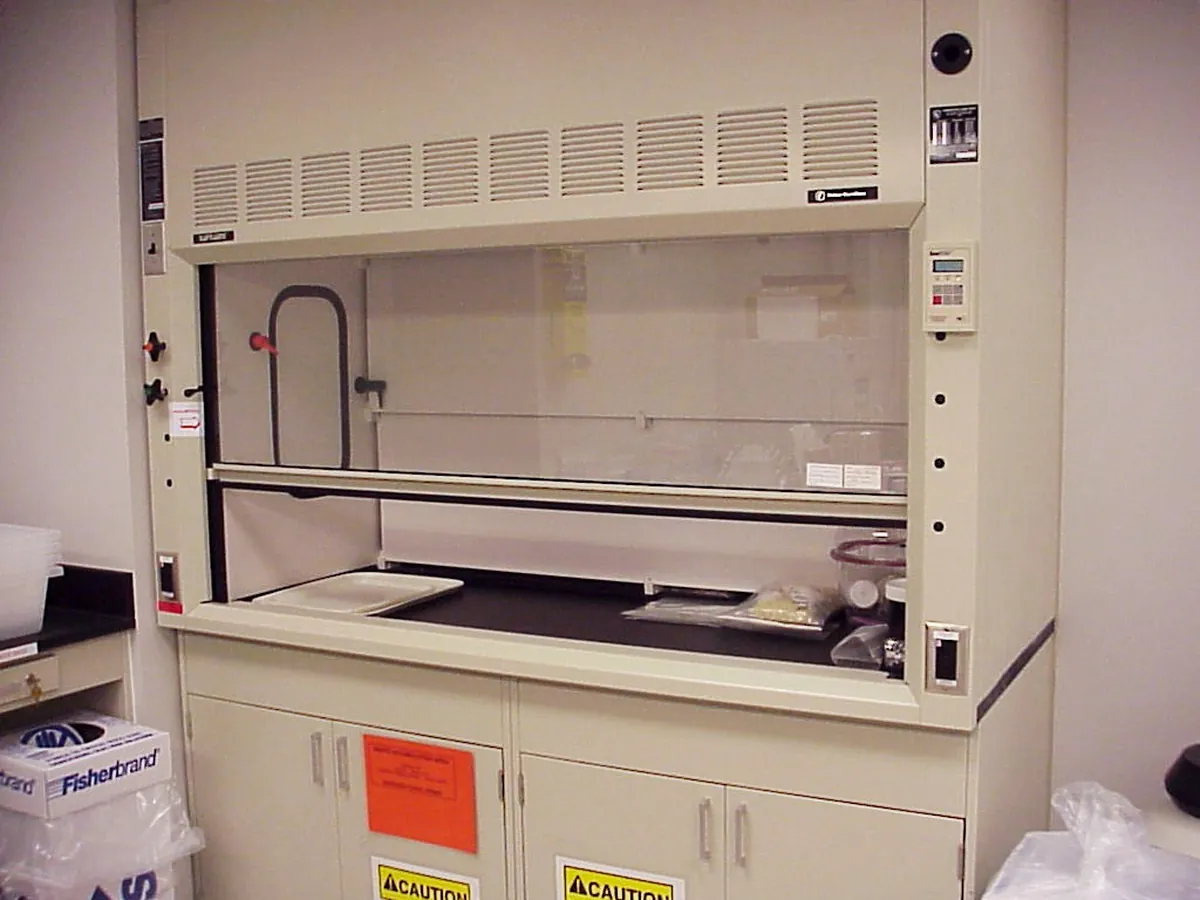
How Fume hood works
An exhaust fan creates negative pressure inside the hood. Room air flows in through the front opening at a controlled face velocity, sweeps across the work surface past baffles and leaves through the exhaust duct, taking contaminants with it.
The path of a sample
- 01
Air enters
Room air enters through the sash opening and the aerofoil sill.
- 02
Sweeps work area
Air flows across the work surface, capturing vapours released there.
- 03
Baffles
Rear slots draw air evenly from the top, middle and bottom of the hood.
- 04
Exhaust
The fan pulls air through the duct and discharges it above the roof.
- 05
Monitor
An airflow monitor shows face velocity and alarms if it falls too low.
Main parts and what they do
Enclosure and work surface
Chemically resistant cabinet and spill-containing worktop.
Sash
Movable glass front that shields the user and controls the opening size.
Aerofoil sill
Smooths air entering at the front edge to reduce turbulence.
Baffles
Distribute exhaust air evenly across the back of the hood.
Exhaust duct and fan
Carry contaminated air out of the building.
Airflow monitor and alarm
Display face velocity or airflow and warn when it is low.
Services
Lighting, power sockets (outside the hood) and gas or water taps.
Terms every analyst should know
Face velocity
Speed of air entering the hood opening. Typically about 0.4–0.6 m/s, as set by your site standard.
Containment
How well the hood keeps contaminants inside, tested with tracer gas methods such as EN 14175 or ASHRAE 110.
Sash height
The working height of the front window. Work with it as low as practical and never above the marked maximum.
Ducted vs ductless
Ducted hoods exhaust outside; ductless hoods filter air (usually activated carbon) and return it to the room.
Keep every Fume hood in control: usage logs, calibration and maintenance schedules, and automatic blocking of overdue instruments.