Franz Diffusion Cell (Vertical Diffusion Cell)
A two-chamber glass cell used to measure how fast drug is released from creams, gels and ointments, or permeates through skin. Drug passes through a membrane into a stirred receptor medium that is sampled over time.
- Pharmaceutical (topicals and transdermals)
- Cosmetics
- Research and academia
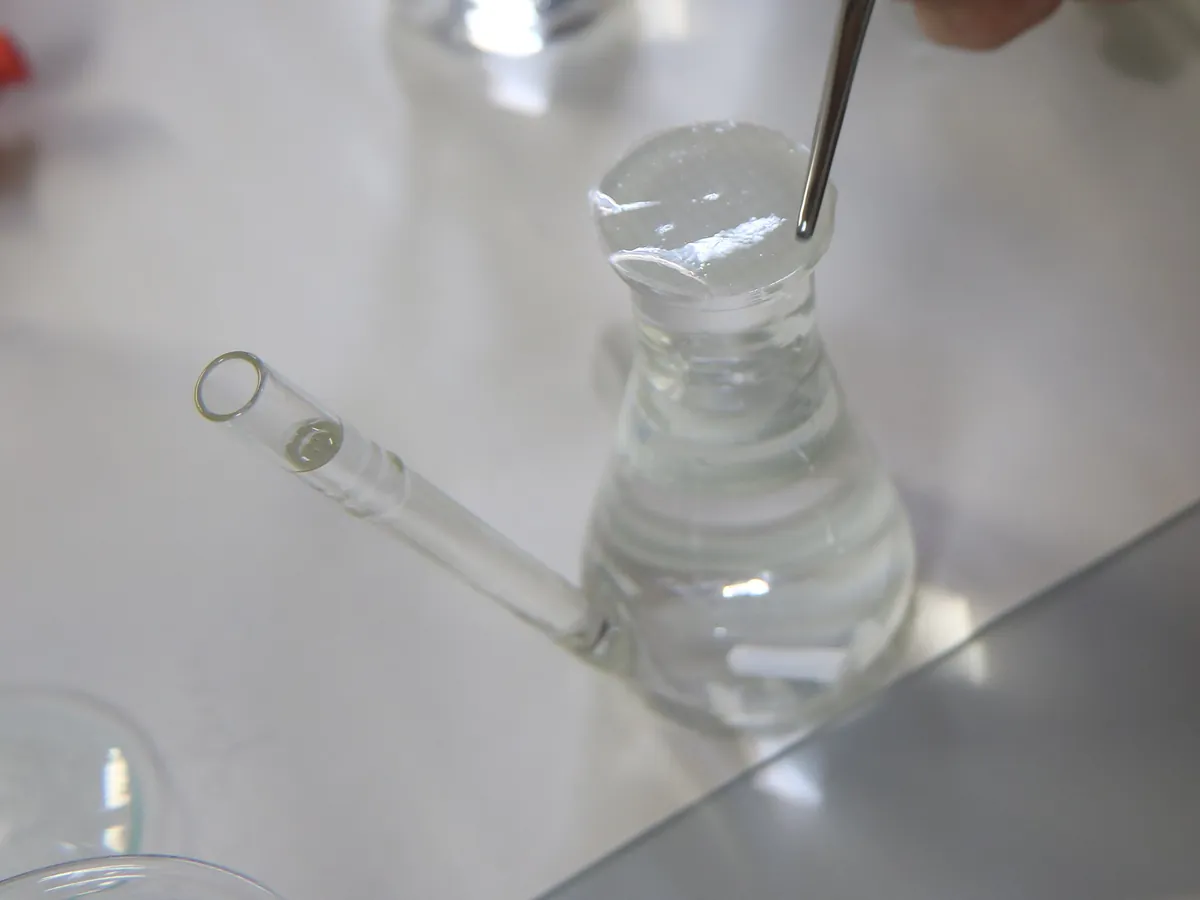
How Franz cell works
Drug diffuses from the product, through an inert porous membrane, into a receptor medium kept under sink conditions. For many semi-solids the cumulative amount released per unit area is proportional to the square root of time (Higuchi model), and the slope of that line is the release rate.
The path of a sample
- 01
Prepare receptor
Degassed receptor medium is filled into the receptor chamber with no bubbles.
- 02
Mount membrane
A synthetic membrane is placed between the chambers and clamped.
- 03
Equilibrate
Cells are held so the membrane surface is at about 32 ± 1 °C, with stirring.
- 04
Dose
A known amount of product is applied evenly on the membrane in the donor chamber.
- 05
Sample
Aliquots are withdrawn from the sampling arm at set times and replaced with fresh medium.
- 06
Analyse
Samples are assayed and cumulative release per cm² is plotted against √time.
Main parts and what they do
Donor chamber
Upper glass compartment where the product is applied; may be open or occluded.
Receptor chamber
Lower compartment of known volume holding the receptor medium.
Membrane
Inert synthetic membrane (e.g. polysulfone, cellulose acetate) or skin between the chambers.
Sampling arm
Side port used to withdraw and replace receptor medium.
Water jacket or heating block
Keeps the membrane surface at the test temperature.
Magnetic stirrer
Keeps the receptor medium well mixed.
Clamp
Holds the chambers and membrane together without leaks.
Terms every analyst should know
Donor and receptor chambers
The donor holds the product; the receptor collects released drug.
Diffusion area
The open membrane area (e.g. about 1.77 cm² for a 15 mm orifice); results are expressed per cm².
Sink conditions
Receptor drug concentration stays low (commonly below about 10% of saturation) so it does not slow release.
Release rate
Slope of cumulative amount per area against √time (e.g. µg/cm²/√h).
IVRT vs IVPT
IVRT uses synthetic membranes to measure release from the product; IVPT uses skin to measure permeation.
Keep every Franz cell in control: usage logs, calibration and maintenance schedules, and automatic blocking of overdue instruments.