Food & proximate analysis
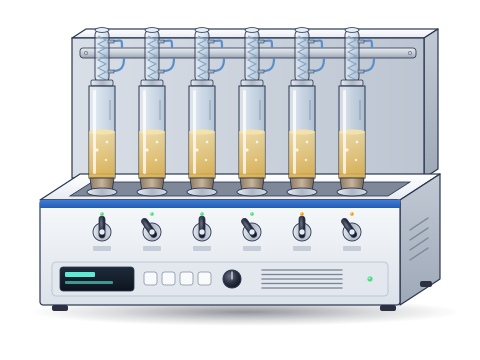
Crude fibre analyser
Boils a defatted sample first in dilute acid and then in dilute alkali, filters it in fritted crucibles, and weighs the dried and ashed residue. The organic residue is reported as crude fibre.
- Animal feed
- Food & beverage
- Agriculture
- Spices
- Academic research
TROUBLESHOOTING
Common problems, causes and fixes
Very slow filtration
Likely causes
- • Sample ground too finely
- • High protein or starch forming a gel
- • Clogged crucible frit
What to do
- • Grind to the size in the method, not finer
- • Use a filter aid such as acid-washed sand or Celite if the method allows
- • Clean frits thoroughly or replace crucibles
Results too high
Likely causes
- • Incomplete digestion (boil not reached quickly)
- • Fat not removed
- • Reagents weaker than specified
What to do
- • Preheat reagents and check boiling starts promptly
- • Defat high-fat samples
- • Check reagent strength by titration
Results too low
Likely causes
- • Fibre particles lost through a damaged frit
- • Boiling too long or reagents too strong
What to do
- • Inspect and replace damaged crucibles
- • Check timer and reagent preparation
Foaming during boiling
Likely causes
- • High protein or saponin content
What to do
- • Add a few drops of antifoam (for example octanol) as the method permits
Crucible cracks in the furnace
Likely causes
- • Thermal shock
- • Old crucibles
What to do
- • Cool and heat gradually
- • Retire crucibles showing stress marks
In LimsPulse · Calibration Management
Keep every Fibre analyser in control: usage logs, calibration and maintenance schedules, and automatic blocking of overdue instruments.