Copper Strip Corrosion Bath
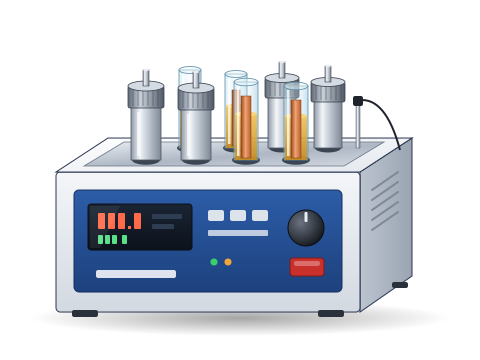
A thermostatic bath that holds a polished copper strip immersed in a fuel or oil at a set temperature (for example 50 °C or 100 °C) for a set time. The tarnished strip is then compared with the ASTM colour standards to grade corrosiveness.
- Petroleum refining
- Fuel terminals
- Lubricant blending
- Aviation fuel quality
- Independent testing laboratories
Test your Copper corrosion bath knowledge
Multiple-choice questions
Pick an answer to see whether you are right and why.
Q1. What causes copper strip corrosion in fuels?
basicQ2. Which class indicates slight tarnish?
basicQ3. Why are volatile products like petrol tested in a sealed pressure vessel?
intermediateQ4. A strip falls between classes 1b and 2a. How is it reported?
intermediateQ5. Why should a polished strip never be touched with bare fingers?
basicQ6. What bath temperature tolerance does the copper strip test typically require?
intermediate
Viva questions
Think of your answer first, then open it to compare.
1. Describe how a copper strip test result is reported.
Report the class and letter together with test time and temperature, for example 'Copper corrosion, 3 h at 50 °C: 1a', and the method used. Conditions matter because results at different times or temperatures are not comparable.
2. What precautions apply to the pressure vessels used in the copper strip test?
Use only pressure-tested vessels with good seals, do not overfill, tighten caps correctly, and let vessels cool before opening in a hood pointing away from you. Hot flammable vapour can be released if a vessel leaks or is opened hot.
3. A fuel has low total sulphur but fails the copper strip test. How can this be?
Copper corrosion depends on the type of sulphur, not the total. A few mg/kg of elemental sulphur or H₂S can tarnish copper strongly, while stable sulphur compounds such as thiophenes do not. The two tests answer different questions.
Keep every Copper corrosion bath in control: usage logs, calibration and maintenance schedules, and automatic blocking of overdue instruments.