Petroleum testing
Copper Strip Corrosion Bath
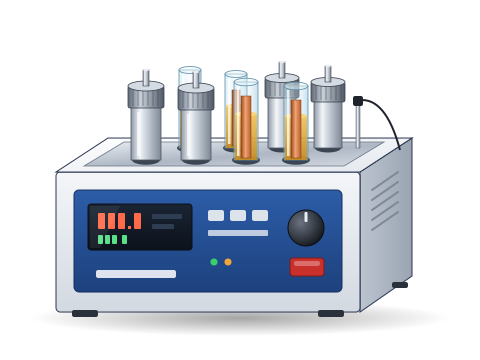
A thermostatic bath that holds a polished copper strip immersed in a fuel or oil at a set temperature (for example 50 °C or 100 °C) for a set time. The tarnished strip is then compared with the ASTM colour standards to grade corrosiveness.
- Petroleum refining
- Fuel terminals
- Lubricant blending
- Aviation fuel quality
- Independent testing laboratories
Follow your site SOP
This is a typical operating sequence for learning. Your instrument model and approved SOP take precedence.
STAGE 1
Before you start
- 1Check the bath is at the specified temperature on the calibrated thermometer.
- 2Check the pressure vessels and seals are in good condition and within their pressure-test date.
- 3Check the colour standards are within their use period and have been kept away from light.
- Use only vessels that have passed their pressure test; a failing vessel can release hot flammable vapour.
STAGE 2
Preparing the strip
- 1Remove surface blemishes with silicon carbide paper, then final-polish with silicon carbide grains on cotton, always along the strip's length.
- 2Handle only with forceps or ashless filter paper; do not touch it with fingers.
- 3Inspect for scratches or pits; use the strip immediately after polishing.
- Fingerprints and polishing residue cause stains that look like tarnish.
STAGE 3
Testing
- 1Place 30 mL of sample in a clean, dry test tube and slide the polished strip in within one minute.
- 2For volatile samples, put the tube in the pressure vessel and close the cap tightly.
- 3Place in the bath for the specified time and temperature.
- 4Remove, empty the sample into a beaker, take out the strip with forceps and wash it in wash solvent.
- 5Blot dry with filter paper and compare at once with the standards, under good lighting at about a 45° angle.
- Let pressure vessels cool before opening; open them in a hood, pointing away from you.
STAGE 4
Reporting
- 1Report the class (e.g. 1a) with test time and temperature, e.g. 'Copper corrosion (3 h at 50 °C): 1a'.
- 2If the strip is between two classes, report the more tarnished class.
- 3Repeat the test if the strip shows unusual spots that may be due to handling or polishing.
In LimsPulse · Calibration Management
Keep every Copper corrosion bath in control: usage logs, calibration and maintenance schedules, and automatic blocking of overdue instruments.