General lab & storage
Centrifuge
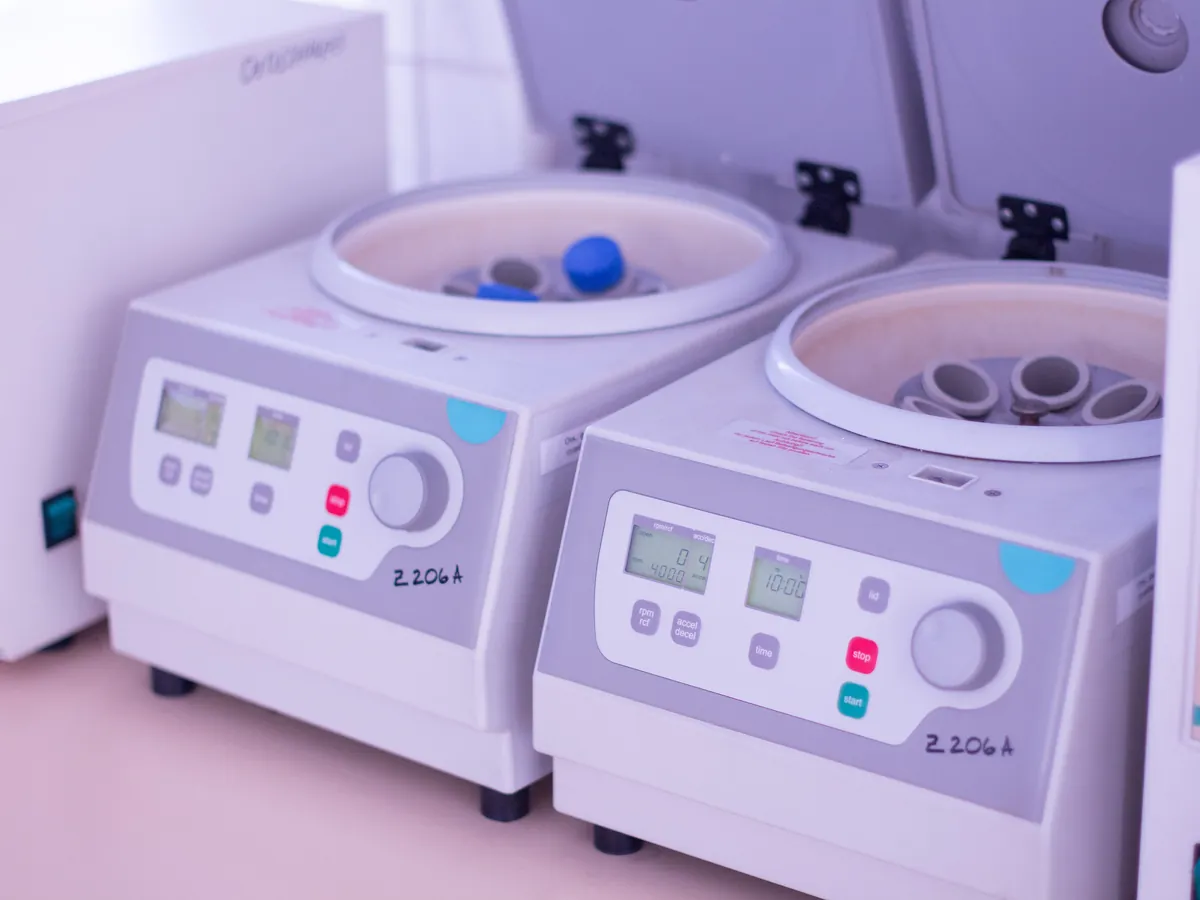
Spins tubes at high speed so that the centrifugal force separates solids from liquids or liquids of different density. In QC it is used to clarify sample extracts and separate phases.
- Pharmaceutical
- Biotech
- Clinical laboratories
- Food & dairy
- Research
Follow your site SOP
This is a typical operating sequence for learning. Your instrument model and approved SOP take precedence.
STAGE 1
Before the run
- 1Check the centrifuge is within its calibration due date and the rotor is the right one, clean and undamaged.
- 2Fill tubes to the same level and check opposite tubes balance (weigh them if needed).
- 3Place tubes symmetrically; fill empty positions with balance tubes of water.
- 4Close bucket caps or aerosol-tight lids for hazardous samples.
- Never exceed the rotor's maximum speed or the tube's rated RCF.
STAGE 2
Running
- 1Close and lock the lid.
- 2Set speed (or RCF), time and temperature as per the method and start.
- 3Stay with the centrifuge until it reaches full speed and listen for unusual noise or vibration.
- If you hear vibration or noise, stop the run at once and check the balance.
STAGE 3
After the run
- 1Wait for the rotor to stop completely before opening the lid.
- 2Remove tubes gently so the pellet is not disturbed.
- 3Wipe any spills, leave the lid open to dry condensation (refrigerated units) and log the use.
In LimsPulse · Calibration Management
Keep every Centrifuge in control: usage logs, calibration and maintenance schedules, and automatic blocking of overdue instruments.