Construction materials testing
Blaine Air Permeability Apparatus
Measures the fineness of cement as specific surface area (m²/kg) by timing how long a fixed volume of air takes to pass through a compacted bed of cement.
- Cement manufacturing
- Construction materials testing
- Fly ash and slag suppliers
- Academic labs
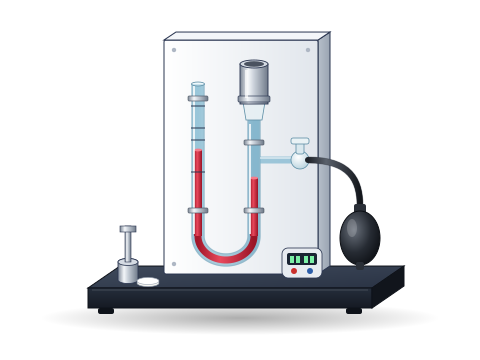
Follow your site SOP
This is a typical operating sequence for learning. Your instrument model and approved SOP take precedence.
STAGE 1
Before you start
- 1Check the apparatus constant and bed volume are current (re-determine after any part is replaced).
- 2Check the manometer liquid is at the lowest mark and clean.
- 3Bring the cement sample to room temperature and mix it well; know its density (e.g. 3.15 g/cm³ for OPC if not measured).
- 4Record the room temperature.
- Use the same type of filter paper as used for calibration.
STAGE 2
Preparing the bed
- 1Calculate and weigh the sample mass for the required porosity.
- 2Place the disc and one filter paper in the cell, add the cement and tap to level it.
- 3Place a second filter paper on top and press the plunger down firmly until its collar touches the cell; withdraw it slowly.
- Press the plunger once only; repeated pressing changes the bed.
STAGE 3
Measuring
- 1Fit the cell to the manometer, ensuring an airtight seal.
- 2Draw the liquid up to the top mark with the bulb and close the tap.
- 3Start timing when the meniscus passes the second mark and stop when it reaches the third mark.
- 4Repeat on a fresh bed and average the times (or follow the number of determinations in the standard).
- If the liquid falls without the tap closed, there is a leak; reseat the cell.
STAGE 4
After testing
- 1Empty and clean the cell and disc with a soft brush.
- 2Calculate specific surface and report in m²/kg.
- 3Record time, temperature, sample mass and apparatus ID.
In LimsPulse · Calibration Management
Keep every Blaine in control: usage logs, calibration and maintenance schedules, and automatic blocking of overdue instruments.