Total Dissolved Solids (TDS) — Gravimetric at 180 °C, with Conductivity Estimate
Measures the total mass of salts and other dissolved material in water. A known volume is filtered, the filtrate is evaporated in a pre-weighed dish, the residue is dried at 180 °C and weighed. A conductivity reading gives a quick estimate and a cross-check.
- Environmental & water
- Filtration, evaporation and drying at 180 ± 2 °C, then weighing; conductivity used as a screening estimate
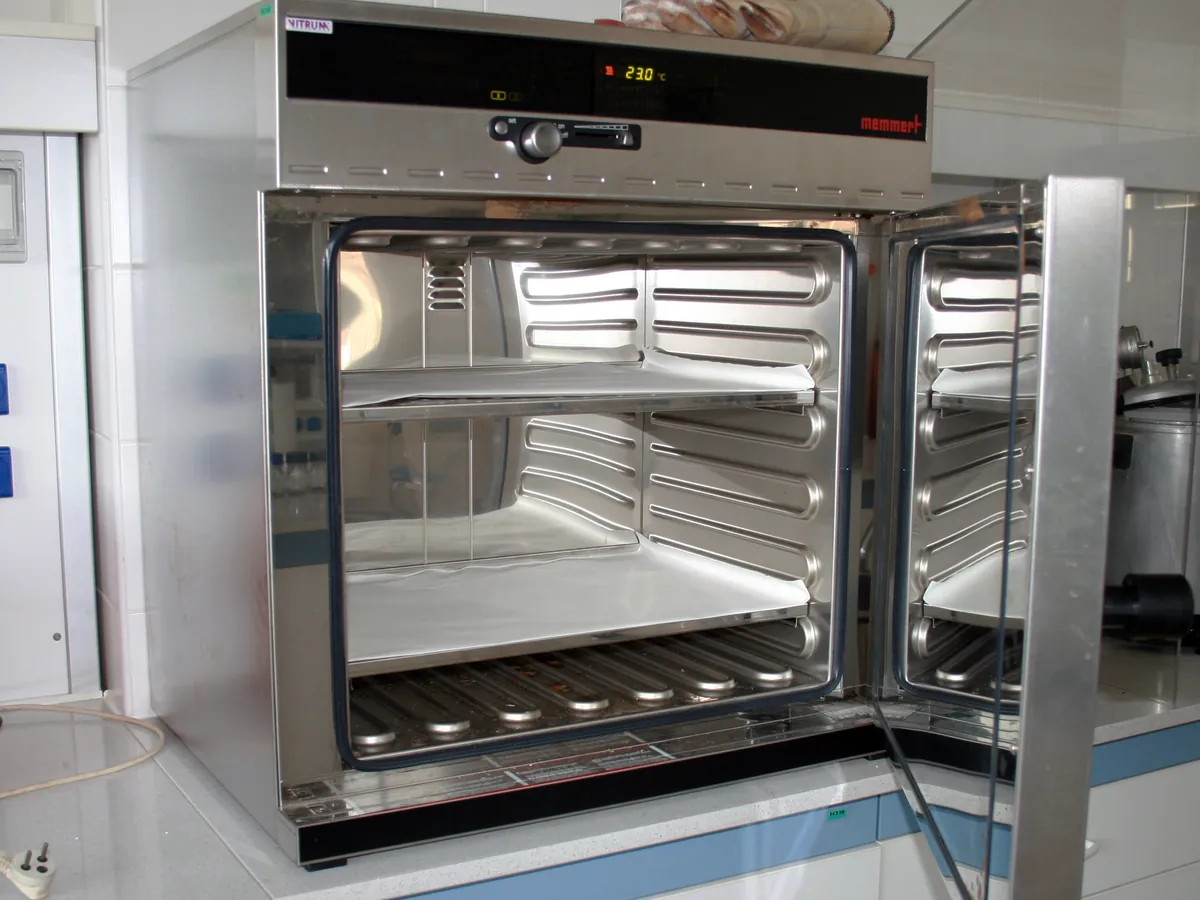
- Hot air oven
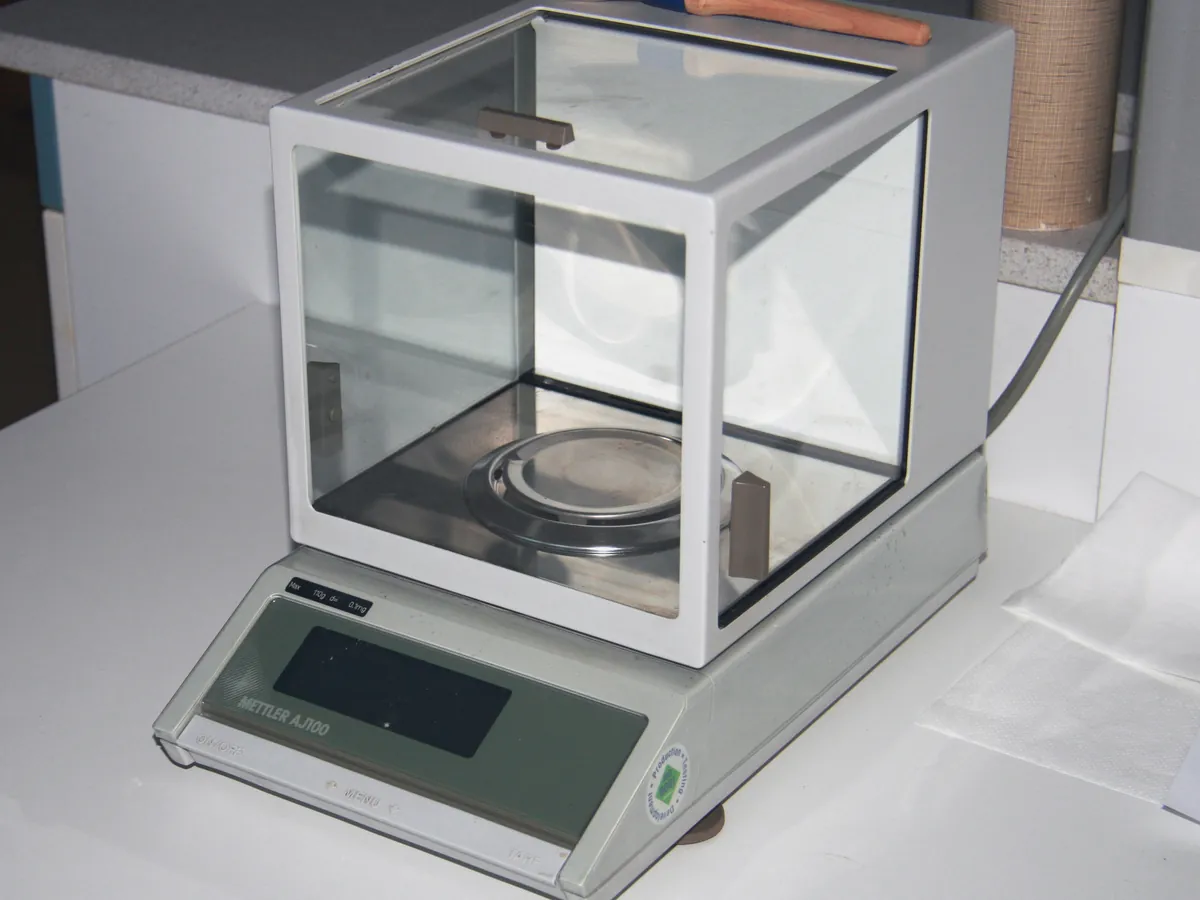
- Analytical balance
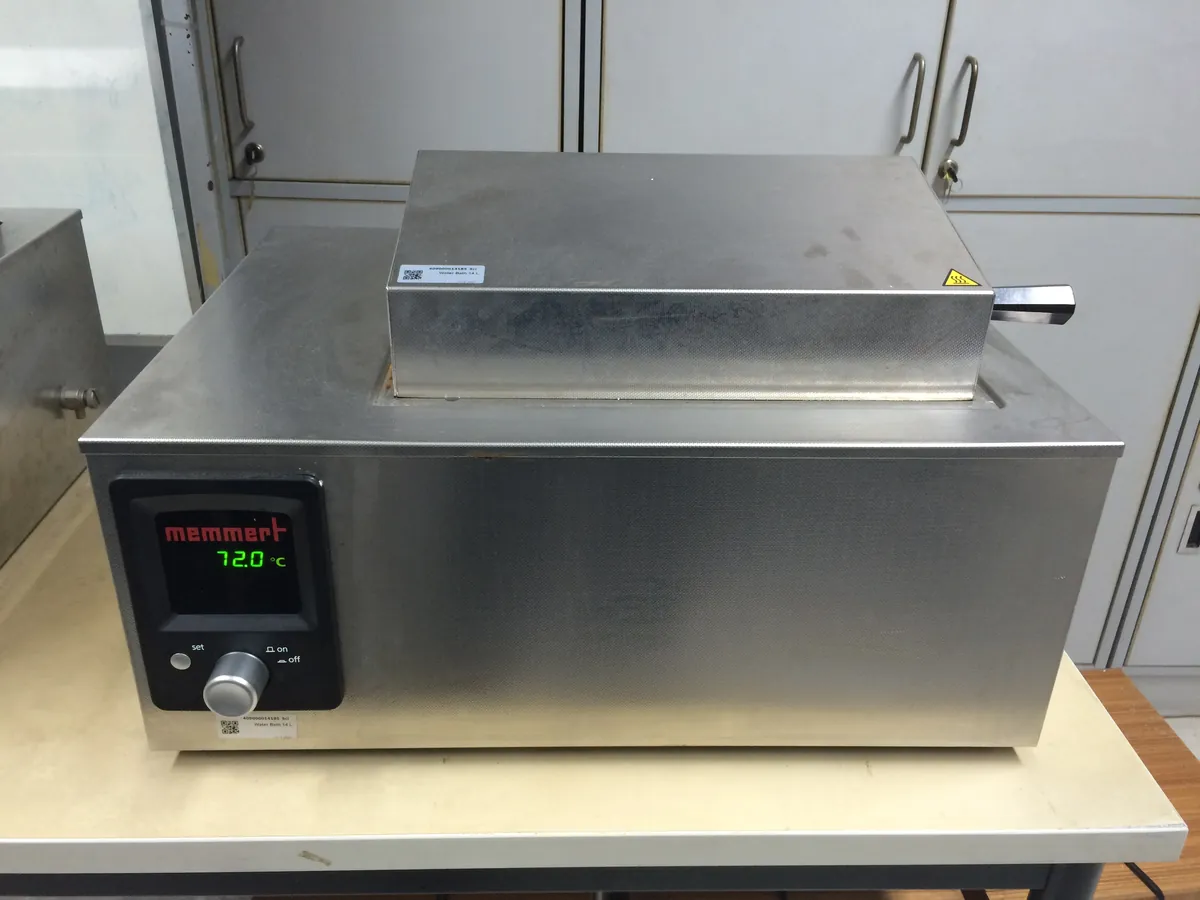
- Water bath
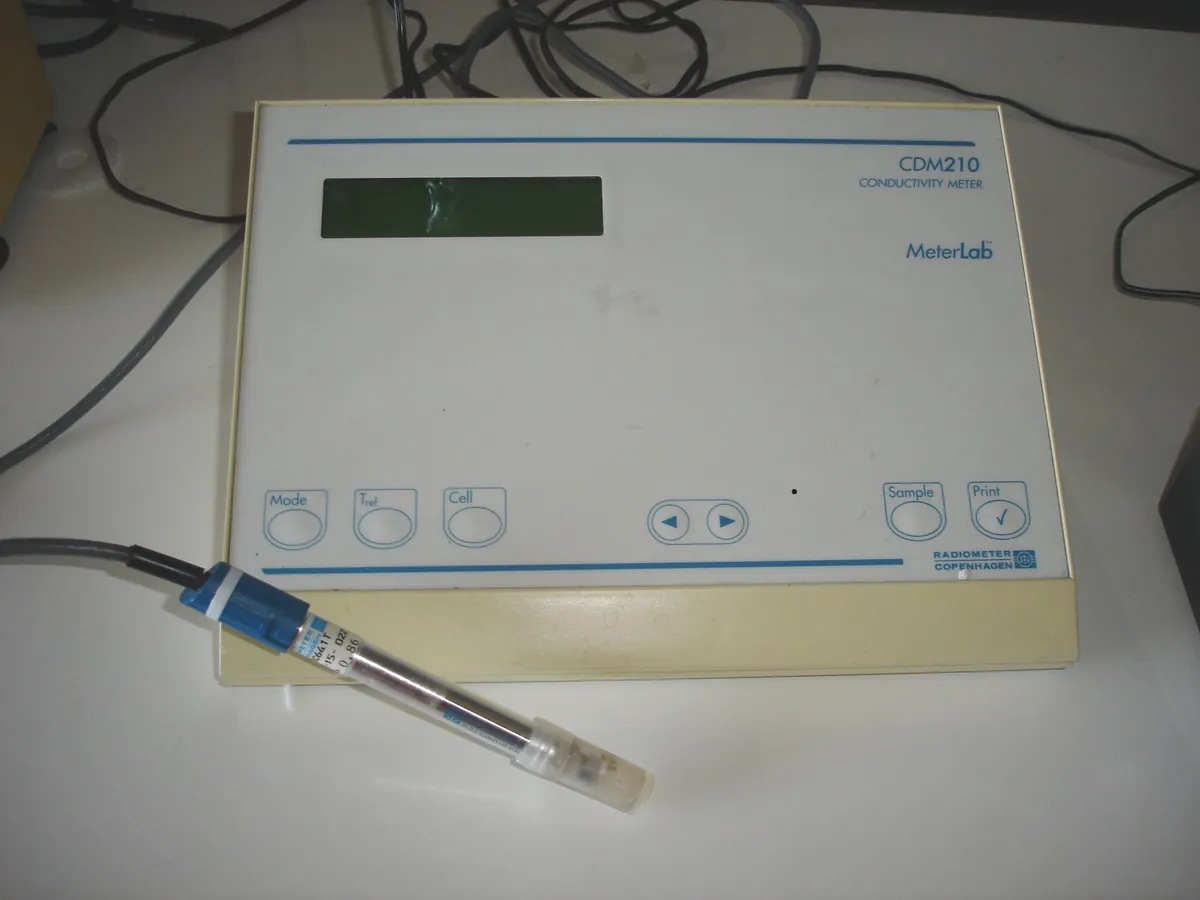
- Conductivity meter
Reference: Typical method based on APHA Standard Methods 2540 C (total dissolved solids dried at 180 °C) and the IS 3025 part for dissolved solids. Follow your lab SOP.
Why this method works
Everything that passes a glass-fibre filter (nominal pore size about 1.5 µm) is counted as dissolved. When the filtrate is evaporated and dried at 180 °C, water — including most mechanically trapped water — is driven off, leaving the dissolved salts. The gain in dish mass divided by the sample volume gives TDS in mg/L. Because dissolved salts carry current, electrical conductivity (EC) rises with TDS; for many natural waters TDS (mg/L) is roughly 0.55–0.75 × EC (µS/cm).
Instruments used
Reagents & standards
| Reagent | Grade / specification |
|---|---|
| Glass-fibre filters | Without organic binder, about 1.5 µm nominal pore size (e.g. 47 mm) |
| Evaporating dishes | Porcelain, platinum or high-silica glass, 100–200 mL |
| Conductivity standard | KCl standard, e.g. 1413 µS/cm at 25 °C |
Preparing the sample
- 01
Prepare dish
Heat at 180 °C, cool in desiccator, weigh to constant mass.
- 02
Filter
Filter a well-mixed sample through glass-fibre filter.
- 03
Evaporate
Evaporate the filtrate to dryness on a water bath.
- 04
Dry
Dry the residue at 180 ± 2 °C for at least 1 h.
- 05
Weigh
Cool in desiccator, weigh; repeat to constant mass.
- 06
Cross-check
Compare with conductivity × factor.
Procedure
- 1Heat a clean evaporating dish at 180 ± 2 °C for 1 hour, cool in a desiccator and weigh. Repeat until the mass is constant (typically within 0.5 mg).
- 2Choose a sample volume that will give roughly 2.5–200 mg of residue (for typical tap water, 100 mL is common).
- 3Filter the well-mixed sample through a pre-washed glass-fibre filter. Wash the filter with three small portions of distilled water and add the washings to the filtrate.
- 4Transfer the filtrate to the weighed dish and evaporate to dryness on a steam or water bath (or in the oven at a temperature at least 2 °C below boiling to avoid spattering).
- 5Dry the dish in the oven at 180 ± 2 °C for at least 1 hour, cool in a desiccator and weigh. Repeat drying, cooling and weighing until the mass change is within the SOP limit.
- 6Separately, measure the conductivity of the unfiltered sample at 25 °C (or with temperature compensation) after verifying the meter with a KCl standard.
Standard preparation
- 1Run a blank (distilled water through the whole procedure) with each batch.
- 2A check standard can be made from a known mass of sodium chloride (or a mixed salt) dissolved in water; its expected TDS is known.
Notes for analysts
- Report the gravimetric value as the result; the conductivity figure is an estimate, not a substitute, unless your SOP allows it for screening.
- Waters high in bicarbonate, sulphate or hygroscopic salts (calcium/magnesium chloride) can give results that drift; dry longer and weigh quickly.
- Hand-held 'TDS meters' are conductivity meters with a fixed factor (often 0.5 or 0.7). They are useful for screening but are not the reference method.
Method parameters (typical)
| Drying temperature | 180 ± 2 °C |
|---|---|
| Drying time | At least 1 h, then to constant mass |
| Filter | Glass-fibre, about 1.5 µm |
| Balance | Readability 0.1 mg |
| Conductivity reference temperature | 25 °C |
System suitability & sequence
| Parameter | Limit |
|---|---|
| Constant mass | Successive weighings agree within about 0.5 mg (or 4% of the previous mass, whichever is less) — as per SOP |
| Duplicates | Agree within the SOP limit (commonly within 5%) |
| Blank | Residue not more than about 0.5 mg |
Typical sequence
- 1Dish preparation to constant mass
- 2Blank
- 3Sample in duplicate
- 4Check standard
Calculation with a worked example
Where
- A
- Mass of dish + dried residue (mg)
- B
- Mass of empty dish (mg)
- V
- Volume of sample filtered (mL)
- k
- Empirical TDS/EC factor for the water type (often 0.55–0.75)
- EC
- Electrical conductivity at 25 °C (µS/cm)
Given
- B (empty dish)
- 48.2153 g
- A (dish + residue)
- 48.2412 g
- V
- 100 mL
- EC
- 410 µS/cm at 25 °C
- k (assumed)
- 0.65
Working
- 1
Residue = 48.2412 − 48.2153 = 0.0259 g = 25.9 mg
- 2TDS = 25.9 × 1000 ÷ 100 = 259 mg/L
- 3
Conductivity estimate = 0.65 × 410 = 266.5 mg/L (close to the measured value)
- 4Observed ratio for this water = 259 ÷ 410 = 0.63 — use this to refine k for this source
TDS = 259 mg/L (gravimetric); conductivity estimate ≈ 267 mg/L
What result passes
- As per IS 10500:2012: acceptable limit 500 mg/L, permissible limit 2000 mg/L in the absence of an alternative source; check the current edition.
- WHO gives no health-based guideline for TDS; above roughly 1000 mg/L water may taste noticeably salty.
Validation parameters (ICH Q2(R2))
| Parameter | Typical requirement |
|---|---|
| Accuracy | Recovery of a known salt standard (typically 90–110%) |
| Precision | Duplicate agreement on real samples |
| Range | Residue mass about 2.5–200 mg in the dish |
Run this method in LimsPulse: specifications and STPs under version control, results calculated and checked against limits, and a signed Certificate of Analysis.