Total Coliforms and E. coli by Multiple-Tube Fermentation (MPN)
Measured volumes of the water are inoculated into tubes of lactose broth. Tubes that show gas (and acid) are presumptive positives and are confirmed in brilliant green lactose bile broth for total coliforms, and at 44.5 °C (EC broth or tryptone water + indole) for thermotolerant coliforms / E. coli. The pattern of positive tubes is converted to a most probable number (MPN) per 100 mL using statistical tables.
- Environmental & water
- Multiple-tube fermentation: presumptive, confirmed and E. coli stages; statistical MPN estimate
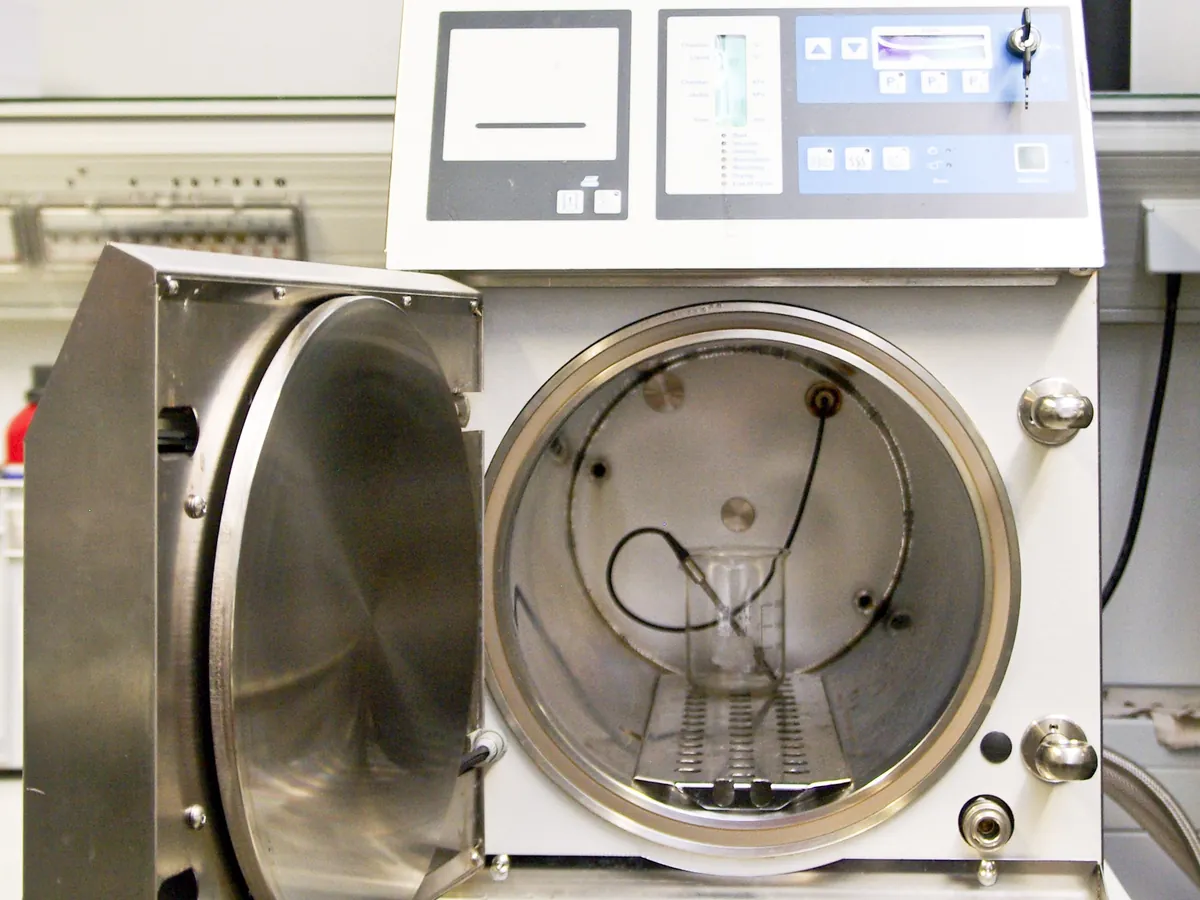
- Autoclave
- Incubator
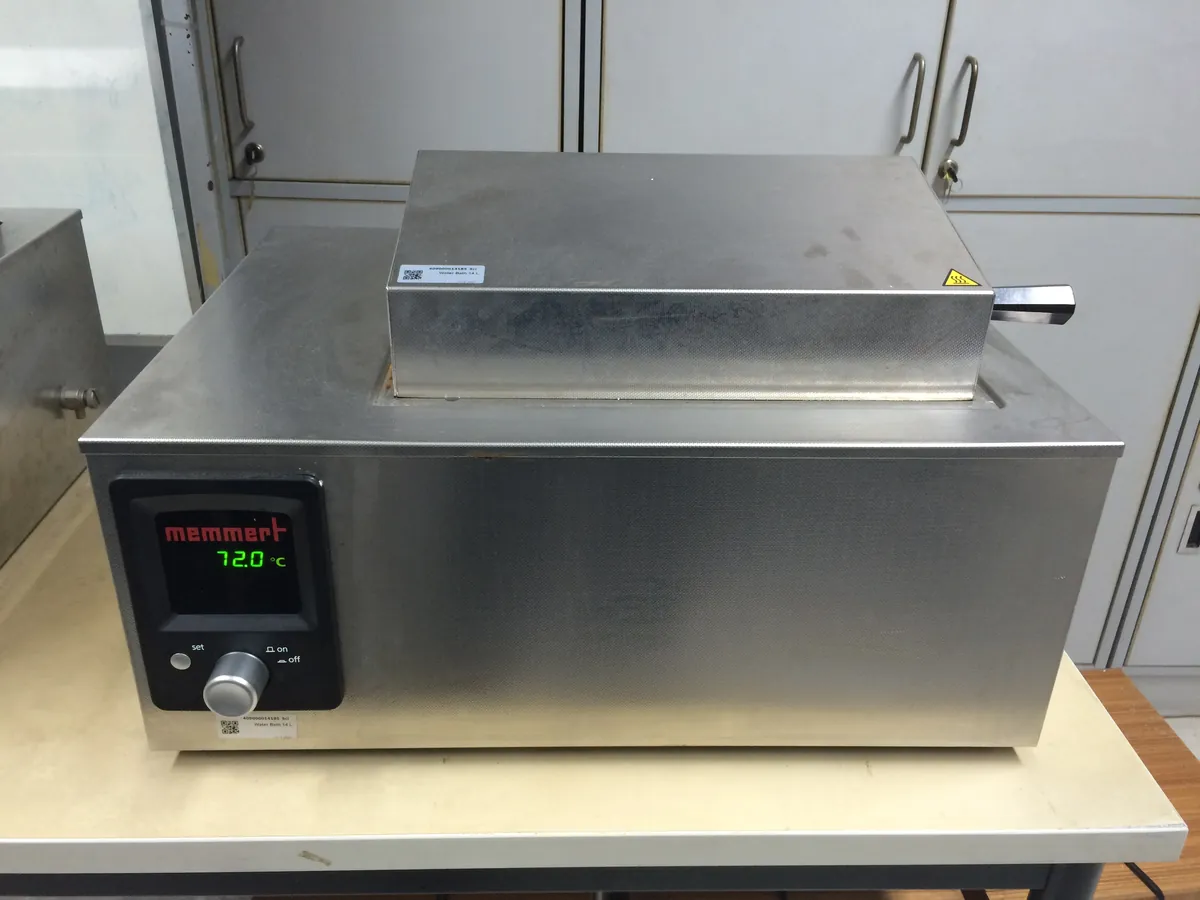
- Water bath
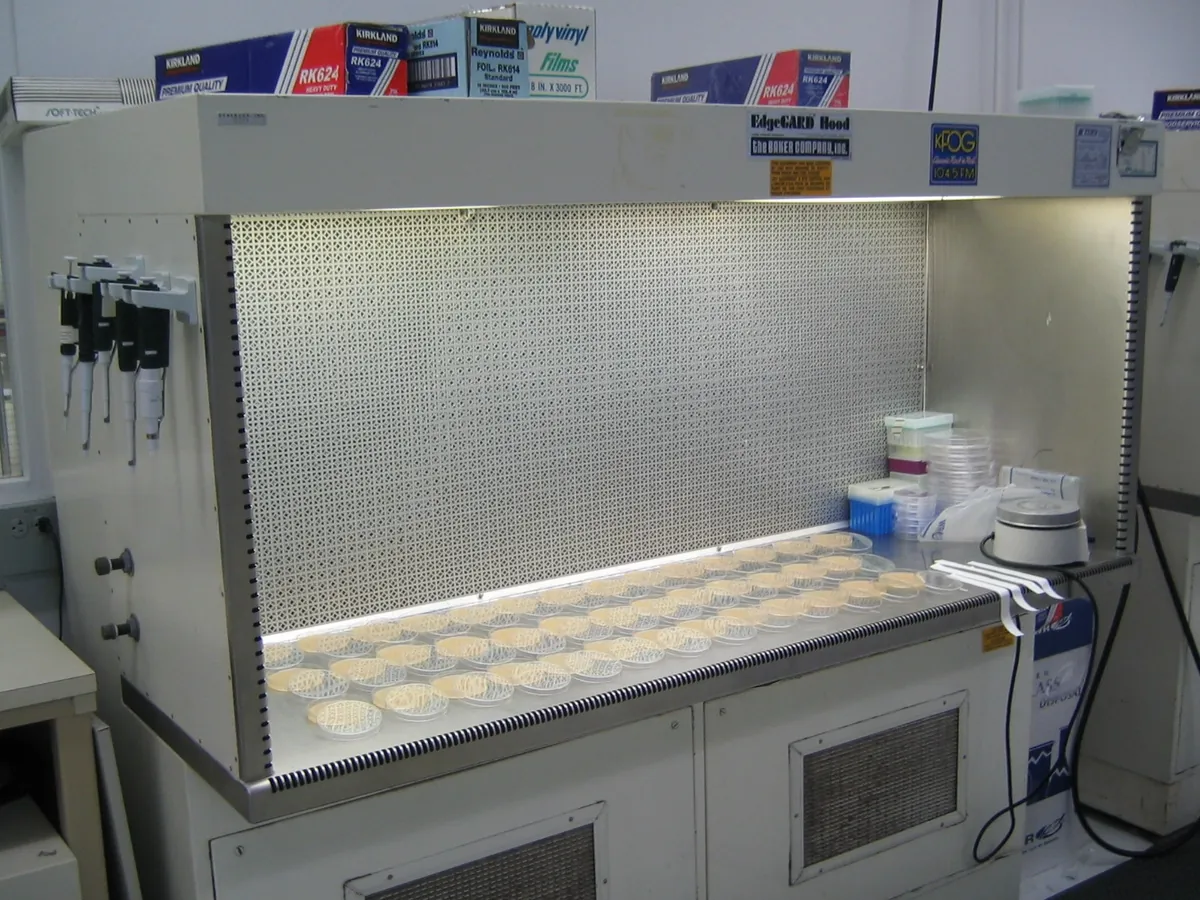
- LAF
Reference: Typical method based on APHA Standard Methods 9221 (multiple-tube fermentation technique for coliforms), IS 1622 and ISO 9308-2. Media, incubation times and confirmation steps vary between methods; follow your validated SOP.
Why this method works
Coliforms are Gram-negative, non-spore-forming rods that ferment lactose with acid and gas at 35–37 °C. E. coli does the same at 44–44.5 °C and produces indole, making it a specific indicator of recent faecal contamination. The MPN is not a direct count: it is a statistical estimate of the concentration most likely to have produced the observed pattern of positive and negative tubes, assuming the organisms are randomly (Poisson) distributed in the sample.
Instruments used
Reagents & standards
| Reagent | Grade / specification |
|---|---|
| Presumptive medium | Lauryl tryptose broth or MacConkey broth (double strength for 10 mL inocula, single strength for 1 and 0.1 mL), with inverted Durham tubes |
| Confirmatory medium (total coliforms) | Brilliant green lactose bile (BGLB) broth, 35–37 °C, 48 h |
| Thermotolerant / E. coli medium | EC broth (or EC-MUG) at 44.5 ± 0.2 °C, 24 h; tryptone water for indole |
| Sodium thiosulphate | In sterile sample bottles before sterilisation, to neutralise chlorine |
| Controls | E. coli (positive), Enterobacter aerogenes (coliform, indole negative), and an uninoculated media control |
Preparing the sample
- 01
Sterile bottle
Sterile bottle with sodium thiosulphate.
- 02
Transport cold
Keep cool; test within about 24 h (ideally 6–8 h).
- 03
Inoculate
5 × 10 mL, 5 × 1 mL, 5 × 0.1 mL.
- 04
Presumptive
35–37 °C, 24–48 h; look for gas + acid.
- 05
Confirm
BGLB at 35–37 °C; EC at 44.5 °C.
- 06
MPN
Read positive pattern; look up MPN/100 mL.
Procedure
- 1Collect the sample aseptically in a sterile bottle containing sodium thiosulphate (to neutralise chlorine). For a tap, remove aerators, flame or disinfect the spout, flush, then fill leaving an air space for mixing.
- 2Keep the sample cool (about 2–8 °C) and dark, and start testing as soon as possible — most SOPs set a maximum of about 24 hours, with a target of 6–8 hours.
- 3Shake the sample vigorously (about 25 times) to distribute bacteria evenly.
- 4For treated drinking water, inoculate 5 tubes of double-strength broth with 10 mL each (or the volumes in your SOP). For waters expected to be contaminated, use a series such as 5 × 10 mL, 5 × 1 mL and 5 × 0.1 mL, or further dilutions.
- 5Incubate at 35–37 °C. Read at 24 h and 48 h: gas in the Durham tube plus acid (colour change or turbidity) is a positive presumptive result.
- 6Subculture each positive tube into BGLB broth (35–37 °C, up to 48 h) — gas confirms total coliforms — and into EC broth (44.5 °C, 24 h) plus tryptone water — gas plus indole indicates E. coli. Further confirmation (Gram stain, biochemical tests) as per SOP.
- 7Record the number of confirmed positive tubes at each volume and read the MPN per 100 mL from the MPN table for that tube combination.
Standard preparation
- 1Run positive and negative culture controls with each batch of media and each test day.
- 2Run a sterility (media) control tube with each batch and a sterile water blank through the inoculation procedure.
Notes for analysts
- How the MPN table works, in words: each row of the table lists a combination of positive tubes (for example 5-2-0) and the concentration that would most often produce that combination, plus lower and upper 95% confidence limits. The table is calculated from probability theory for the exact tube volumes used, so you must use the table that matches your series. If your volumes are ten times larger or smaller than those in the table, divide or multiply the MPN by ten.
- MPN is less precise than a plate count — a single result can easily be out by a factor of two or three — so trends over time are more informative than one value.
- Membrane filtration (counting colonies on a membrane) and defined-substrate methods (colour/fluorescence) are widely used alternatives.
- Handle cultures at biosafety level 2 practice; autoclave all positive tubes before disposal.
Method parameters (typical)
| Presumptive incubation | 35–37 °C, 24–48 h |
|---|---|
| Confirmed (total coliforms) | BGLB, 35–37 °C, up to 48 h |
| E. coli / thermotolerant | EC broth 44.5 ± 0.2 °C, 24 h; indole positive |
| Tube series | 5 tubes per volume (e.g. 10, 1, 0.1 mL) or as per SOP |
| Reporting | MPN per 100 mL, with the tube combination |
System suitability & sequence
| Parameter | Limit |
|---|---|
| Positive control | E. coli gives gas in presumptive, BGLB and EC broth; indole positive |
| Negative / coliform control | Non-target organism behaves as expected (e.g. Enterobacter: no growth or no gas at 44.5 °C) |
| Media sterility | Uninoculated tube shows no growth |
| 44.5 °C water bath | Temperature verified with a calibrated thermometer, within ±0.2 °C |
Typical sequence
- 1Media sterility and growth-promotion checks
- 2Inoculate sample tubes
- 3Presumptive reading 24 h / 48 h
- 4Confirmation (BGLB, EC, indole)
- 5MPN look-up and report
Calculation with a worked example
Where
- P
- Number of confirmed positive tubes
- N
- Total sample volume (mL) in the negative tubes
- T
- Total sample volume (mL) in all tubes
Given
- Series
- 5 × 10 mL, 5 × 1 mL, 5 × 0.1 mL (river-affected raw water)
- Confirmed positives
- 5 of 10 mL, 2 of 1 mL, 0 of 0.1 mL (code 5-2-0)
Working
- 1
P = 5 + 2 + 0 = 7 positive tubes
- 2
T = 5 × 10 + 5 × 1 + 5 × 0.1 = 55.5 mL
- 3
Negative tubes: 0 × 10 + 3 × 1 + 5 × 0.1 = 3.5 mL, so N = 3.5 mL
- 4MPN ≈ 100 × 7 ÷ √(3.5 × 55.5) = 700 ÷ √194.25 = 700 ÷ 13.94 = 50 per 100 mL
- 5
The standard 5-tube MPN table gives a value of about 49 per 100 mL for the 5-2-0 code — report the table value with its 95% confidence limits
Total coliforms ≈ 49 MPN/100 mL (code 5-2-0) — this water is NOT fit to drink without treatment
What result passes
- As per IS 10500:2012: total coliform bacteria and E. coli (or thermotolerant coliforms) shall not be detectable in any 100 mL sample; check the current edition.
- WHO: E. coli (or thermotolerant coliforms) must not be detectable in any 100 mL sample of water intended for drinking.
- With a 5 × 10 mL series, '0 positive tubes' is reported as < 1.1 MPN/100 mL (or 'not detected in 50 mL tested', as per SOP).
Validation parameters (ICH Q2(R2))
| Parameter | Typical requirement |
|---|---|
| Media performance | Growth promotion and selectivity checks for each media lot |
| Precision | MPN has wide confidence limits; replicate testing and proficiency schemes are used to monitor performance |
| Comparability | Compare with membrane filtration or enzyme-substrate methods if used in parallel |
Run this method in LimsPulse: specifications and STPs under version control, results calculated and checked against limits, and a signed Certificate of Analysis.