Titratable acidity of juices and beverages
Titrates all the titratable acids in a juice or drink with standardised sodium hydroxide to a fixed pH end point and expresses the result as the predominant acid — citric acid for most fruit juices and soft drinks.
- Food & beverage
- Acid–base titration with 0.1 M NaOH to pH 8.1 (potentiometric) or phenolphthalein end point
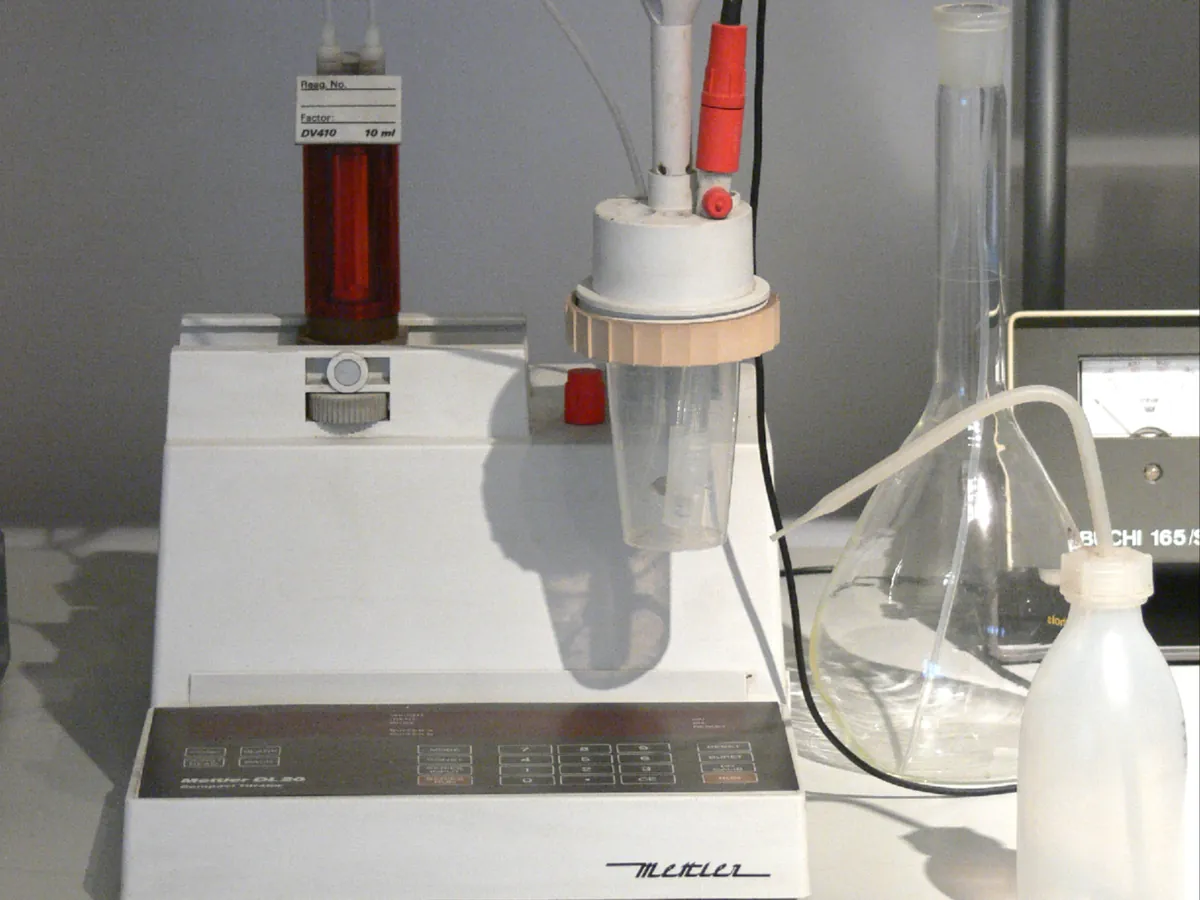
- Potentiometric titrator
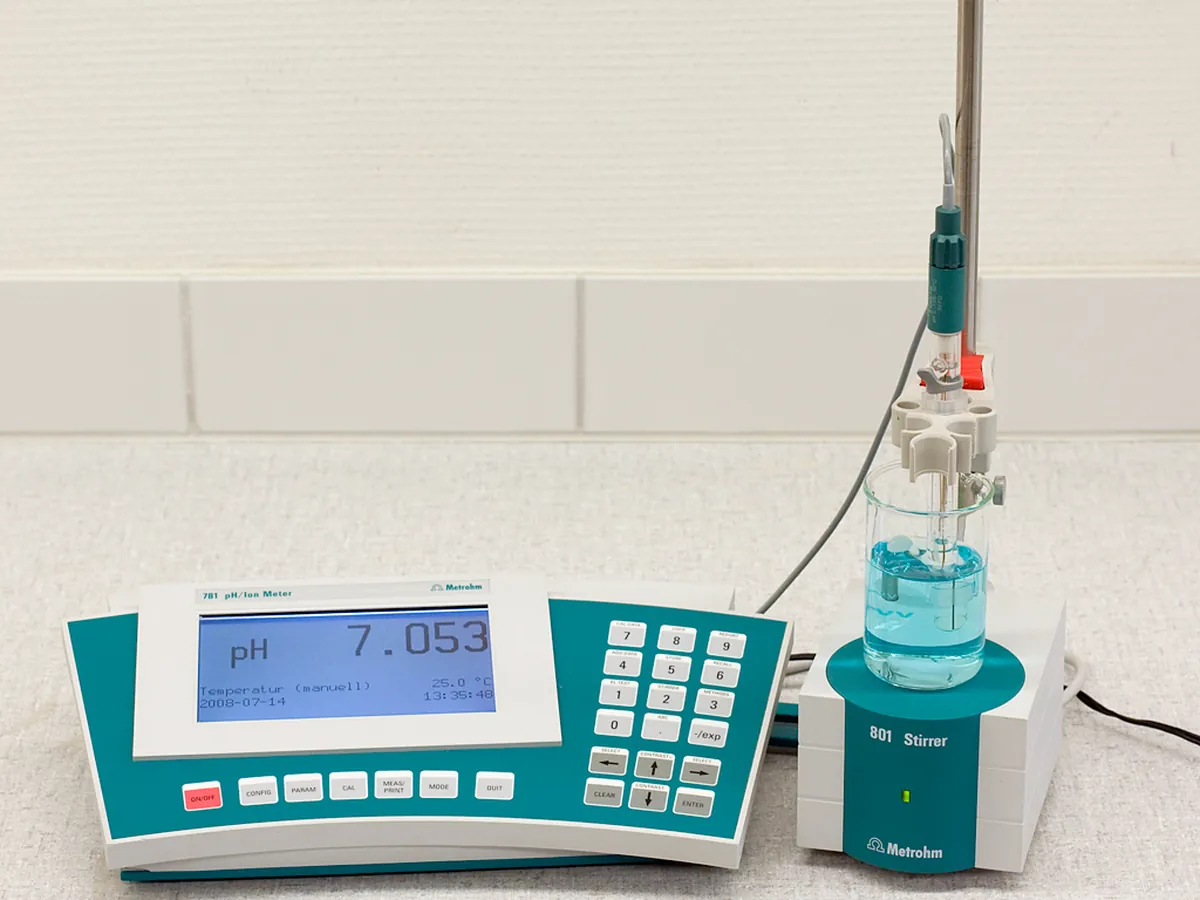
- pH meter
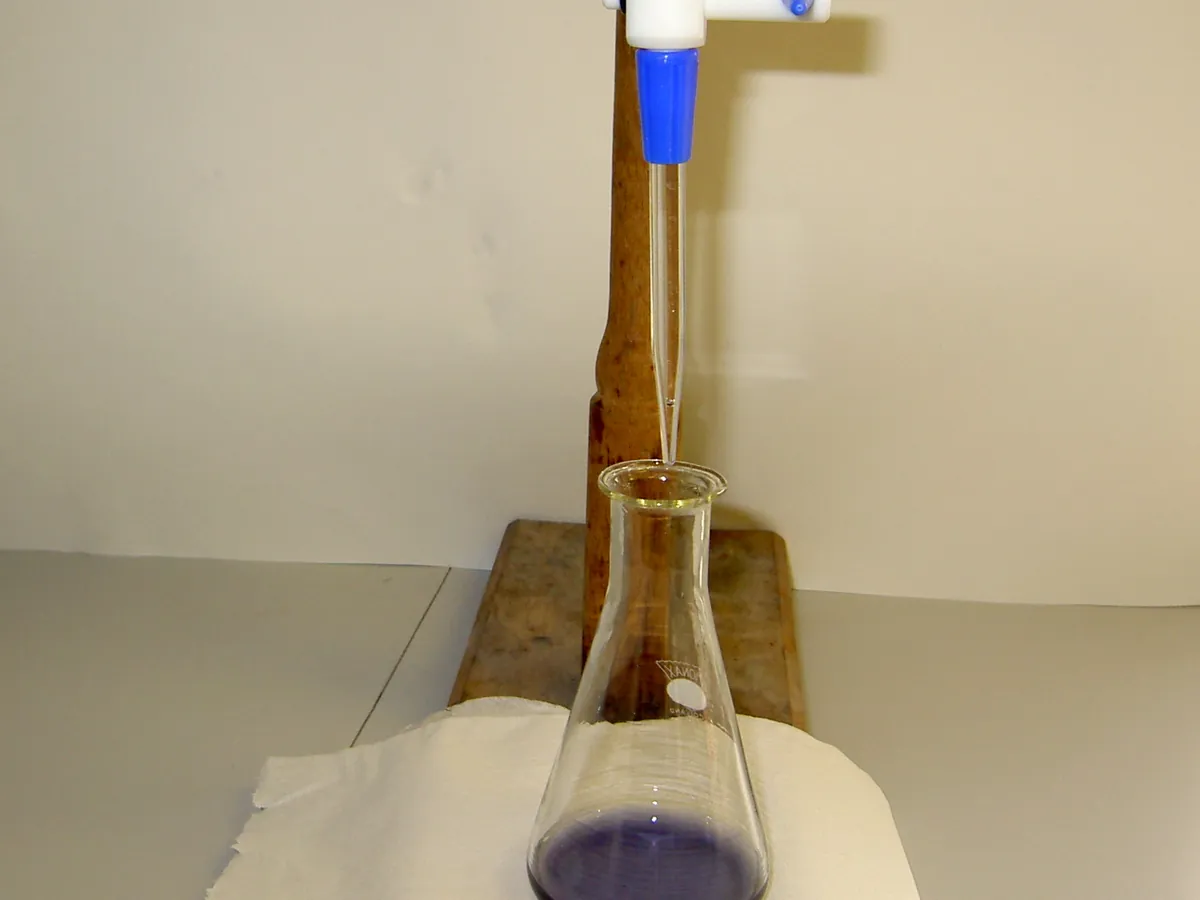
- Burette & glassware
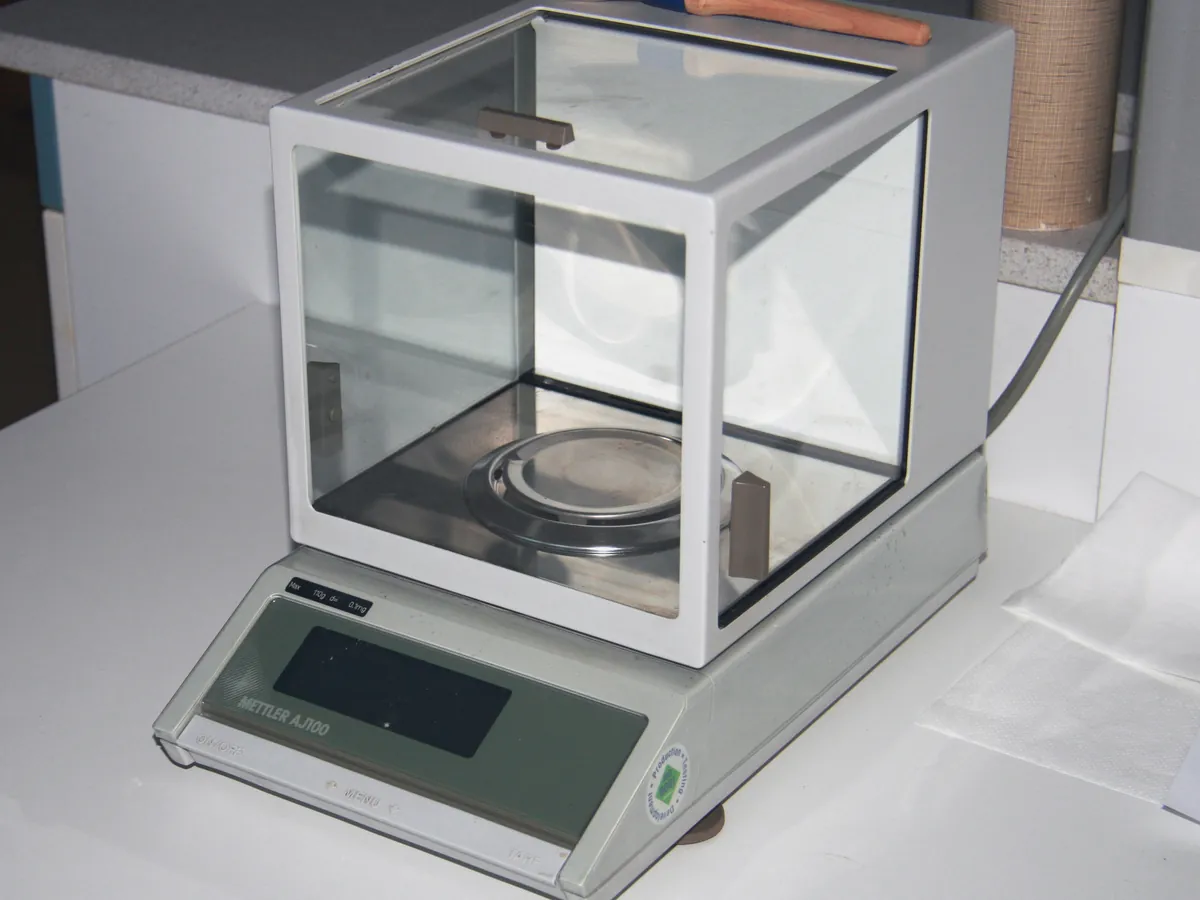
- Analytical balance
Reference: Typical method based on ISO 750 and AOAC titratable acidity methods for fruit products. Follow your approved test method and specification.
Why this method works
Organic acids such as citric, malic and tartaric acid are neutralised by sodium hydroxide. Titrating to a fixed pH of 8.1 (close to the phenolphthalein colour change) neutralises all their acidic protons. The moles of NaOH used are converted to grams of the reference acid using its equivalent weight: citric acid is triprotic, so one mole of NaOH neutralises one third of a mole of citric acid (64.04 g per equivalent for the anhydrous acid). Coloured juices hide the indicator colour, so a pH electrode end point is preferred.
Instruments used
Reagents & standards
| Reagent | Grade / specification |
|---|---|
| Sodium hydroxide 0.1 M | Volumetric solution, carbonate-free, standardised against potassium hydrogen phthalate |
| Phenolphthalein indicator | 1% in ethanol (for pale samples, if not titrating potentiometrically) |
| pH buffers | pH 4.01, 7.00 and 10.01 for electrode calibration |
| Water | Freshly boiled and cooled (CO₂-free) distilled water |
Preparing the sample
- 01
Degas
Remove CO₂ from carbonated drinks — it is an acid too.
- 02
Mix & clarify
Mix well; strain pulpy juices if needed.
- 03
Take aliquot
Pipette 10 mL (or weigh 10 g) into a beaker.
- 04
Dilute
Add about 50 mL CO₂-free water.
- 05
Titrate
Titrate with 0.1 M NaOH to pH 8.1 with stirring.
Procedure
- 1Calibrate the pH electrode with pH 4.01, 7.00 and 10.01 buffers (or as required for the titrator).
- 2Degas carbonated drinks by stirring vigorously, gentle warming and cooling, or brief vacuum, until no more bubbles form. Dissolved CO₂ would be titrated as acid.
- 3Mix the sample. Pipette 10.0 mL (or weigh about 10 g for viscous or pulpy products) into a 150 mL beaker.
- 4Add about 50 mL of CO₂-free water and a magnetic stirrer bar. Immerse the electrode.
- 5Titrate with standardised 0.1 M NaOH, slowly near the end point, to pH 8.1 (or to the first permanent faint pink with phenolphthalein for pale samples). Record the volume to 0.01 mL.
- 6Carry out a blank titration on 60 mL of the same water and subtract it if it is significant.
- 7Analyse in duplicate and report the mean.
Standard preparation
- 1Standardise 0.1 M NaOH against dried potassium hydrogen phthalate (KHP) at least weekly, or as your SOP requires, and use the actual molarity in the calculation.
Notes for analysts
- Factor check: 1 mL of 0.1 M NaOH neutralises 0.1 mmol H⁺ = 0.0064 g anhydrous citric acid (0.0070 g as monohydrate). The figure 0.064 often quoted is per milliequivalent (g/meq), i.e. per mL of 1 M NaOH.
- Brix-to-acid ratio = °Brix ÷ (TA as % citric acid). For the example above with 11.5 °Brix it would be about 14.
- pH and titratable acidity measure different things: pH is the free hydrogen-ion activity, titratable acidity is the total acid that can be neutralised.
Method parameters (typical)
| Titrant | 0.1 M sodium hydroxide (actual molarity from standardisation) |
|---|---|
| End point | pH 8.1 (ISO 750 approach); some methods use pH 8.2 or phenolphthalein |
| Sample size | 10 mL or 10 g (adjust so the titre is roughly 5–20 mL) |
| Expression | Citric acid (anhydrous) for fruit juices and soft drinks; tartaric acid for wine and grape juice; malic acid for apple products; lactic acid for dairy |
| Equivalent weights (g/mol of H⁺) | Citric anhydrous 64.04; citric monohydrate 70.05; malic 67.05; tartaric 75.04; lactic 90.08; acetic 60.05 |
System suitability & sequence
| Parameter | Limit |
|---|---|
| Electrode calibration | Slope typically 95–102% of theoretical |
| Duplicate agreement | Typically within 2% relative, or as defined in your SOP |
Typical sequence
- 1Electrode calibration
- 2Blank titration
- 3Sample replicate 1
- 4Sample replicate 2
Calculation with a worked example
Where
- V
- Volume of NaOH used, blank-corrected (mL)
- M
- Actual molarity of the NaOH (mol/L)
- 64.04
- Equivalent weight of anhydrous citric acid (192.12 ÷ 3), mg per mmol of NaOH
- Vₛ
- Volume of sample taken (mL); use mass in g for a g/100 g result
Given
- Sample
- Orange juice, 10.0 mL
- V
- 12.50 mL
- M
- 0.1002 M
Working
- 1
mmol NaOH = 12.50 × 0.1002 = 1.2525 mmol
- 2
Citric acid = 1.2525 × 64.04 = 80.21 mg in 10.0 mL
- 3
Per 100 mL = 80.21 mg × 100 / 10.0 = 802.1 mg = 0.802 g
- 4
Check with the shortcut factor: 1 mL of exactly 0.1 M NaOH ≡ 0.0064 g citric acid; 12.50 × (0.1002/0.1) × 0.006404 × 10 = 0.802 g/100 mL
Titratable acidity = 0.80 g/100 mL as anhydrous citric acid
What result passes
- Compare with the product specification. Typical values: orange juice about 0.5–1.2 g/100 mL, lemon juice about 4.5–6 g/100 mL, cola-type drinks are mainly phosphoric acid and are often expressed differently.
- Report which acid the result is expressed as, and whether anhydrous or monohydrate citric acid was used — they differ by about 9%.
Validation parameters (ICH Q2(R2))
| Parameter | Typical requirement |
|---|---|
| Accuracy | Recovery of spiked citric acid typically 98–102% |
| Precision | Repeatability %RSD typically ≤ 1–2% for clear juices |
| Titrant | Standardised NaOH with traceable KHP; burette or titrator calibrated |
| Ruggedness | Effect of degassing and end-point pH (8.1 vs 8.2) assessed |
Run this method in LimsPulse: specifications and STPs under version control, results calculated and checked against limits, and a signed Certificate of Analysis.