California Bearing Ratio (CBR) of Soil
Soil is compacted in a CBR mould, usually soaked for 4 days, and then penetrated by a 50 mm plunger at 1.25 mm/min. The loads at 2.5 mm and 5.0 mm penetration are expressed as a percentage of standard loads for crushed stone.
- Construction materials
- Penetration of a standard plunger at constant rate into compacted (usually soaked) soil
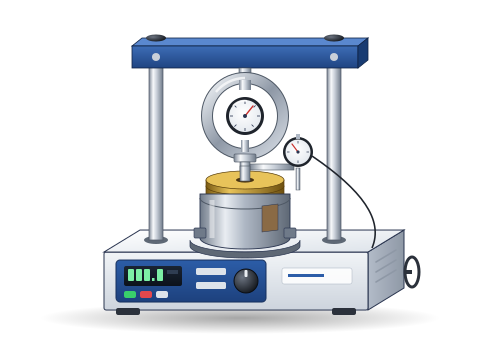
- CBR apparatus
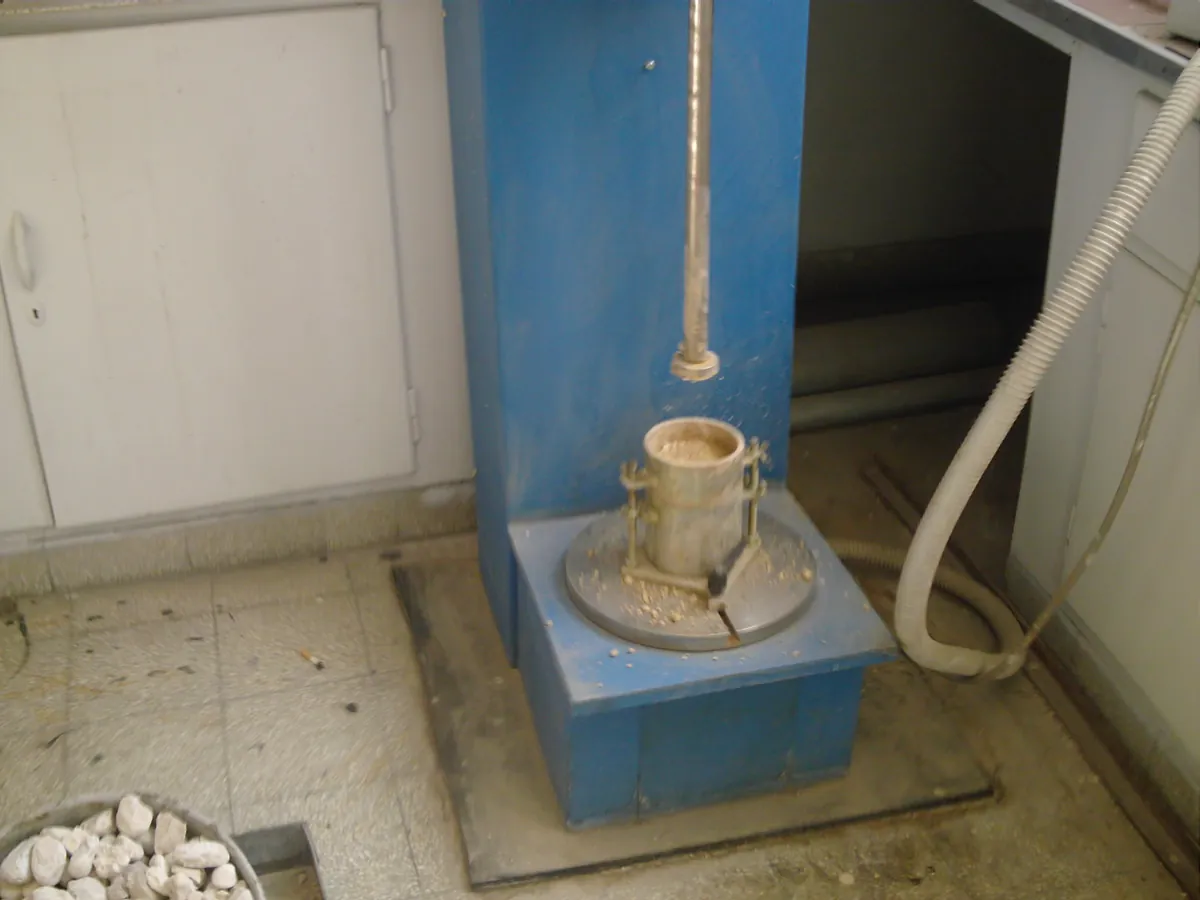
- Proctor apparatus
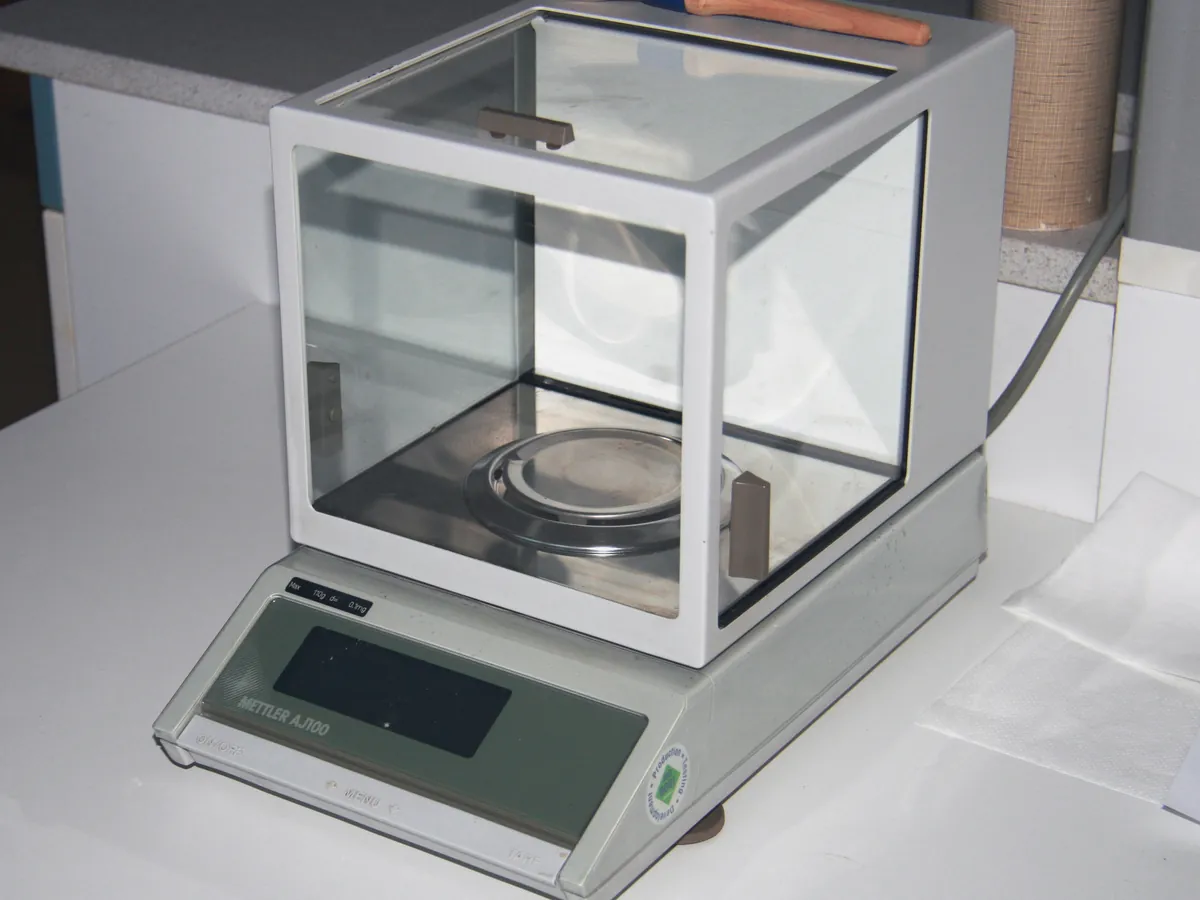
- Analytical balance
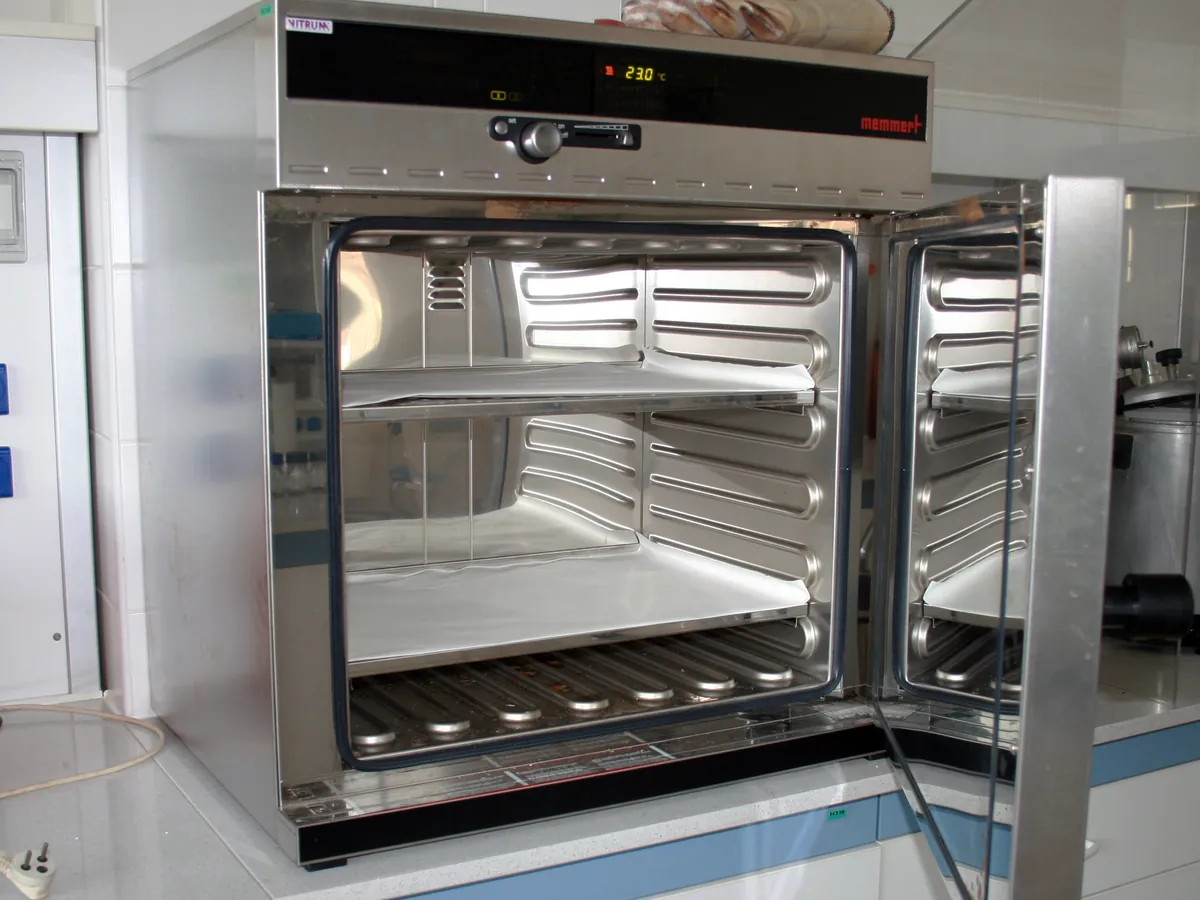
- Hot air oven
Reference: Typical method based on IS 2720 (Part 16); ASTM D1883 is similar. Always follow the current editions and your approved SOP.
Why this method works
The CBR compares the resistance of a soil to that of a standard high-quality crushed stone. A plunger is pushed into the soil at a fixed rate, and the load needed for 2.5 mm and 5.0 mm penetration is recorded. These loads are divided by the standard loads for the reference material — 1370 kg at 2.5 mm and 2055 kg at 5.0 mm in IS 2720 Part 16 — and multiplied by 100. Soaking the specimen for 4 days models the worst wet condition a subgrade may reach in service. Pavement design methods use the CBR to decide the thickness of the pavement layers.
Instruments used
Reagents & standards
| Reagent | Grade / specification |
|---|---|
| CBR mould | 150 mm internal diameter, 175 mm high, with collar, perforated base and 50 mm spacer disc (giving a 125 mm specimen) |
| Surcharge weights | Annular weights of 2.5 kg each; typically 5 kg total, or to match the expected pavement load |
| Swell gauge | Tripod with dial gauge and perforated plate for measuring swell during soaking |
| Soaking tank | Tank deep enough to keep water above the mould |
Preparing the sample
- 01
Prepare
Mix soil (passing 19 mm) to the OMC from the Proctor test.
- 02
Compact
Compact in the CBR mould on the spacer disc to the target density.
- 03
Soak
Add surcharge, soak 96 h and record swell.
- 04
Drain
Drain for 15 min, keeping the surcharge on.
- 05
Penetrate
Seat plunger and penetrate at 1.25 mm/min.
- 06
Calculate
Read loads at 2.5 and 5.0 mm; work out CBR.
Procedure
- 1Take soil passing the 19 mm sieve (replace the oversize with an equal mass of 19–4.75 mm material if the standard requires). Mix it to the OMC, or to the water content in the specification.
- 2Compact it in the CBR mould on the spacer disc, either dynamically (with the rammer and the number of layers and blows that give the target dry density) or statically to a calculated mass, typically to the MDD from the Proctor test.
- 3Remove the collar, trim the specimen, remove the spacer disc and turn the mould over onto the perforated base with filter paper. Weigh it and take a water content sample from the trimmings.
- 4Place the surcharge weights on the specimen. Put the swell plate and dial gauge in place, immerse the mould in water and soak for 96 hours (4 days), recording swell.
- 5Take the mould out, tilt it to drain for about 15 minutes and keep the surcharge on.
- 6Set the mould on the loading machine. Seat the plunger with a small load (typically about 4 kg) and set the load and penetration gauges to zero.
- 7Apply load so that the plunger penetrates at 1.25 mm per minute. Read the load at 0.5, 1.0, 1.5, 2.0, 2.5, 3.0, 4.0, 5.0, 7.5, 10.0 and 12.5 mm penetration.
- 8After the test, take a water content sample from the top 30 mm of the specimen.
Standard preparation
- 1Check that the proving ring or load cell and the penetration rate have been verified within the calibration interval.
- 2Know the proving ring constant (kg or kN per division) before starting.
Notes for analysts
- Standard loads 1370 kg and 2055 kg correspond to about 70 and 105 kg/cm² on the 19.6 cm² plunger. In SI units they are about 13.4 kN and 20.2 kN.
- If the load–penetration curve is concave upward at the start (from surface irregularities), draw a tangent at the steepest point and shift the zero to where it meets the penetration axis before reading the loads.
- Unsoaked CBR is sometimes used where the subgrade will never get wet, but soaked CBR is the usual design value in India.
- Swell is reported as a percentage of the initial specimen height; high swell points to expansive clay.
Method parameters (typical)
| Plunger | 50 mm diameter (area about 19.6 cm²) |
|---|---|
| Penetration rate | 1.25 mm/min |
| Standard loads | 1370 kg at 2.5 mm; 2055 kg at 5.0 mm (IS 2720 Part 16) |
| Soaking | 96 hours under surcharge, swell recorded |
| Surcharge | Typically 5 kg (two 2.5 kg weights), or as the specification states |
| Specimen | Compacted at OMC to the target dry density (e.g. MDD) in a 150 mm mould |
System suitability & sequence
| Parameter | Limit |
|---|---|
| Load–penetration curve | Smooth curve; if the start is concave upward, apply the zero correction |
| Density check | Specimen dry density within the tolerance of the target in your SOP |
Typical sequence
- 1Compact the specimen
- 2Soak 96 h with surcharge; record swell
- 3Drain 15 min
- 4Penetration test; record load at each penetration
- 5Water content after test
- 6Plot curve, correct if needed, calculate CBR
Calculation with a worked example
Where
- PT
- Test load at the given penetration, from the (corrected) curve (kg)
- PS
- Standard load at the same penetration (kg)
Given
- Proving ring constant
- 2.0 kg per division
- Reading at 2.5 mm
- 41 divisions → 82 kg
- Reading at 5.0 mm
- 58 divisions → 116 kg
- Curve
- No zero correction needed
Working
- 1CBR at 2.5 mm = 82 ÷ 1370 × 100 = 5.99%
- 2CBR at 5.0 mm = 116 ÷ 2055 × 100 = 5.64%
- 3
The value at 2.5 mm is higher, so it is reported
CBR = 6.0% (soaked, at 2.5 mm penetration).
What result passes
- Normally the CBR at 2.5 mm is reported. If the value at 5.0 mm is higher, the test is repeated; if it is still higher, the 5.0 mm value is reported.
- The required CBR comes from the pavement design and the contract (for example IRC and MoRTH guidance for roads). Many highway projects set a minimum subgrade CBR — check the project specification.
- Report the compaction method, dry density, water content before and after soaking, surcharge and swell.
Validation parameters (ICH Q2(R2))
| Parameter | Typical requirement |
|---|---|
| Approach | Standard method; competence shown by repeat specimens and proficiency testing |
| Repeatability | Test at least two or three specimens; CBR scatters more than many tests, especially for coarse soils |
| Equipment control | Proving ring / load cell and penetration rate verified periodically |
Run this method in LimsPulse: specifications and STPs under version control, results calculated and checked against limits, and a signed Certificate of Analysis.