Crude Protein in Food by the Kjeldahl Method
The sample is digested in sulphuric acid with a copper catalyst to turn organic nitrogen into ammonium. The ammonia is distilled into boric acid and titrated with standard acid. Nitrogen % is multiplied by a conversion factor (6.25 for general foods, 6.38 for dairy) to give crude protein.
- Food & beverage
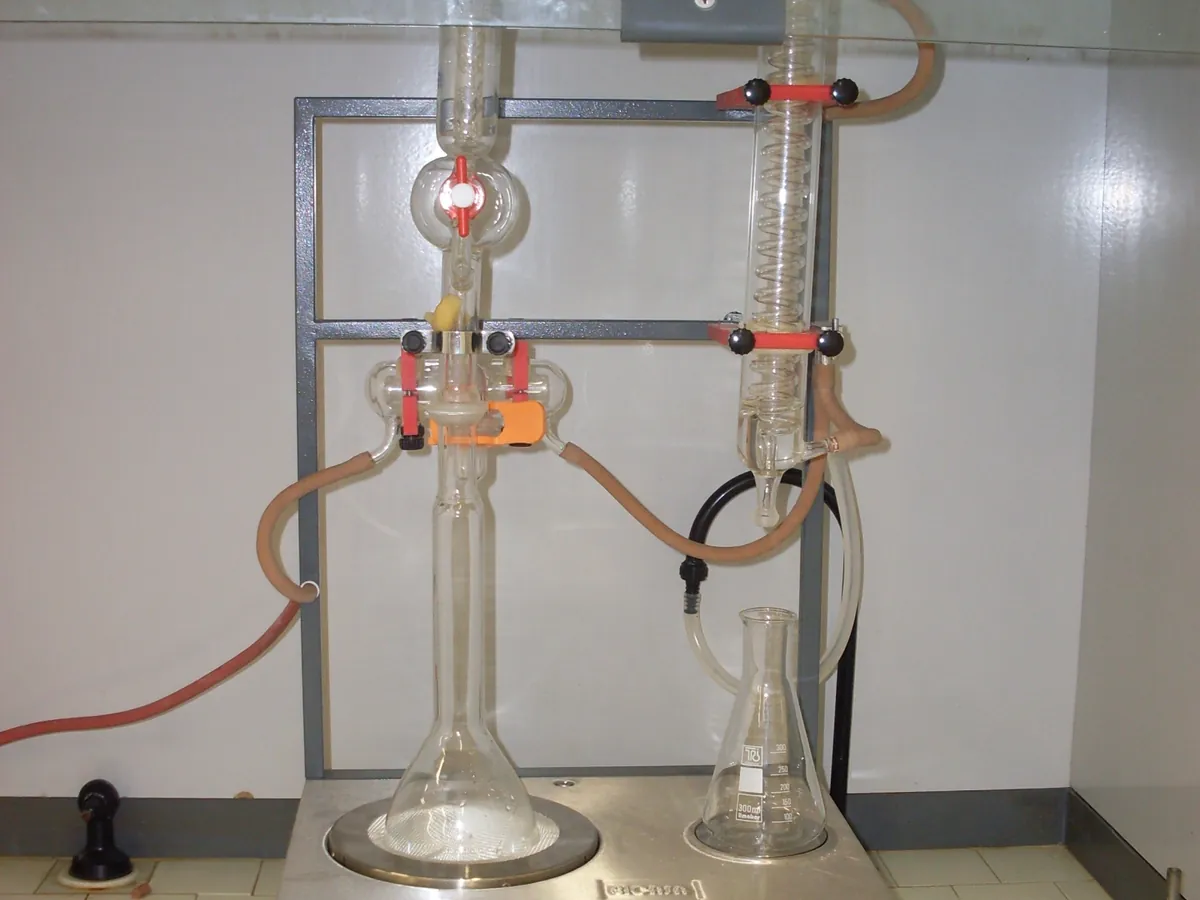
- Block digestion, steam distillation and acid titration
- Kjeldahl
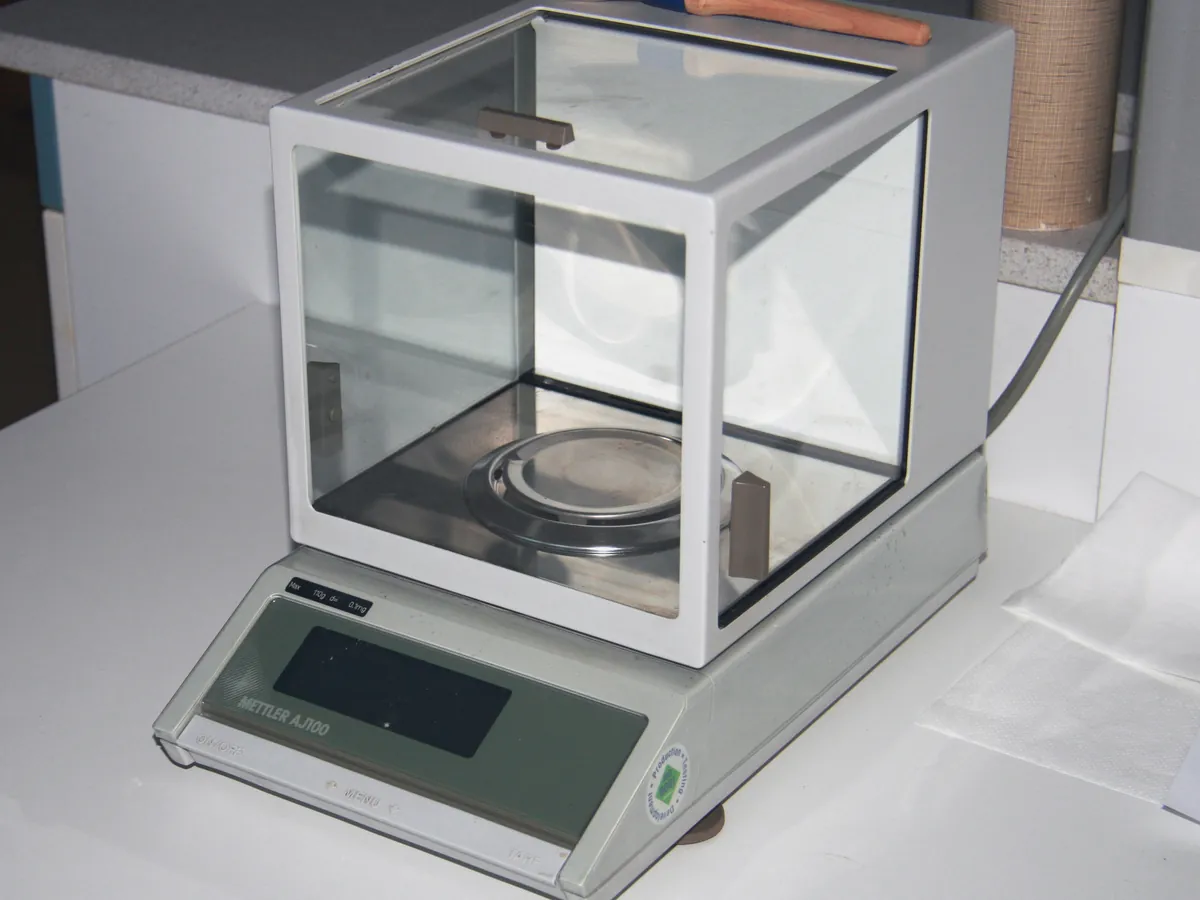
- Analytical balance
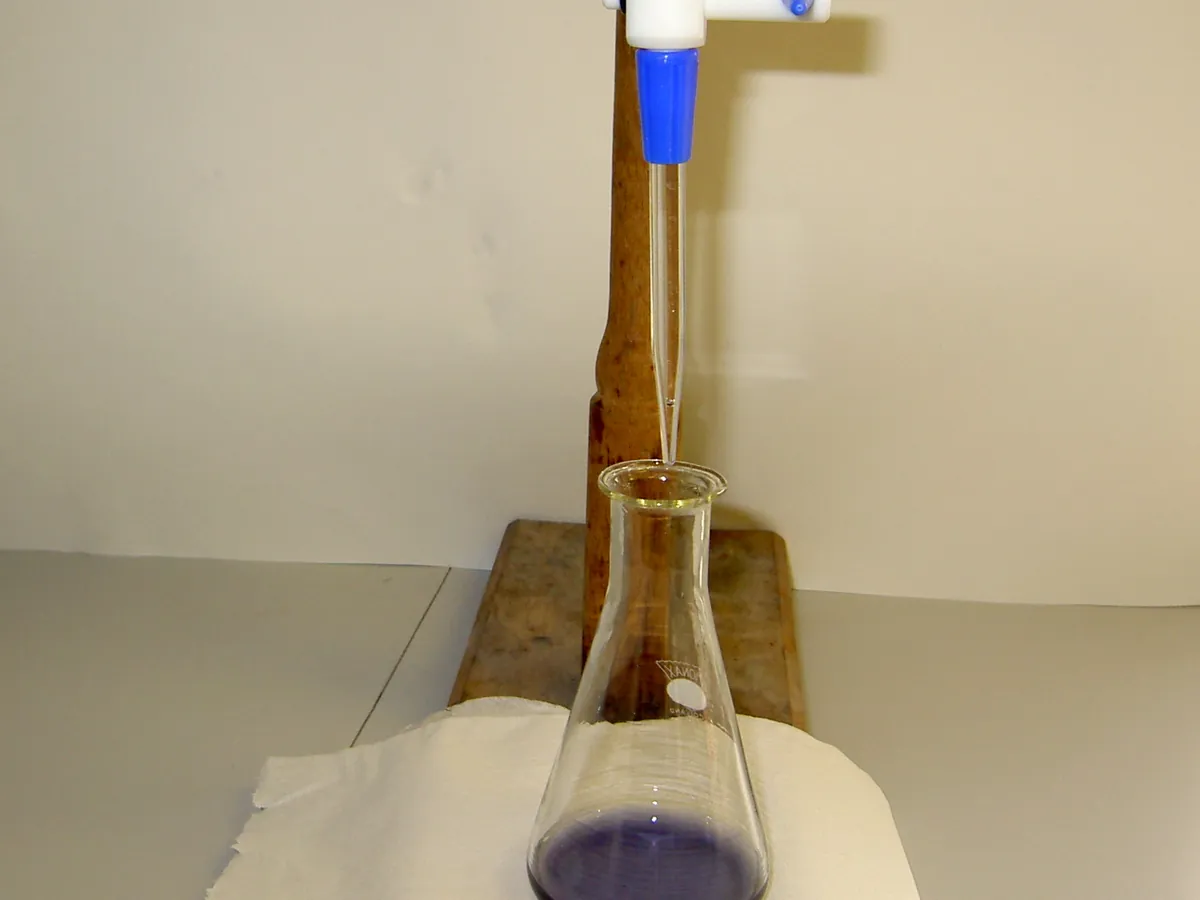
- Burette & glassware
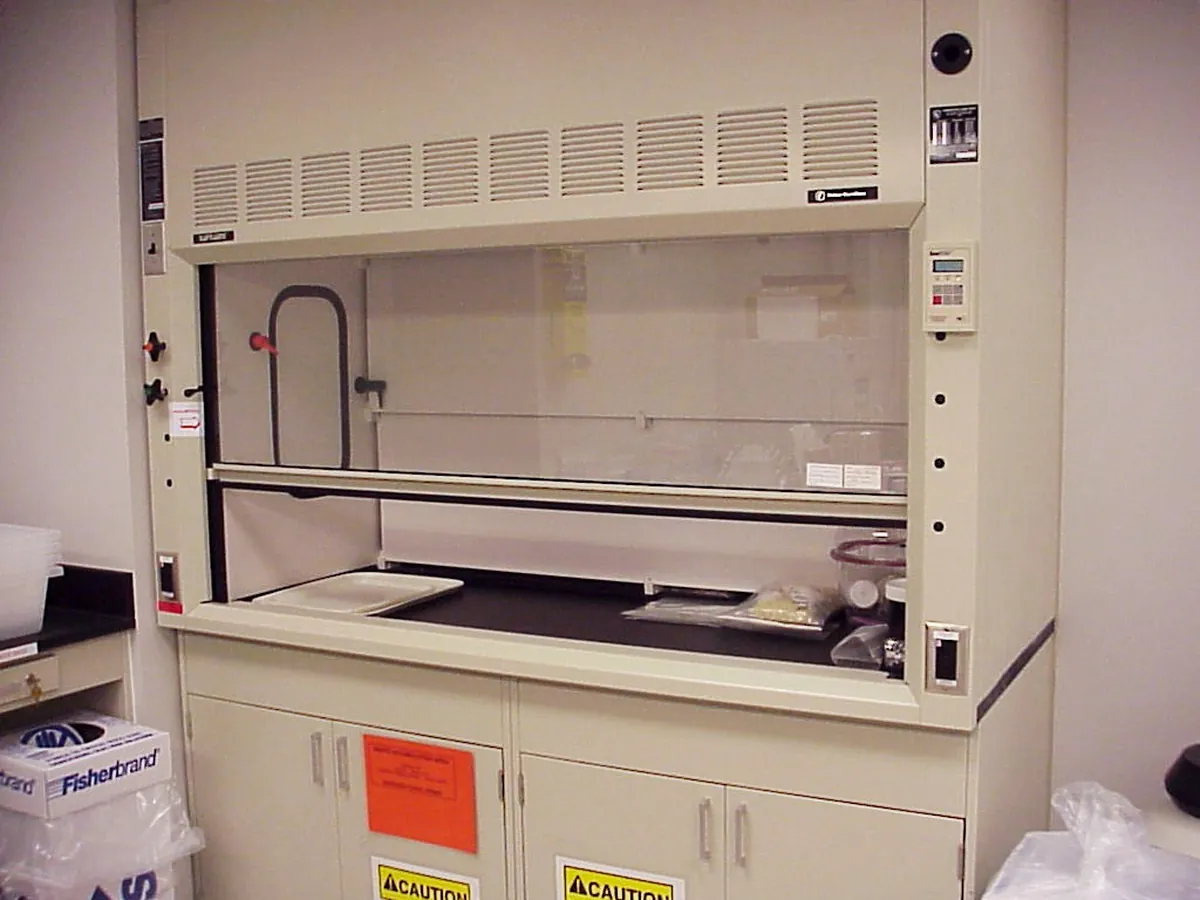
- Fume hood
Reference: Typical method based on AOAC 2001.11, ISO 1871 and AOAC 991.20 (milk). Use the sample mass, digestion programme and protein factor stated in your method.
Why this method works
Hot concentrated sulphuric acid, with potassium sulphate to raise its boiling point and copper as catalyst, oxidises the organic matter. Nitrogen in amino groups ends up as ammonium sulphate. Adding excess sodium hydroxide releases ammonia gas, which steam carries into boric acid, forming ammonium borate. Titration with standard hydrochloric acid measures the ammonia: one mole of HCl equals one mole of nitrogen (14.007 g). Protein is calculated as nitrogen × a factor that reflects the nitrogen content of the protein in that food.
Instruments used
Reagents & standards
| Reagent | Grade / specification |
|---|---|
| Sulphuric acid | Concentrated, nitrogen-free (about 12–15 mL per tube) |
| Catalyst tablets | Potassium sulphate with copper sulphate (for example 3.5 g K₂SO₄ + 0.4 g CuSO₄·5H₂O per tablet; use the amount in your method) |
| Sodium hydroxide | About 32–40% w/v, nitrogen-free |
| Receiver solution | Boric acid about 4% with bromocresol green–methyl red mixed indicator |
| Titrant | Hydrochloric acid 0.1 M (or 0.05 M sulphuric acid), standardised |
| Recovery standards | Ammonium sulphate and tryptophan (or acetanilide) |
Preparing the sample
- 01
Weigh
Weigh about 1 g of homogenised sample into a digestion tube.
- 02
Add reagents
Add catalyst tablets and sulphuric acid.
- 03
Digest
Digest at about 420 °C until clear, plus the extra time in the method.
- 04
Cool & dilute
Cool and add water carefully.
- 05
Distil
Add excess NaOH and steam-distil into boric acid.
- 06
Titrate
Titrate with 0.1 M HCl to the indicator colour change.
Procedure
- 1Weigh about 1.0 g of the homogenised sample (containing roughly 10–30 mg nitrogen) accurately onto nitrogen-free paper or directly into the tube.
- 2Add two catalyst tablets and 12–15 mL concentrated sulphuric acid. Prepare a reagent blank with the same reagents (and paper, if used).
- 3Place the rack in the preheated block with the exhaust running and digest at about 420 °C until the digest is clear and pale blue-green, then continue for the further time in the method (total often 60–120 min).
- 4Cool to room temperature and carefully add about 50–75 mL of water.
- 5On the distillation unit, add excess sodium hydroxide (for example 50 mL of 40%) and distil into 25–30 mL of boric acid with indicator until 100–150 mL of distillate is collected.
- 6Titrate the distillate with standardised 0.1 M HCl until the green colour changes to grey-pink (or to pH about 4.6 with an automatic titrator).
- 7Titrate the blank in the same way.
Standard preparation
- 1Standardise the 0.1 M HCl against a primary standard (for example tris(hydroxymethyl)aminomethane or sodium carbonate) and record the molarity.
- 2Run an ammonium sulphate recovery and an organic nitrogen recovery standard with each batch, as in the nitrogen recovery check.
Notes for analysts
- Kjeldahl measures total nitrogen. Non-protein nitrogen such as urea or melamine is counted as protein, which is why melamine adulteration was not detected by this test.
- 6.25 assumes protein contains 16% nitrogen. Milk protein contains about 15.7% nitrogen, giving 6.38.
- Always state the factor used on the report, for example 'Protein (N × 6.25)'.
- Dumas combustion gives comparable total nitrogen results faster and without hot acid.
Method parameters (typical)
| Sample mass | About 0.5–2 g, to give 10–30 mg N |
|---|---|
| Digestion temperature | About 400–420 °C |
| Digestion time | Until clear plus extra time; typically 60–120 min total |
| Catalyst | K₂SO₄ + CuSO₄ (no mercury or selenium) |
| Receiver | 4% boric acid with mixed indicator |
| Titrant | 0.1 M HCl, standardised |
| Protein factor | 6.25 for general foods; 6.38 for milk and dairy; other specific factors (for example about 5.7 for wheat) only where your method or regulation requires |
System suitability & sequence
| Parameter | Limit |
|---|---|
| Ammonium sulphate recovery | Typically 99–101% |
| Organic standard recovery | Typically not less than about 98% |
| Reagent blank | Low and consistent with history (for example below 0.3 mL of 0.1 M HCl) |
| Duplicate agreement | As per method repeatability |
Typical sequence
- 1Reagent blank
- 2Ammonium sulphate standard
- 3Organic recovery standard
- 4Sample prep 1
- 5Sample prep 2
- 6Reference material (if used)
Calculation with a worked example
Where
- Vs
- Volume of HCl used for the sample (mL)
- Vb
- Volume of HCl used for the blank (mL)
- M
- Molarity of HCl (mol/L)
- 1.4007
- 14.007 mg N per mmol, divided by 1000 mg/g and multiplied by 100 for per cent
- W
- Sample mass (g)
- F
- Nitrogen-to-protein factor (6.25 general; 6.38 dairy)
Given
- Sample
- Breakfast cereal, W = 1.0042 g
- Vs
- 12.85 mL
- Vb
- 0.15 mL
- M (HCl)
- 0.1012 M
- F
- 6.25
Working
- 1
Net titre = 12.85 − 0.15 = 12.70 mL
- 2
Nitrogen = 12.70 × 0.1012 × 14.007 = 18.00 mg
- 3N (%) = 12.70 × 0.1012 × 1.4007 ÷ 1.0042 = 1.793%
- 4
Protein = 1.793 × 6.25 = 11.20%
- 5
For comparison, if this were a dairy product the factor 6.38 would give 1.793 × 6.38 = 11.44%
Nitrogen = 1.79%; crude protein (N × 6.25) = 11.2%
What result passes
- Compare with the label declaration or specification, applying the tolerance in your food labelling regulations.
Validation parameters (ICH Q2(R2))
| Parameter | Typical requirement |
|---|---|
| Accuracy | Recovery of standards and agreement with a food reference material |
| Precision | Repeatability within method limits (for example AOAC or ISO precision data) |
| Range | From low-protein foods (about 1%) to high-protein foods (80%+), adjusting sample mass |
| Specificity | Not specific to protein: non-protein nitrogen is included |
Run this method in LimsPulse: specifications and STPs under version control, results calculated and checked against limits, and a signed Certificate of Analysis.