Oil and Grease (n-Hexane Extractable Material) by Gravimetry
An acidified 1 L sample is extracted three times with n-hexane in a separatory funnel. The combined extract is dried, the solvent is evaporated, and the residue is weighed. The result is reported as n-hexane extractable material in mg/L.
- Environmental & water
- Liquid–liquid extraction with n-hexane, solvent evaporation and gravimetry
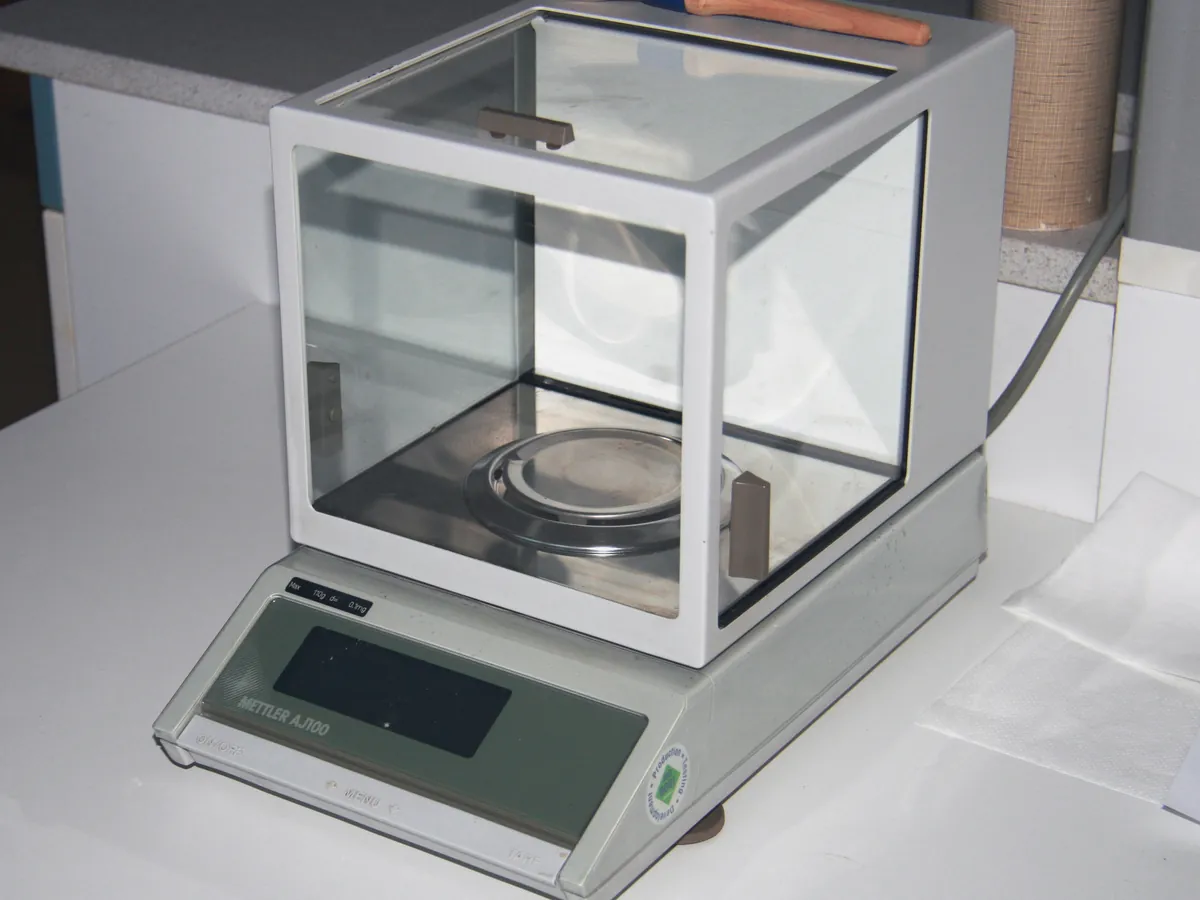
- Analytical balance
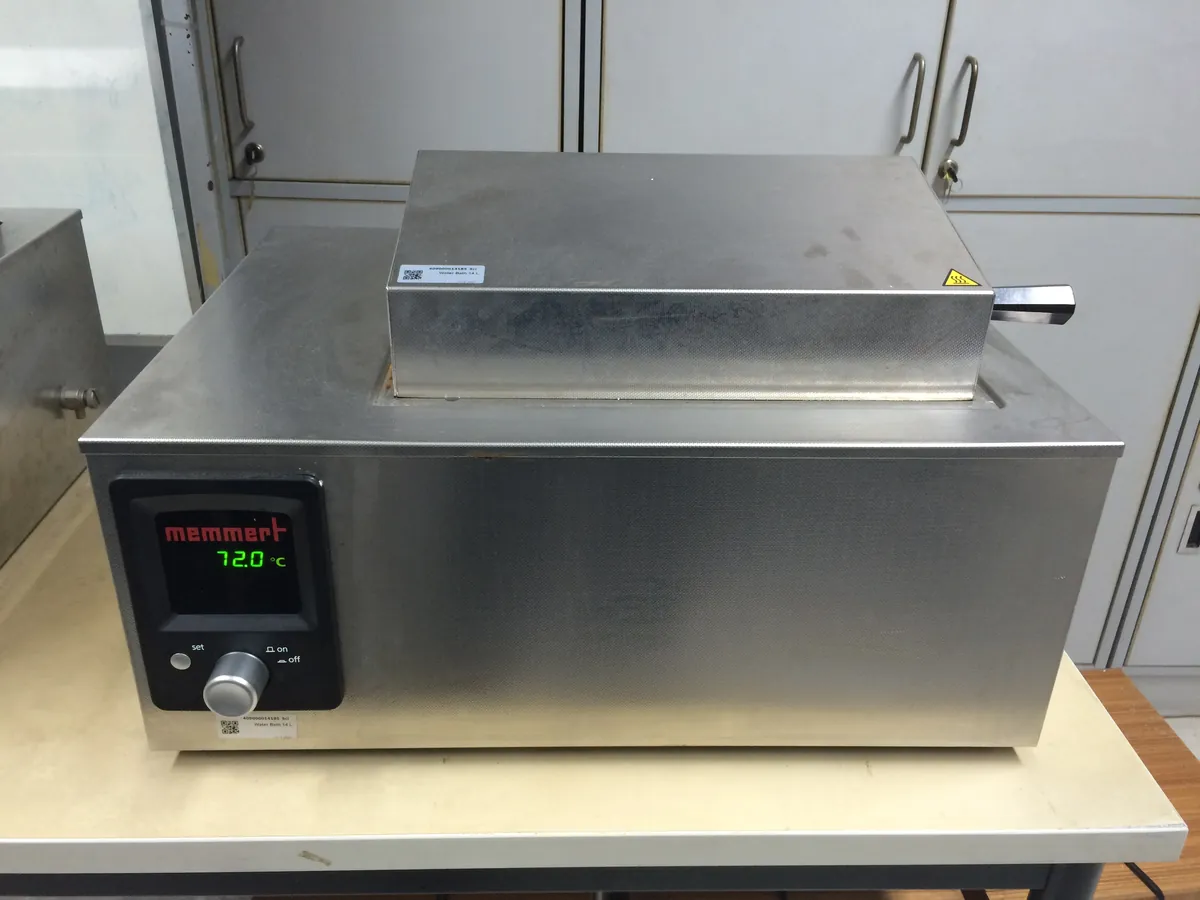
- Water bath
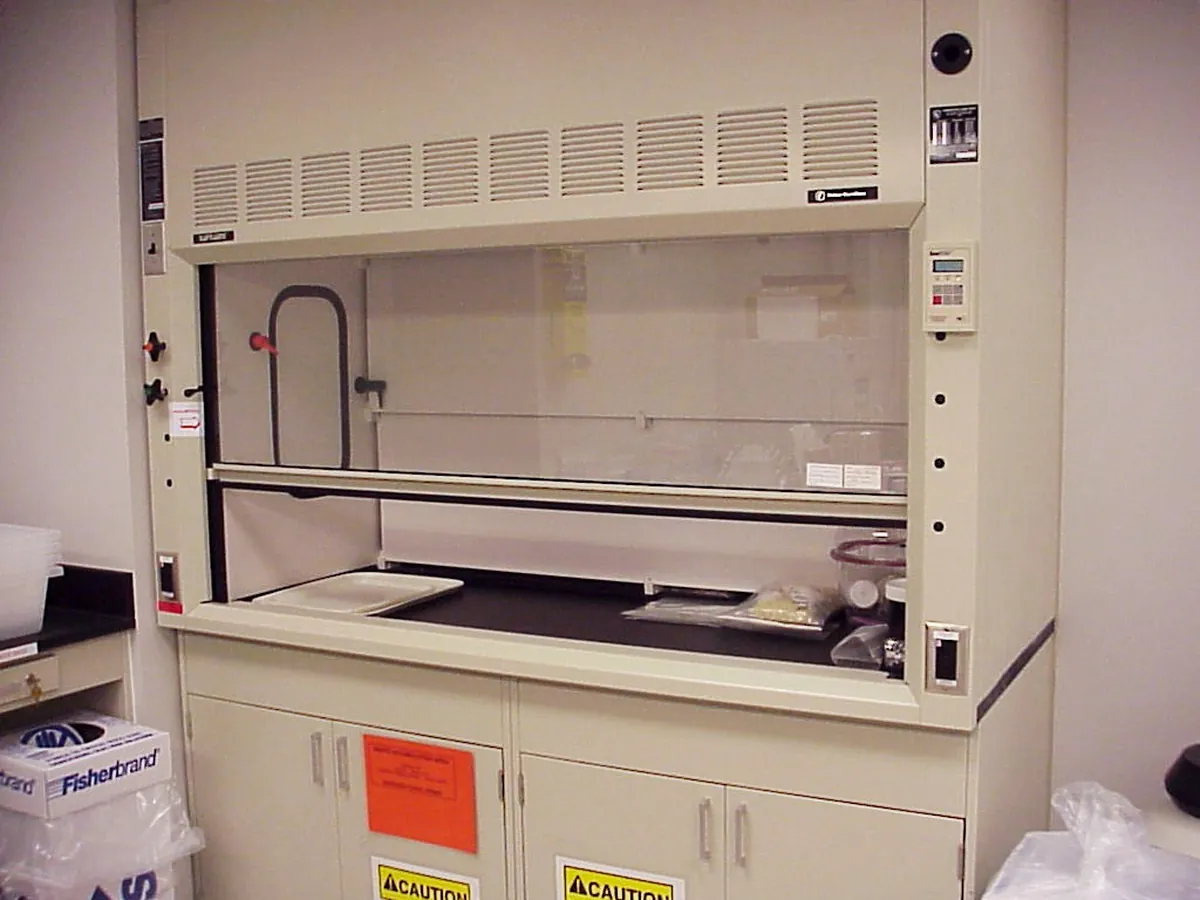
- Fume hood
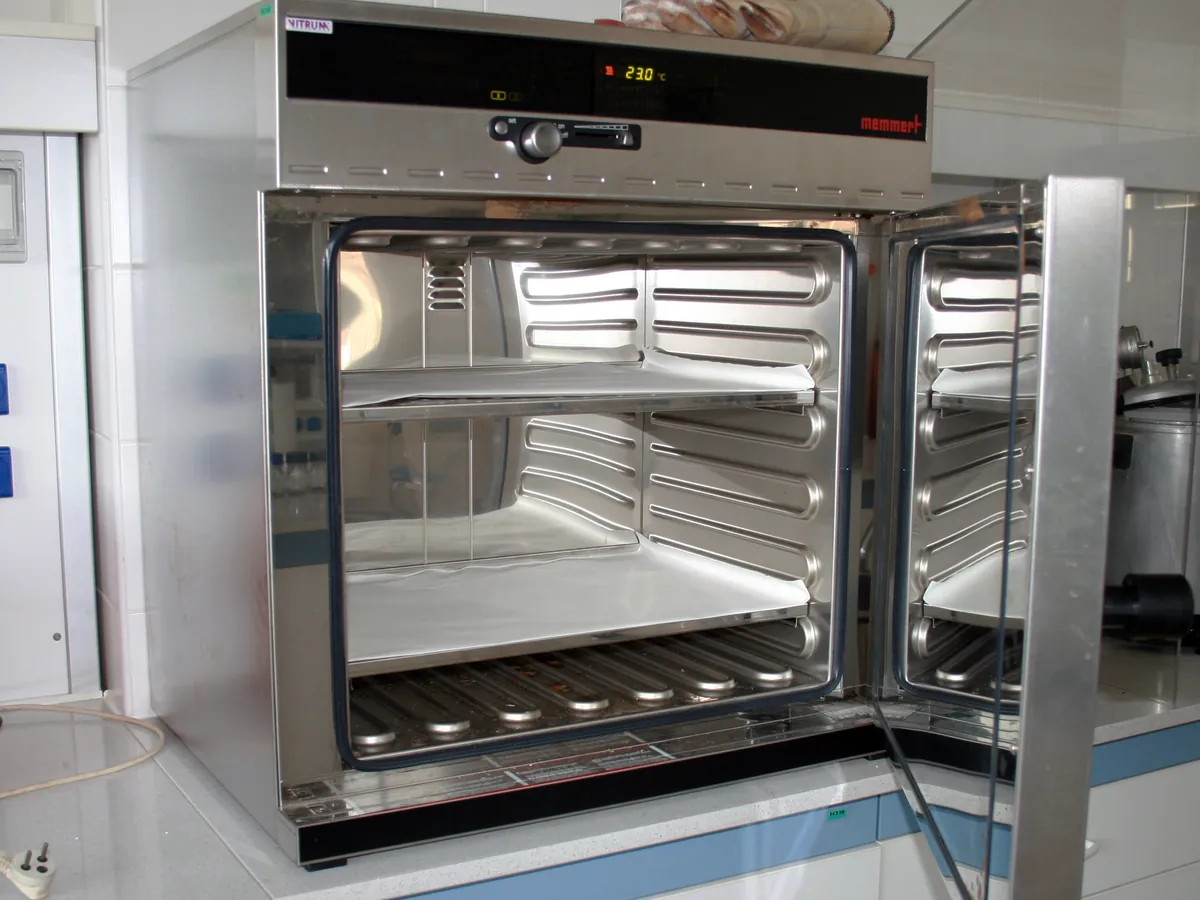
- Hot air oven
Reference: Typical method based on US EPA Method 1664 (n-hexane extractable material, HEM, and silica gel treated HEM, SGT-HEM), APHA Standard Methods 5520 B and IS 3025 (Part 39).
Why this method works
Oil and grease is defined by the method, not by a single compound: it is everything that dissolves in n-hexane at pH below 2 and does not evaporate at about 70–85 °C. This includes mineral oils, animal fats, vegetable oils, waxes and soaps (as fatty acids after acidification). Weighing the residue left after solvent evaporation gives the mass extracted.
Instruments used
Reagents & standards
| Reagent | Grade / specification |
|---|---|
| n-Hexane | Residue-free, 85% minimum purity, residue typically below 1 mg/L |
| Hydrochloric or sulphuric acid | 1 : 1, to acidify samples to pH below 2 |
| Sodium sulphate, anhydrous | Granular, heated to remove organics, to dry the extract |
| Hexadecane / stearic acid spiking solution | 1 : 1 mixture in acetone, for precision and recovery checks |
| Silica gel (for SGT-HEM) | Activated, to remove polar material when non-polar (petroleum) oil is required |
Preparing the sample
- 01
Collect & preserve
Collect 1 L in a glass bottle, acidify to pH < 2, keep chilled.
- 02
Extract
Extract three times with 30 mL n-hexane in a separatory funnel.
- 03
Dry
Pass the combined extract through anhydrous sodium sulphate.
- 04
Evaporate
Evaporate the hexane from a weighed flask in a water bath at about 85 °C.
- 05
Desiccate
Cool in a desiccator.
- 06
Weigh
Weigh to constant mass and subtract the blank.
Procedure
- 1Collect a grab sample directly into a wide-mouth glass bottle with a PTFE-lined cap. Do not pre-rinse the bottle or sub-sample, because oil sticks to the walls.
- 2Acidify to pH below 2 with HCl or H₂SO₄ and keep chilled until analysis, within the holding time in your method (often up to 28 days).
- 3Mark the sample level on the bottle and transfer the whole sample to a 2 L separatory funnel.
- 4Rinse the bottle with 30 mL n-hexane and add it to the funnel. Shake vigorously for 2 minutes with periodic venting, then let the layers separate.
- 5Drain the aqueous (lower) layer back to the bottle. Pass the hexane layer through a funnel of anhydrous sodium sulphate into a pre-weighed boiling flask (dried, desiccated and weighed to constant mass).
- 6Repeat the extraction twice more with fresh 30 mL portions of hexane, combining extracts in the flask. If an emulsion forms, break it by centrifugation, adding sodium sulphate or gentle stirring.
- 7Evaporate the hexane in a water bath at about 85 °C in a fume hood, using a distillation adapter to recover solvent where possible.
- 8Cool the flask in a desiccator for at least 30 minutes and weigh. Repeat drying (briefly) and weighing until constant mass.
- 9Fill the sample bottle to the mark with water and measure the volume in a measuring cylinder.
- 10Carry a method blank (1 L reagent water, acidified) through all steps.
Standard preparation
- 1Ongoing precision and recovery (OPR): spike 1 L reagent water with the hexadecane / stearic acid solution (for example to about 40 mg/L total) and analyse like a sample; recovery must meet the limits in the method.
- 2Matrix spike: spike a second portion of a sample at a similar level to check extraction efficiency in that matrix.
Notes for analysts
- Volatile hydrocarbons (for example petrol fractions) evaporate with the solvent and are not measured.
- The older Freon-based method is no longer used because Freon depletes the ozone layer; n-hexane results are not always identical to Freon results.
- n-Hexane is highly flammable and neurotoxic: work in a fume hood away from ignition sources.
Method parameters (typical)
| Sample volume | About 1 L (whole bottle) |
|---|---|
| Sample pH | Below 2 |
| Extracting solvent | n-Hexane, 3 × 30 mL |
| Evaporation | Water bath at about 85 °C, in a fume hood |
| Weighing | Analytical balance, 0.1 mg; to constant mass |
System suitability & sequence
| Parameter | Limit |
|---|---|
| Method blank | Typically below the method's minimum level (for EPA 1664 the minimum level is about 5 mg/L) |
| OPR recovery | Within the limits stated in the method |
| Balance check | Daily check with a calibrated weight |
Typical sequence
- 1Method blank
- 2OPR / laboratory control sample
- 3Samples
- 4Matrix spike and matrix spike duplicate (as required)
Calculation with a worked example
Where
- W_s
- Mass of residue from the sample (mg) = final flask mass − tare flask mass
- W_b
- Mass of residue from the method blank (mg)
- V
- Volume of sample extracted (mL)
- 1000
- Converts mL to L
Given
- Tare flask mass
- 95.4321 g
- Flask + residue
- 95.4612 g
- Blank residue W_b
- 0.4 mg
- V
- 1000 mL
Working
- 1
W_s = 95.4612 − 95.4321 = 0.0291 g = 29.1 mg
- 2
W_s − W_b = 29.1 − 0.4 = 28.7 mg
- 3Oil and grease = 28.7 × 1000 ÷ 1000 = 28.7 mg/L
Oil and grease (HEM) = 28.7 mg/L
What result passes
- Compare with your consent limit. For example, the general standards for discharge into inland surface water in India typically set oil and grease at 10 mg/L; check the current notification.
- Report the method used (HEM or SGT-HEM) because results are method-defined.
- Flag results if the blank, OPR or matrix spike fails.
Validation parameters (ICH Q2(R2))
| Parameter | Typical requirement |
|---|---|
| Initial precision and recovery (IPR) | Four spiked reagent water replicates meeting the method's recovery and RSD limits |
| Method detection limit | Determined by each lab; EPA 1664 quotes about 1.4 mg/L |
| Matrix effects | Matrix spike recovery for each sample type |
Run this method in LimsPulse: specifications and STPs under version control, results calculated and checked against limits, and a signed Certificate of Analysis.