Metals and Trace Elements in Drinking Water by ICP-MS
Acid-preserved water is introduced into an argon plasma that atomises and ionises the elements. The mass spectrometer separates the ions by mass-to-charge ratio and counts them. One run measures dozens of elements at µg/L (ppb) or lower levels.
- Environmental & water
- Inductively coupled plasma mass spectrometry with internal standards and collision/reaction cell
- ICP-MS
- Lab water system
- Micropipette
- Analytical balance
Reference: Typical method based on US EPA Method 200.8 and APHA Standard Methods 3125 (metals by ICP-MS). Follow your validated SOP.
Why this method works
The plasma (about 6000–10 000 K) converts dissolved elements into singly charged positive ions. Ions are extracted through cones into a vacuum, pass through a collision/reaction cell that removes polyatomic interferences (for example ⁴⁰Ar³⁵Cl⁺ on ⁷⁵As⁺), and are separated by a quadrupole mass filter. Counts are converted to concentration with an external calibration; internal standards (such as Sc, Ge, Rh, In, Tb, Bi) added to every solution correct for drift and matrix suppression.
Instruments used
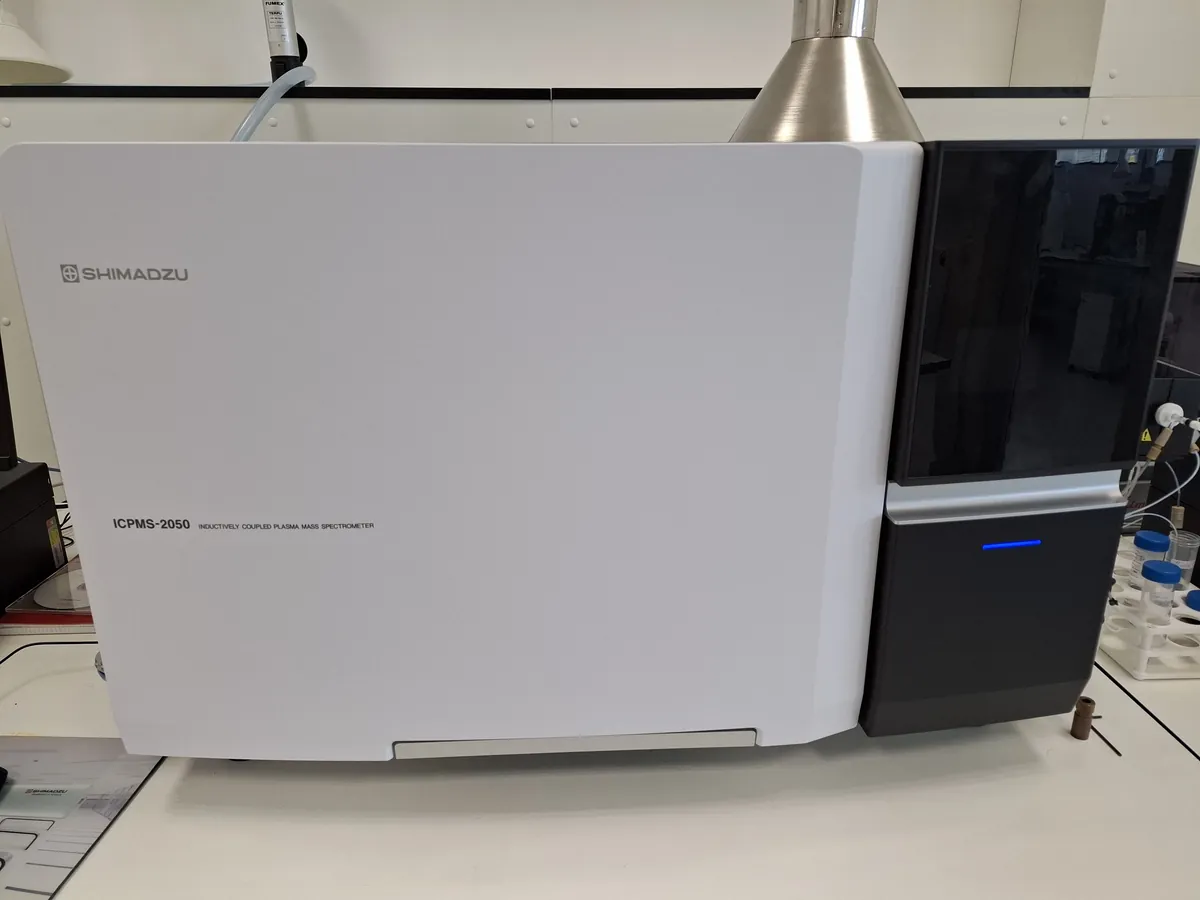
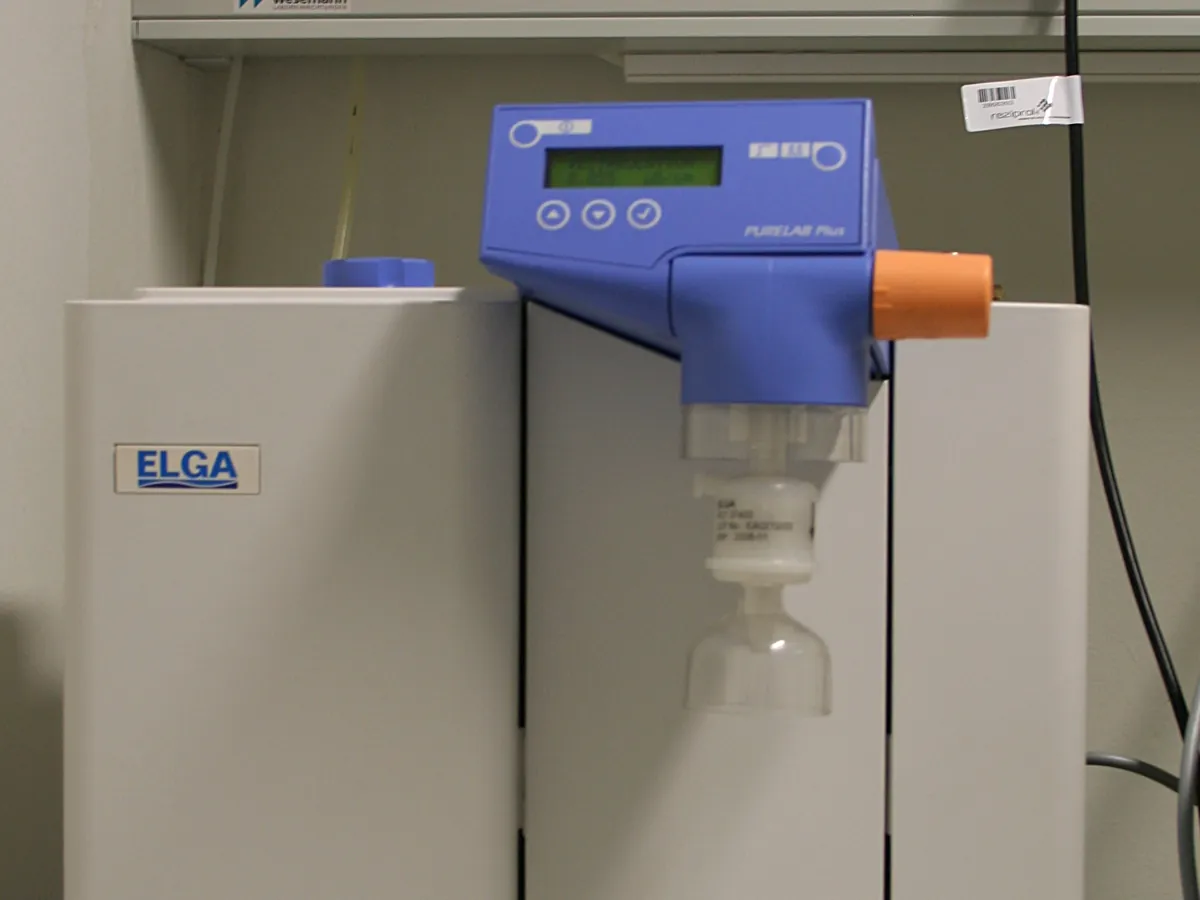
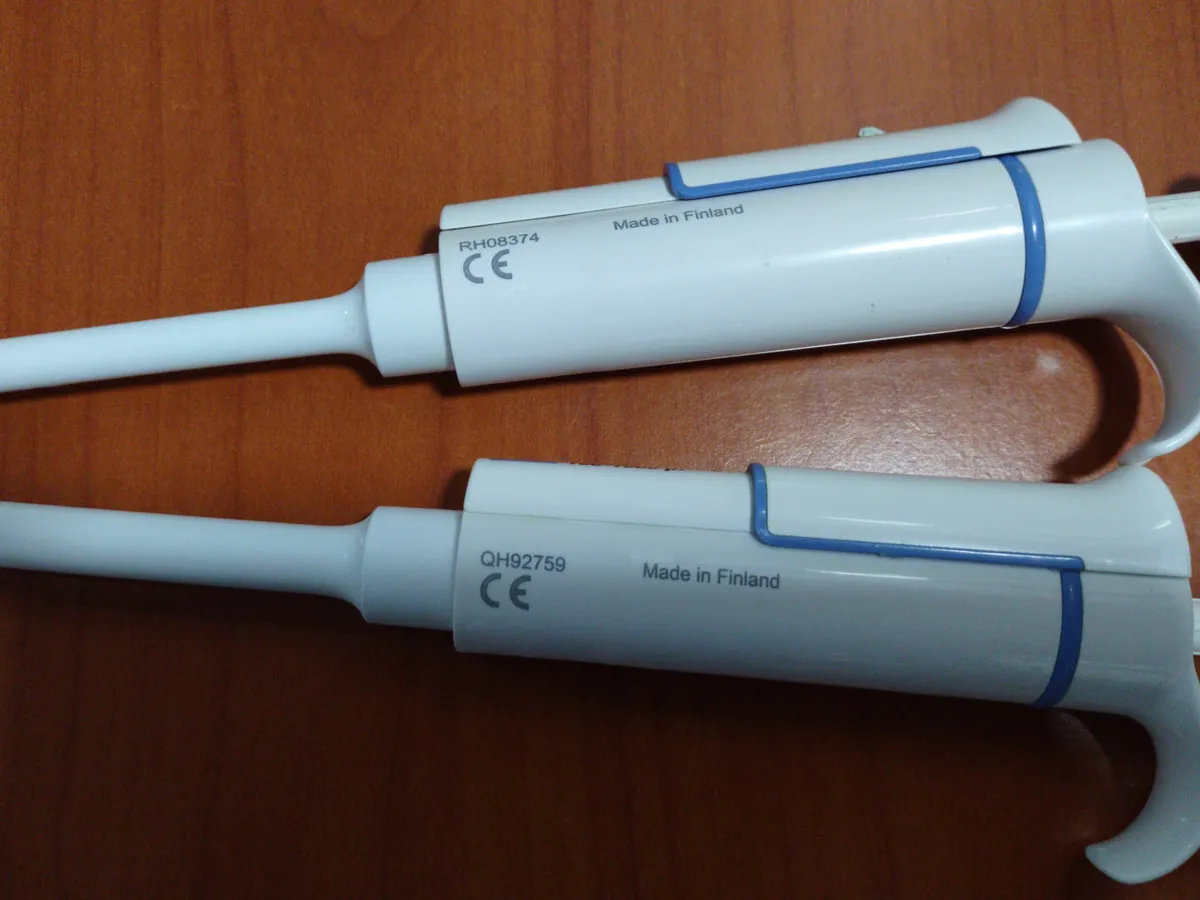
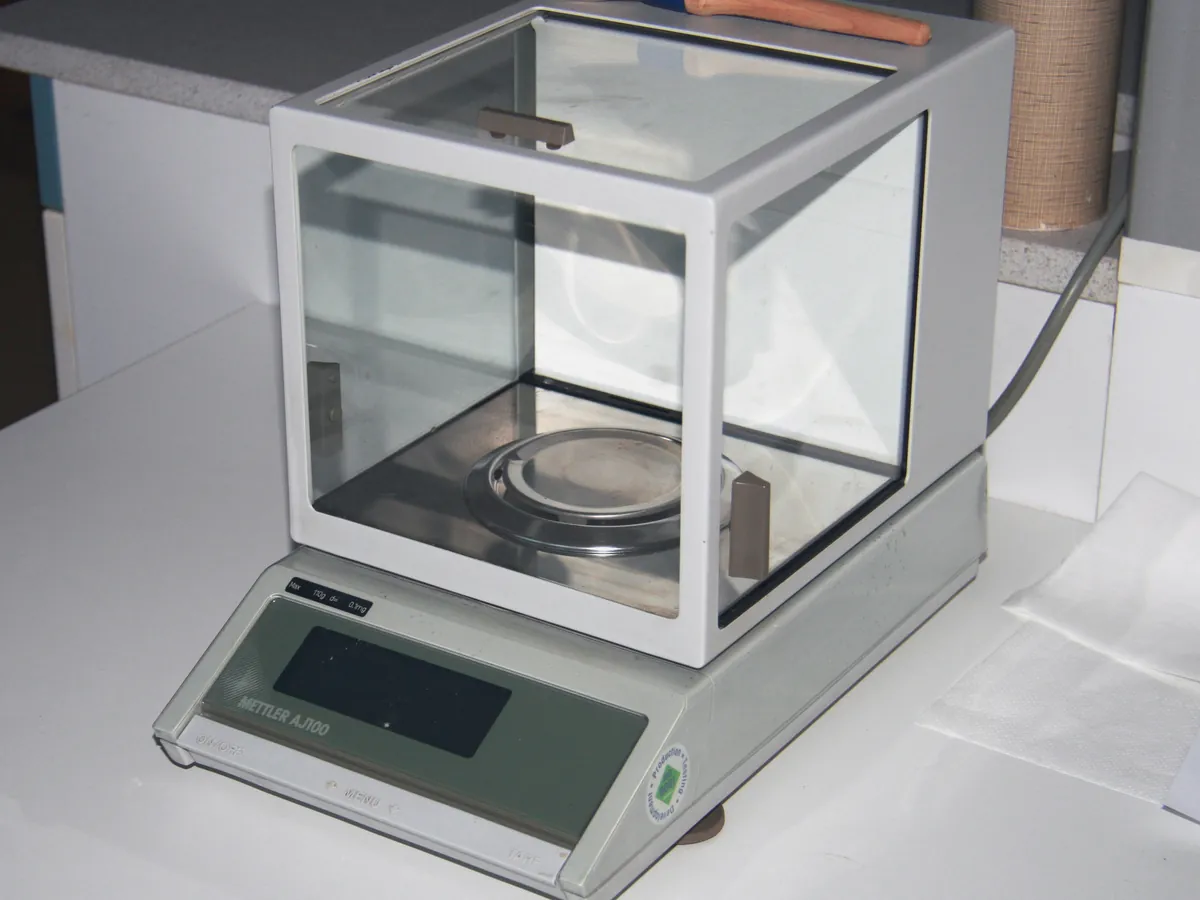
Reagents & standards
| Reagent | Grade / specification |
|---|---|
| Nitric acid | Ultrapure (trace-metal grade) HNO₃ |
| Hydrochloric acid | Ultrapure HCl, if required to stabilise Hg and some elements |
| Calibration standards | Certified multi-element standards, matrix-matched (e.g. 1% HNO₃) |
| Internal standard mix | e.g. Sc, Ge, Rh, In, Tb, Bi — added online or to every solution |
| Tuning solution | As per manufacturer (e.g. Li, Co, Y, Ce, Tl) |
| Reagent water | Type I (≥ 18 MΩ·cm) |
Preparing the sample
- 01
Collect
Acid-washed plastic bottle; preserve with HNO₃ to pH < 2.
- 02
Hold
Up to 6 months for most metals (shorter for Hg).
- 03
Digest?
Total recoverable: mild acid digestion if turbidity > 1 NTU.
- 04
Add IS
Internal standards to every solution.
- 05
Run
Tune, calibrate, QC, then samples.
Procedure
- 1Collect samples in acid-washed polyethylene or PTFE bottles. Preserve with ultrapure HNO₃ to pH below 2 at collection or on receipt (then wait at least 16 hours before analysis).
- 2Most metals are stable for up to 6 months when acidified; mercury has a shorter holding time and may need HCl or other stabiliser — follow your SOP.
- 3For dissolved metals, filter through 0.45 µm before acidifying. For 'total recoverable' metals in samples with turbidity above about 1 NTU, carry out a mild nitric/hydrochloric acid digestion; clear drinking water with turbidity below 1 NTU can often be analysed directly after acidification.
- 4Tune the instrument (sensitivity, oxide and doubly charged ratios, mass calibration) before analysis.
- 5Calibrate with a blank and at least three standards covering the reporting range. Add internal standards to all solutions.
- 6Run QC: initial calibration verification (independent source), blanks, laboratory fortified blank, matrix spike and duplicate, and continuing calibration checks every 10 samples.
Standard preparation
- 1Prepare calibration standards from certified stocks by serial dilution in 1% HNO₃ (plus HCl if used), e.g. 0, 1, 5, 10, 50 µg/L for trace elements and higher for Fe, Mn, Al, Cu, Zn.
- 2Prepare an independent check standard from a second source for initial calibration verification.
Notes for analysts
- Contamination is the biggest risk at µg/L levels: use acid-washed plastics, powder-free gloves and ultrapure reagents.
- Chloride from the sample or HCl forms ArCl⁺ at mass 75, which overlaps arsenic; use the collision cell or correction equations.
- Mercury sticks to tubing and can carry over; rinse with a gold- or HCl-containing rinse as per SOP.
Method parameters (typical)
| RF power | Typically 1.3–1.6 kW |
|---|---|
| Plasma gas | Argon |
| Interference removal | Collision cell (helium KED) and/or reaction gas; correction equations as per method |
| Internal standards | Matched by mass and ionisation potential to analytes |
| Typical isotopes | ⁷⁵As, ²⁰⁸Pb (or sum of 206/207/208), ¹¹¹Cd, ⁵²Cr, ²⁰²Hg, ⁶⁰Ni, ⁶³Cu, ⁶⁶Zn, ⁵⁵Mn, ⁵⁶Fe, ²⁷Al, ⁷⁸Se, ²³⁸U |
System suitability & sequence
| Parameter | Limit |
|---|---|
| Calibration | r ≥ 0.995 (or as per SOP) |
| Initial / continuing calibration verification | Typically within ±10% of true value |
| Internal standard recovery | Typically 60–125% of the value in the calibration blank (EPA 200.8 style criterion) |
| Blanks | Below the reporting limit |
| Matrix spike recovery | Typically 70–130% |
Typical sequence
- 1Tune check
- 2Calibration blank + standards
- 3ICV (second source)
- 4ICB
- 5LFB
- 6Samples (10)
- 7CCV + CCB
- 8Matrix spike / duplicate
- 9Repeat CCV every 10 samples
Calculation with a worked example
Where
- C_measured
- Concentration read from the calibration (µg/L), internal-standard corrected
- DF
- Dilution factor (1 for direct analysis)
- C_spiked
- Result of the spiked sample (µg/L)
- C_unspiked
- Result of the unspiked sample (µg/L)
- C_added
- Concentration of analyte added (µg/L)
Given
- Lead in sample
- 2.78 µg/L (DF = 1)
- Spike added
- 5.0 µg/L
- Spiked sample result
- 7.62 µg/L
Working
- 1Recovery = (7.62 − 2.78) ÷ 5.0 × 100 = 4.84 ÷ 5.0 × 100 = 96.8%
- 2
Recovery within 70–130%, so the matrix does not bias lead
- 3
Lead = 2.78 µg/L = 0.0028 mg/L
Lead = 0.0028 mg/L (below the IS 10500 limit of 0.01 mg/L); matrix spike recovery 96.8%
What result passes
- As per IS 10500:2012 (commonly quoted values; check the current edition and amendments): arsenic 0.01 mg/L, lead 0.01 mg/L, cadmium 0.003 mg/L, mercury 0.001 mg/L, total chromium 0.05 mg/L.
- Limits for iron, manganese, aluminium, copper, zinc, nickel, selenium and uranium are also given in IS 10500; some have been revised by amendment, so always check the current version.
- WHO guideline values include arsenic 0.01 mg/L, lead 0.01 mg/L and cadmium 0.003 mg/L.
Validation parameters (ICH Q2(R2))
| Parameter | Typical requirement |
|---|---|
| LOD / LOQ | From replicate blanks; must be well below the regulatory limit (commonly ≤ one-tenth of the limit) |
| Accuracy | Certified reference water and spike recoveries |
| Precision | Duplicates and replicate spikes |
| Linearity | Across the reporting range for each element |
Run this method in LimsPulse: specifications and STPs under version control, results calculated and checked against limits, and a signed Certificate of Analysis.