Biochemical Oxygen Demand (BOD5) by the Dilution Method
Measures the dissolved oxygen used by micro-organisms to break down the organic matter in a sample over 5 days at 20 °C in the dark. The sample is diluted with aerated, nutrient-rich dilution water, seeded with micro-organisms if needed, and DO is measured at the start and end.
- Environmental & water
- Dilution and seeding, 5-day incubation at 20 °C, DO by membrane / optical probe or Winkler titration
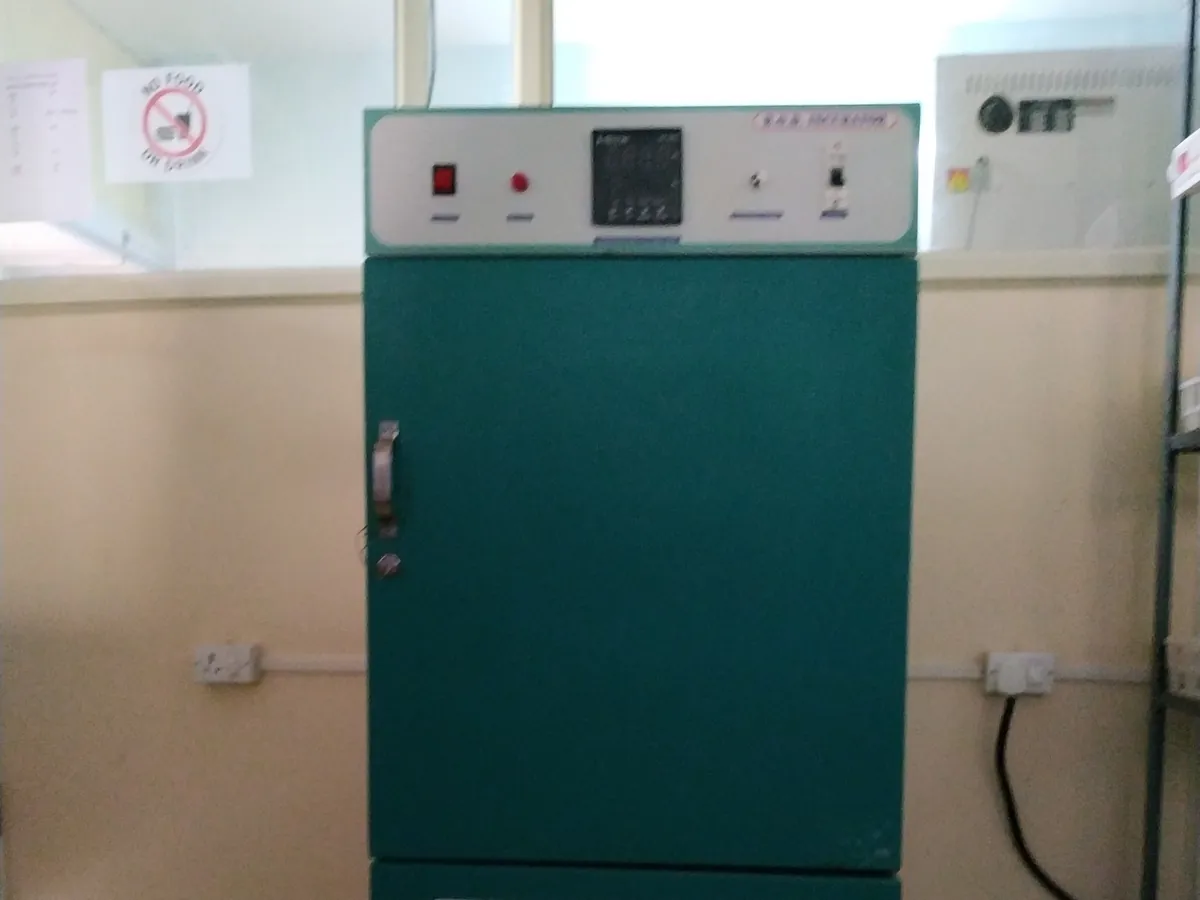
- Incubator
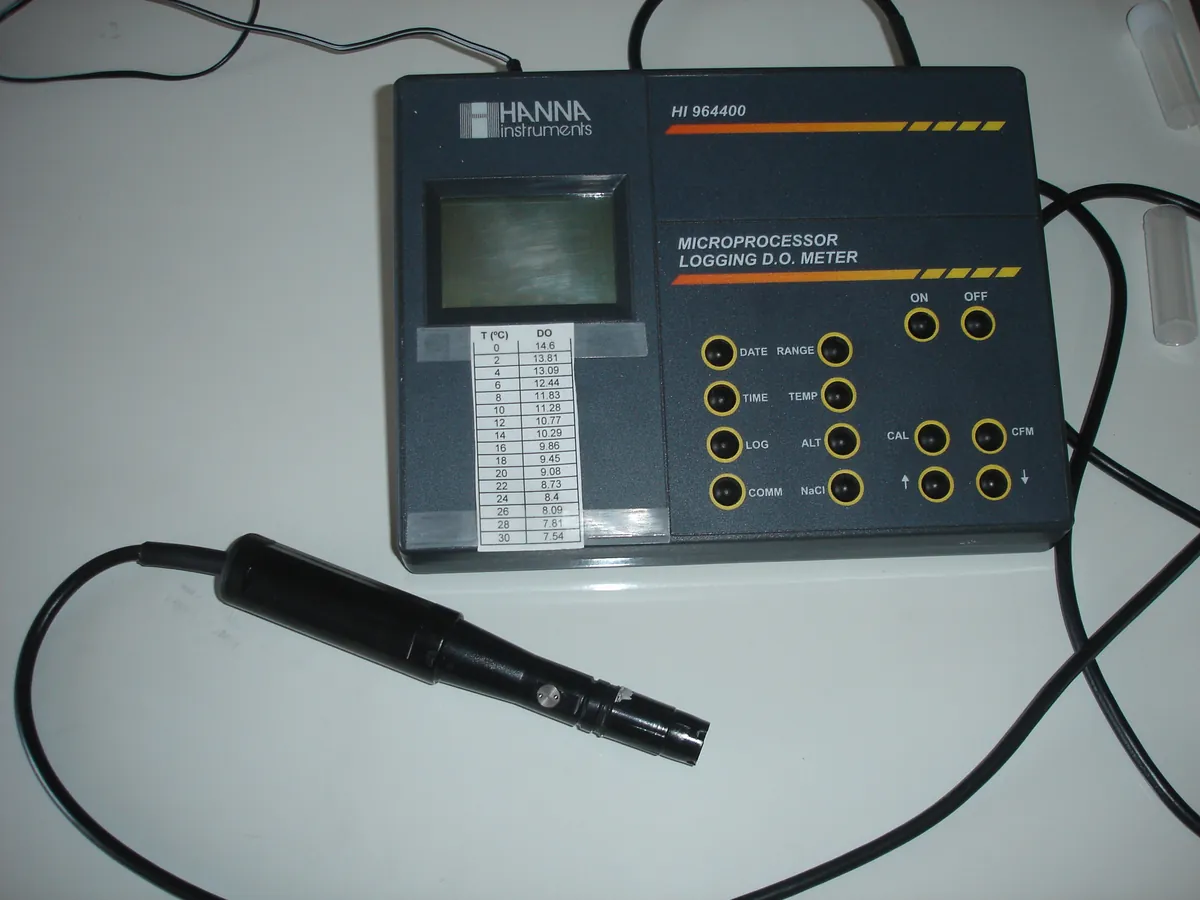
- DO meter
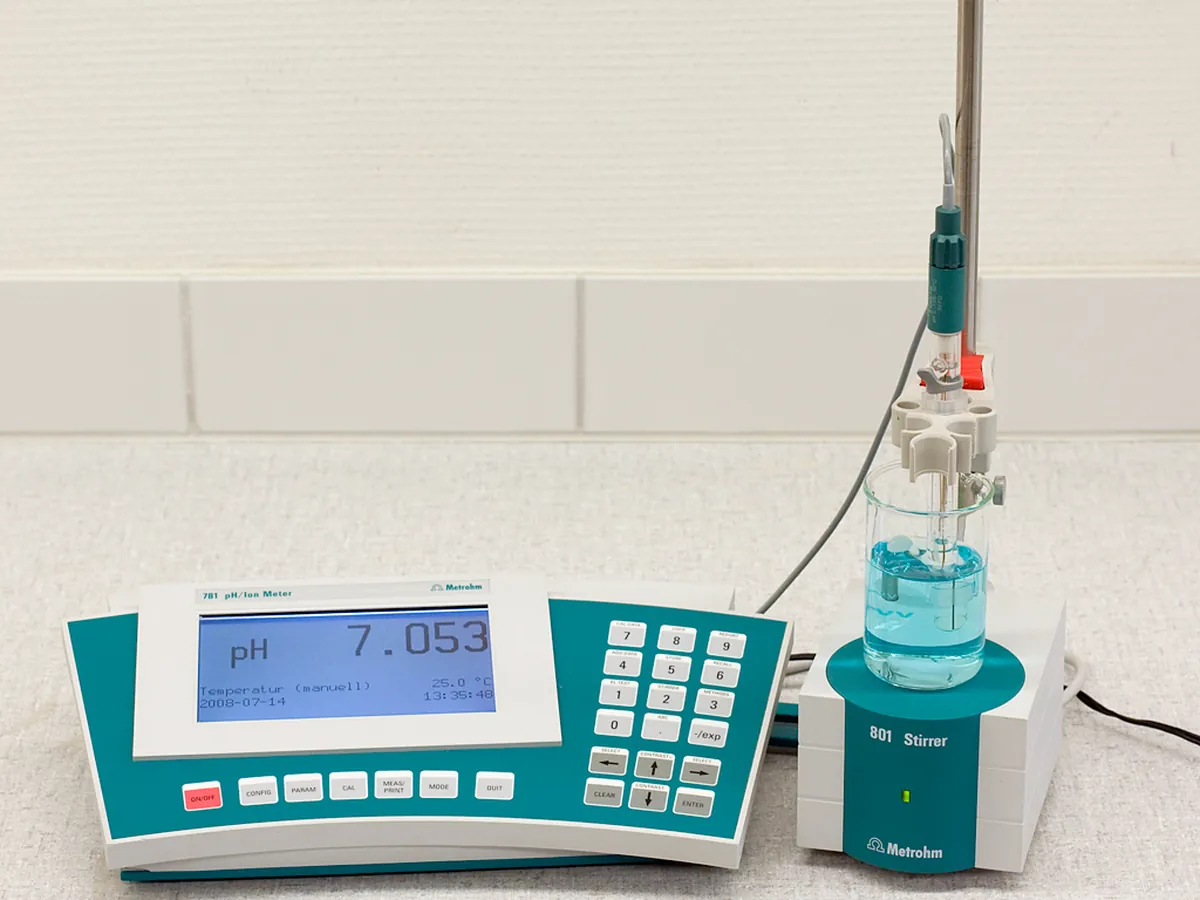
- pH meter
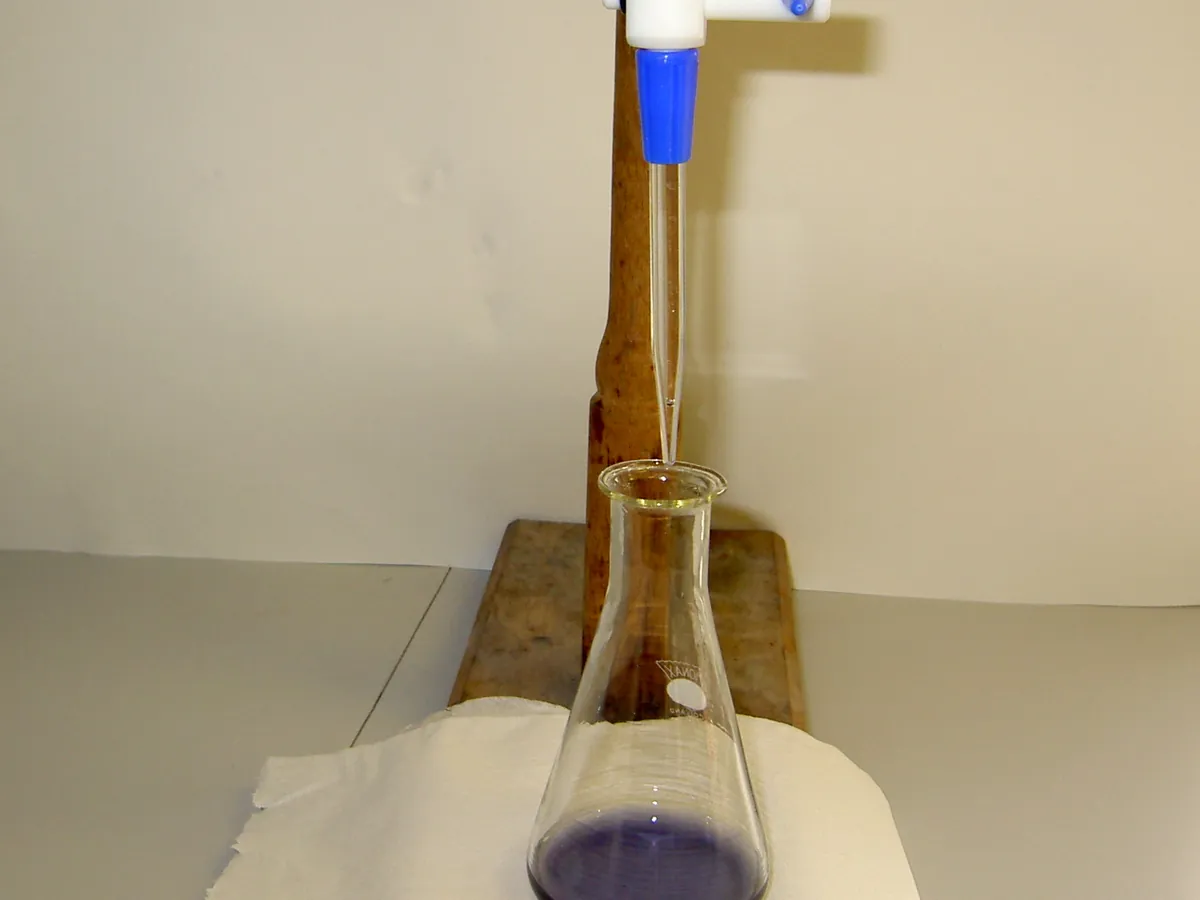
- Burette & glassware
Reference: Typical method based on APHA Standard Methods 5210 B (5-day BOD test) and ISO 5815-1. In India, IS 3025 (Part 44) specifies a 3-day test at 27 °C (BOD₃ at 27 °C) that is widely used for regulatory reporting; follow the method named in your consent or contract.
Why this method works
Bacteria in the bottle oxidise biodegradable organic matter and use dissolved oxygen in the process. Because wastewater usually needs more oxygen than a full bottle of water can hold (about 9 mg/L at 20 °C), the sample is diluted so that a measurable but not total drop in DO occurs. The DO depletion, corrected for oxygen used by the seed, divided by the fraction of sample in the bottle gives the BOD in mg O₂/L.
Instruments used
Reagents & standards
| Reagent | Grade / specification |
|---|---|
| Phosphate buffer | Potassium and sodium phosphates with ammonium chloride, pH about 7.2 |
| Magnesium sulphate solution | MgSO₄·7H₂O nutrient solution |
| Calcium chloride solution | CaCl₂ nutrient solution |
| Ferric chloride solution | FeCl₃·6H₂O nutrient solution |
| Dilution water | High-purity water with 1 mL of each nutrient solution per litre, aerated and held at 20 °C |
| Seed | Settled domestic wastewater, effluent from a biological plant, or a commercial seed preparation |
| Glucose–glutamic acid (GGA) check solution | 150 mg/L glucose + 150 mg/L glutamic acid, dried reagents |
| Nitrification inhibitor (for CBOD) | 2-chloro-6-(trichloromethyl)pyridine (TCMP), when carbonaceous BOD is required |
| Sodium sulphite solution | To remove residual chlorine from chlorinated effluents |
| Acid / alkali | 1 N H₂SO₄ and 1 N NaOH for pH adjustment |
Preparing the sample
- 01
Pre-treat
Bring to about 20 °C, adjust pH to 6.0–8.0, and remove residual chlorine if present.
- 02
Choose dilutions
Use the expected BOD (often about half the COD) to choose at least three dilutions.
- 03
Fill bottles
Add sample, seed and dilution water to 300 mL BOD bottles.
- 04
Initial DO
Measure DO in each bottle (D₁) and stopper without air bubbles.
- 05
Incubate
Incubate in the dark at 20 ± 1 °C for 5 days.
- 06
Final DO
Measure DO again (D₂) and calculate BOD from valid dilutions.
Procedure
- 1Start the test as soon as possible after collection, typically within 6 hours, and not more than 24 hours if the sample has been kept chilled, as defined in your method.
- 2Bring the sample to 20 ± 3 °C. If it is supersaturated with oxygen, shake or aerate it to remove the excess.
- 3Check pH; if outside 6.0–8.0, neutralise with 1 N H₂SO₄ or NaOH, without diluting the sample by more than about 0.5%.
- 4Check for residual chlorine; if present, add the calculated volume of sodium sulphite solution.
- 5Prepare dilution water: add 1 mL each of phosphate buffer, MgSO₄, CaCl₂ and FeCl₃ solutions per litre and aerate; keep at 20 °C.
- 6From the expected BOD, choose at least three dilutions that should leave at least 1 mg/L DO and use at least 2 mg/L. For example, for an expected BOD of about 200 mg/L, use 3, 6 and 12 mL of sample in 300 mL bottles.
- 7Pipette the sample into labelled 300 mL BOD bottles. If the sample lacks active micro-organisms (for example industrial or disinfected effluent), add the same volume of seed to each (for example 2 mL).
- 8Fill bottles with dilution water, leaving no air bubbles. Measure initial DO (D₁) with a calibrated DO probe or by Winkler titration on a duplicate bottle.
- 9Set up dilution water blanks, seed control bottles (seed alone at several volumes, for example 10 mL) and a GGA check bottle.
- 10Stopper, add a water seal and cap, and incubate in the dark at 20 ± 1 °C for 5 days ± 6 hours.
- 11After incubation measure final DO (D₂) in every bottle.
Standard preparation
- 1GGA check: dry glucose and glutamic acid at 103 °C for 1 hour, prepare 150 mg/L of each, and test 6 mL in 300 mL with seed. The expected BOD is typically about 198 ± 30.5 mg/L, as given in Standard Methods.
- 2Seed control: set up seed alone at volumes that give a 40–70% DO drop and calculate the DO uptake per mL of seed.
- 3Dilution water blank: dilution water only, incubated with the samples.
Notes for analysts
- BOD measures only biodegradable organic matter; it is normally lower than COD for the same sample. The BOD : COD ratio indicates how biodegradable a wastewater is.
- Nitrifying bacteria can oxidise ammonia and add to the oxygen demand. Add a nitrification inhibitor when carbonaceous BOD (CBOD) is required.
- Toxic substances (metals, residual chlorine, biocides) can inhibit bacteria and make BOD falsely low; if BOD rises with greater dilution, suspect toxicity.
- Never cross-contaminate bottles: rinse them thoroughly and avoid detergent residues.
Method parameters (typical)
| Bottle volume | 300 mL BOD bottles with ground-glass stoppers |
|---|---|
| Incubation | 20 ± 1 °C, in the dark, 5 days ± 6 hours |
| Sample pH | 6.0–8.0 before dilution |
| Valid DO depletion | At least 2.0 mg/L |
| Valid residual DO | At least 1.0 mg/L |
| DO measurement | Calibrated membrane or luminescent DO probe, or Winkler titration (azide modification) |
System suitability & sequence
| Parameter | Limit |
|---|---|
| Dilution water blank depletion | Typically not more than 0.2 mg/L in 5 days |
| GGA check | Typically 198 ± 30.5 mg/L (or your lab's control limits) |
| Seed correction | Seed adds typically about 0.6–1.0 mg/L DO uptake in the sample bottles |
| Incubator temperature | 20 ± 1 °C recorded daily |
Typical sequence
- 1Dilution water blank (×2)
- 2Seed controls (2–3 volumes)
- 3GGA check
- 4Sample dilution 1 (low volume)
- 5Sample dilution 2
- 6Sample dilution 3 (high volume)
- 7Duplicate of one sample dilution
Calculation with a worked example
Where
- D₁
- DO of the diluted sample immediately after preparation (mg/L)
- D₂
- DO of the diluted sample after 5 days at 20 °C (mg/L)
- B₁, B₂
- Initial and final DO of the seed control bottle (mg/L)
- f
- Ratio of seed volume in the sample bottle to seed volume in the seed control bottle
- P
- Decimal fraction of sample in the bottle (sample volume ÷ bottle volume)
Given
- Sample volume in 300 mL bottle
- 6.0 mL, so P = 6 ÷ 300 = 0.020
- D₁ / D₂
- 8.6 mg/L / 4.2 mg/L
- Seed in sample bottle
- 2.0 mL
- Seed control
- 10.0 mL seed; B₁ = 8.8 mg/L, B₂ = 5.0 mg/L
Working
- 1
Sample depletion: D₁ − D₂ = 8.6 − 4.2 = 4.4 mg/L (≥ 2.0 mg/L and residual 4.2 ≥ 1.0 mg/L, so the dilution is valid)
- 2f = 2.0 ÷ 10.0 = 0.20
- 3
Seed control depletion: B₁ − B₂ = 8.8 − 5.0 = 3.8 mg/L
- 4
Seed correction: 3.8 × 0.20 = 0.76 mg/L
- 5BOD₅ = (4.4 − 0.76) ÷ 0.020 = 3.64 ÷ 0.020 = 182 mg/L
BOD₅ = 182 mg/L (report the mean of all valid dilutions)
What result passes
- Report results only from dilutions with at least 2.0 mg/L depletion and at least 1.0 mg/L residual DO.
- Compare with the discharge limit in your consent. For example, the general standards for discharge into inland surface water in India typically set BOD (3 days, 27 °C) at 30 mg/L; check the current notification and your consent.
- Flag results where QC (blank, GGA, seed correction) did not meet limits.
Validation parameters (ICH Q2(R2))
| Parameter | Typical requirement |
|---|---|
| Working range | Typically about 2 mg/L up to several thousand mg/L with suitable dilution |
| Precision | Assessed with GGA replicates and sample duplicates; control-chart the GGA results |
| Accuracy | GGA recovery against the expected value; inter-laboratory proficiency tests |
Run this method in LimsPulse: specifications and STPs under version control, results calculated and checked against limits, and a signed Certificate of Analysis.