Alcoholic strength by distillation and density
Separates the ethanol from sugars, acids and extract by distillation, makes the distillate back up to the original volume at 20 °C, measures its density, and converts density to % vol using the international alcoholometric tables.
- Food & beverage
- Distillation followed by density measurement (oscillating U-tube density meter) and alcoholometric tables
- Density meter
- Analytical balance
- Water bath
- Thermometer / logger
Reference: Typical method based on the OIV method for alcoholic strength by volume, the international alcoholometric tables (OIML R 22) and IS 3752 for alcoholic drinks. Follow your approved method.
Why this method works
A water–ethanol mixture has a density that falls smoothly as the ethanol content rises (water 0.99820 g/mL, ethanol 0.78924 g/mL at 20 °C). Sugars and extract would raise the density and give a falsely low alcohol result, so the alcohol is first distilled off. The distillate, containing all the ethanol, is made up to the same volume as the sample taken, so its alcohol content equals that of the drink. Its density at 20 °C is then looked up in the alcoholometric tables, which give the % vol for each density.
Instruments used
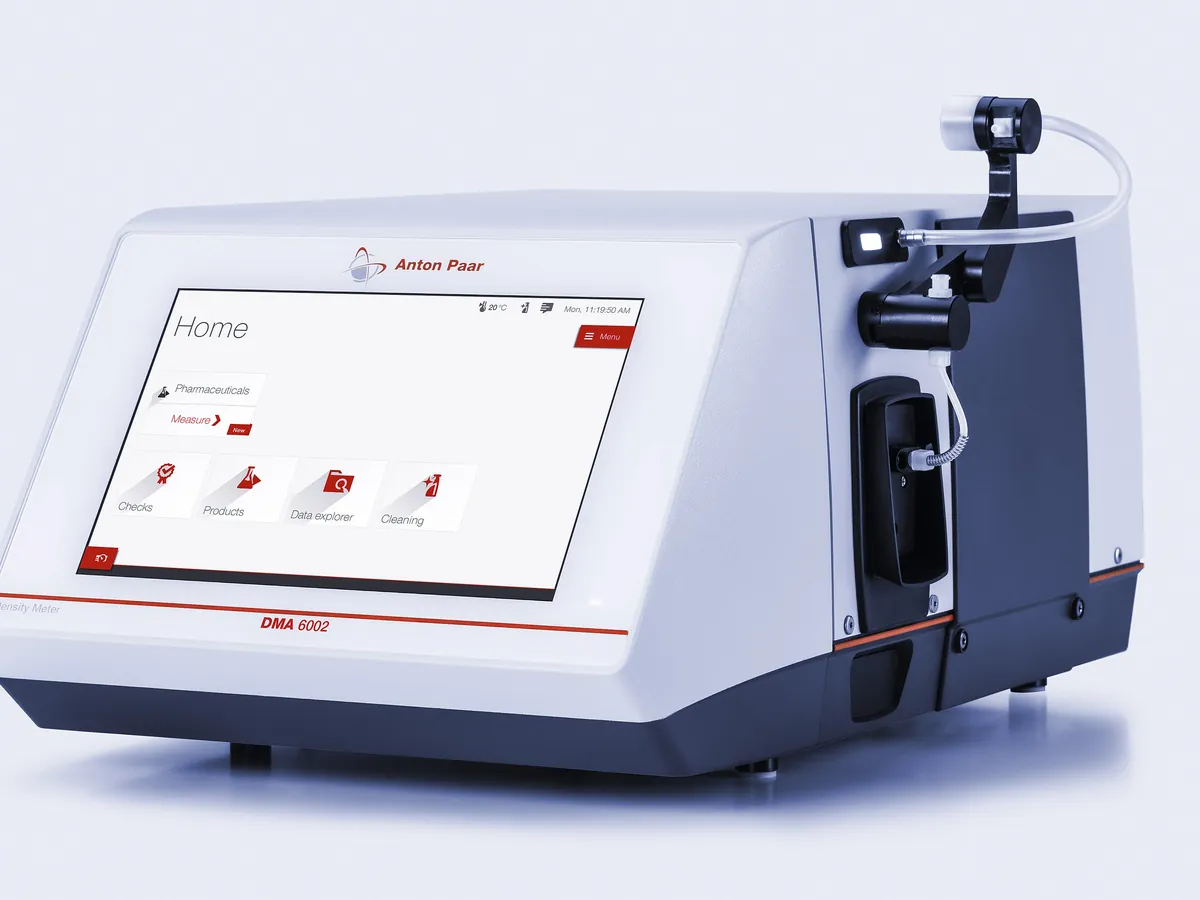

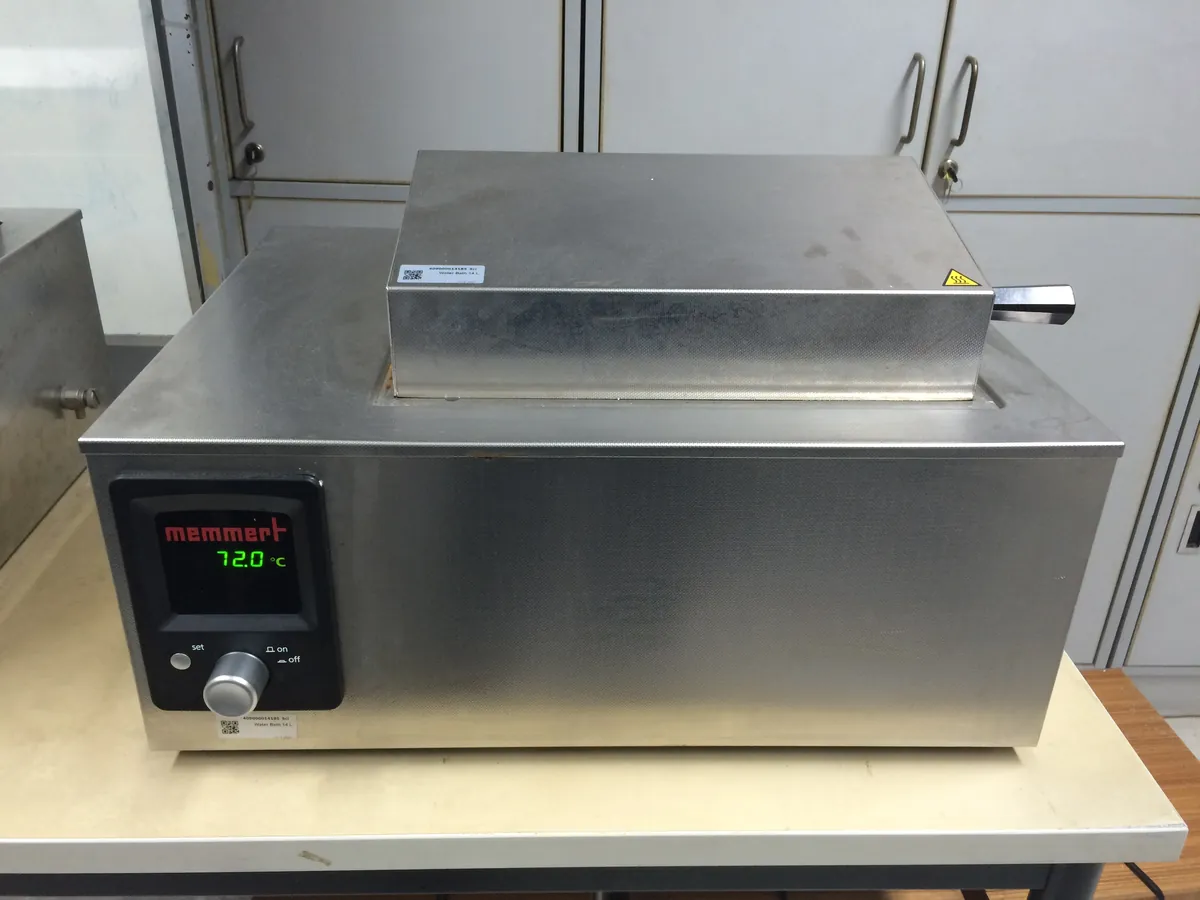
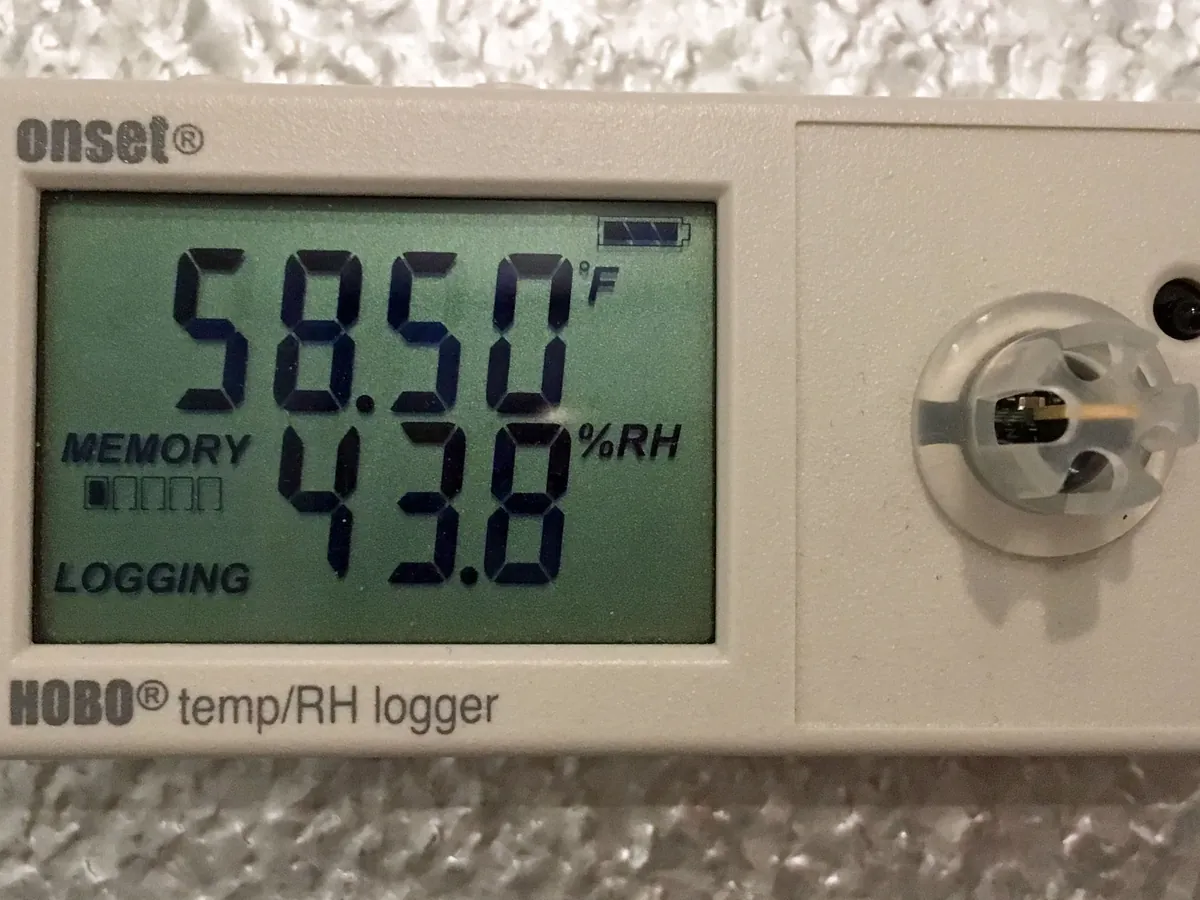
Reagents & standards
| Reagent | Grade / specification |
|---|---|
| Calcium hydroxide suspension | About 2 M, to neutralise volatile acids (wine) before distillation |
| Antifoam | Silicone antifoam for beer and foaming samples |
| Water | Degassed distilled water, for density meter checks and rinsing |
| Density standards | Air and water at 20 °C; certified density standard for verification |
Preparing the sample
- 01
Degas
Remove CO₂ from beer and sparkling wine.
- 02
Measure 200 mL
Fill a 200 mL flask at 20 °C.
- 03
Distil
Transfer with rinsings, neutralise and distil.
- 04
Collect
Collect about 3/4 of the volume in the same flask.
- 05
Make up
Bring to 20 °C, make up to 200 mL and mix.
- 06
Measure density
Read density at 20 °C; convert with tables.
Procedure
- 1Degas beer and sparkling wine by shaking and filtering, or by sonication, so that bubbles do not cause volume errors.
- 2Bring the sample to 20 °C in a water bath and fill a 200 mL volumetric flask exactly to the mark.
- 3Transfer the sample to the distillation flask, rinsing the volumetric flask twice with about 5 mL of water. Add about 10 mL of calcium hydroxide suspension (wine) or a drop of antifoam (beer).
- 4Distil, collecting the distillate in the same 200 mL volumetric flask containing a few mL of water, with the condenser tip under the liquid. Collect roughly three quarters of the original volume.
- 5Bring the distillate to 20 °C in the water bath, make up to the mark with water at 20 °C and mix well.
- 6Inject the distillate into the density meter (calibrated with air and water at 20.00 °C), avoiding bubbles. Record the density to 0.00001 g/mL.
- 7Convert density to alcoholic strength with the international alcoholometric tables (most modern density meters do this automatically). Report the mean of duplicates to 0.1% vol.
Standard preparation
- 1Adjust the density meter with dry air and degassed water at 20.00 °C as per the manufacturer.
- 2Verify with degassed water (0.99820 g/mL at 20 °C) and, if required, a certified water–ethanol standard of known % vol before measuring samples.
Notes for analysts
- How the table works: the alcoholometric tables list, for each step of % vol, the density of a pure water–ethanol mixture at 20 °C. You find where your measured density falls and read across to % vol, interpolating between rows. Higher density means less alcohol.
- The table values in the example are illustrative and rounded; for reporting use the official table, which has finer steps.
- Volume and density are both temperature-sensitive. A 1 °C error in making up the flask changes the result noticeably — always work at 20 °C.
- Clear spirits with no added sugar can sometimes be measured directly without distillation, but liqueurs and wines always need distillation because the extract raises the density.
Method parameters (typical)
| Sample volume | 200 mL measured at 20 °C (some methods use 100 mL) |
|---|---|
| Distillate volume | Made back up to exactly the sample volume at 20 °C |
| Density measurement | Oscillating U-tube density meter at 20.00 ± 0.02 °C, resolution 0.00001 g/mL |
| Conversion | International alcoholometric tables (OIML R 22 / OIV): density at 20 °C → % vol at 20 °C |
| Reporting | % vol at 20 °C, to 0.1% vol |
System suitability & sequence
| Parameter | Limit |
|---|---|
| Water check | 0.99820 g/mL at 20 °C within ± 0.00005 g/mL (or as per your SOP) |
| Duplicates | Typically within 0.1% vol |
Typical sequence
- 1Air and water check
- 2Reference standard (if used)
- 3Distillate replicate 1
- 4Distillate replicate 2
- 5Water check at end
Calculation with a worked example
Where
- ρ
- Measured density of the distillate at 20 °C (g/mL)
- ρ₁, % vol₁
- Table density and strength just below the result (higher density)
- ρ₂, % vol₂
- Table density and strength just above the result (lower density)
Given
- Sample
- Red wine, 200 mL distilled and made back to 200 mL
- ρ (measured, 20 °C)
- 0.98205 g/mL
- Table entry 1
- 12.0% vol ↔ 0.98235 g/mL
- Table entry 2
- 12.5% vol ↔ 0.98178 g/mL
Working
- 1
The measured density 0.98205 lies between the table densities for 12.0% vol (0.98235) and 12.5% vol (0.98178).
- 2
Fraction of the step = (0.98235 − 0.98205) / (0.98235 − 0.98178) = 0.00030 / 0.00057 = 0.526
- 3
% vol = 12.0 + 0.526 × 0.5 = 12.26% vol
Alcoholic strength = 12.3% vol at 20 °C (illustrative; use the full official table or the meter's built-in conversion)
What result passes
- Compare with the labelled alcoholic strength. Labelling rules allow a tolerance that depends on the product (for example, in many markets about ± 0.5% vol for beer and ± 0.8% vol for wine); check the current regulation.
- Spirits usually have a minimum strength in their product definition (for example many whiskies and vodkas at least 37.5–40% vol depending on the market).
Validation parameters (ICH Q2(R2))
| Parameter | Typical requirement |
|---|---|
| Accuracy | Certified water–ethanol reference materials or proficiency test samples |
| Recovery of distillation | Checked by distilling a known ethanol solution; typically ≥ 99.5% |
| Precision | Repeatability typically ≤ 0.1% vol |
| Temperature | Volumetric flasks and density meter controlled at 20 °C |
Run this method in LimsPulse: specifications and STPs under version control, results calculated and checked against limits, and a signed Certificate of Analysis.