Acid value
A weighed oil is dissolved in neutralised solvent and titrated with standard potassium hydroxide to a phenolphthalein end point. The acid value is the mg of KOH needed to neutralise the free acids in 1 g of oil.
- Chemicals & materials
- Acid–base titration (visual indicator or potentiometric)
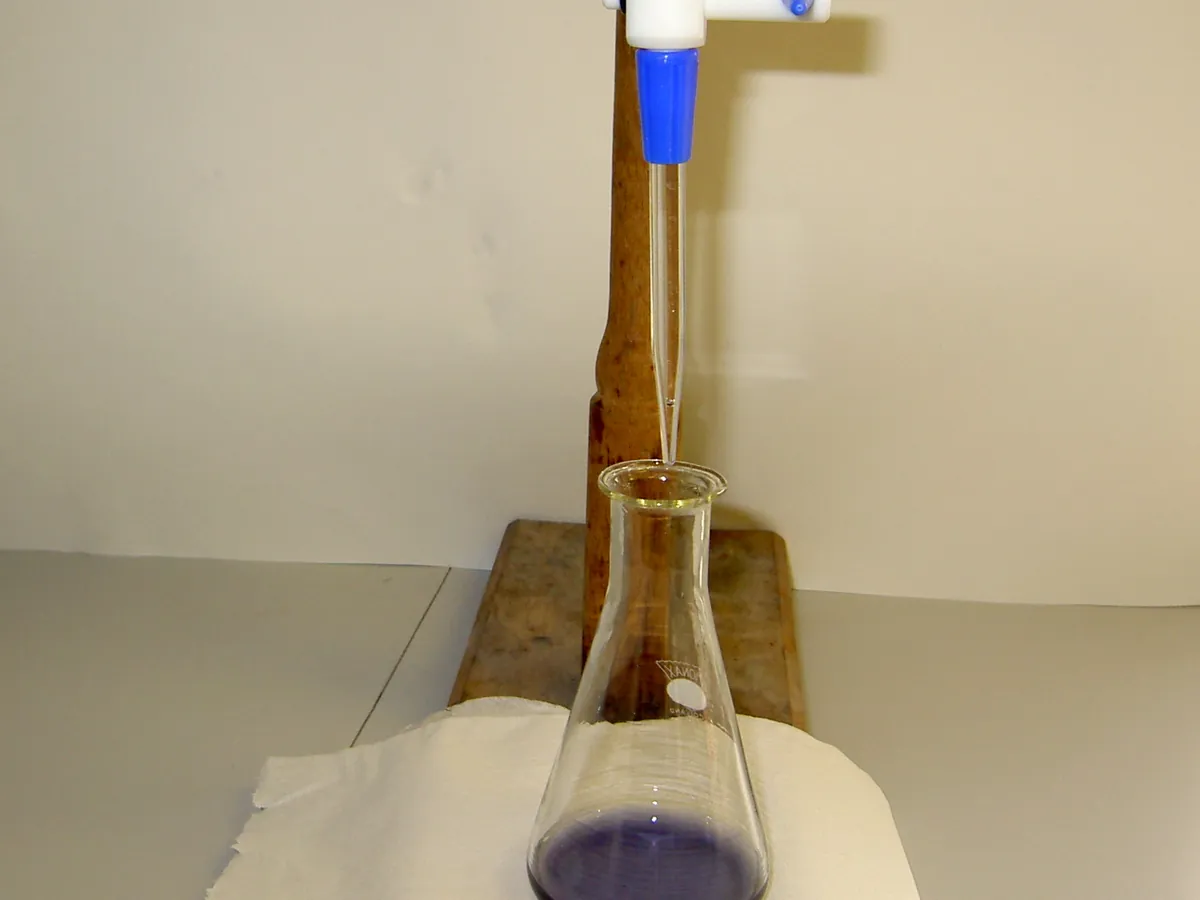
- Burette & glassware
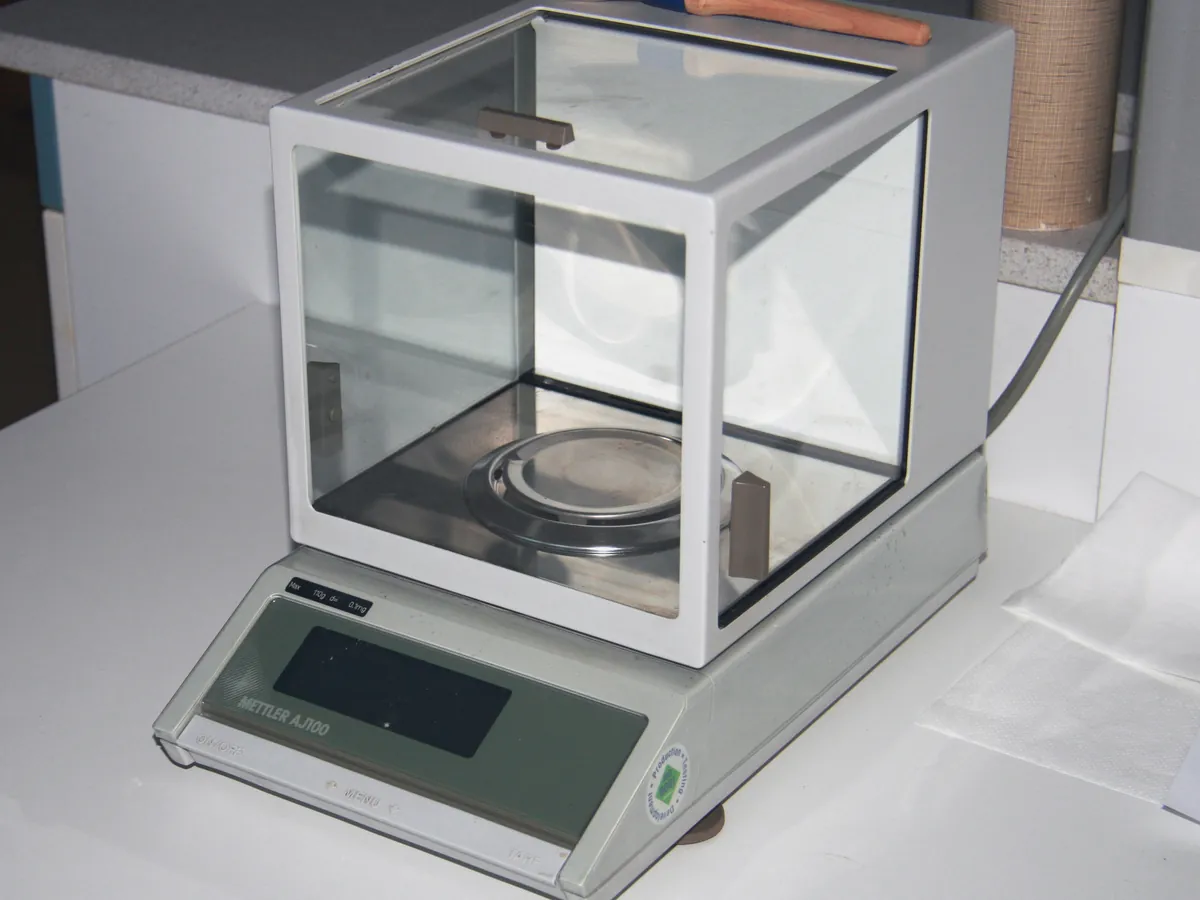
- Analytical balance
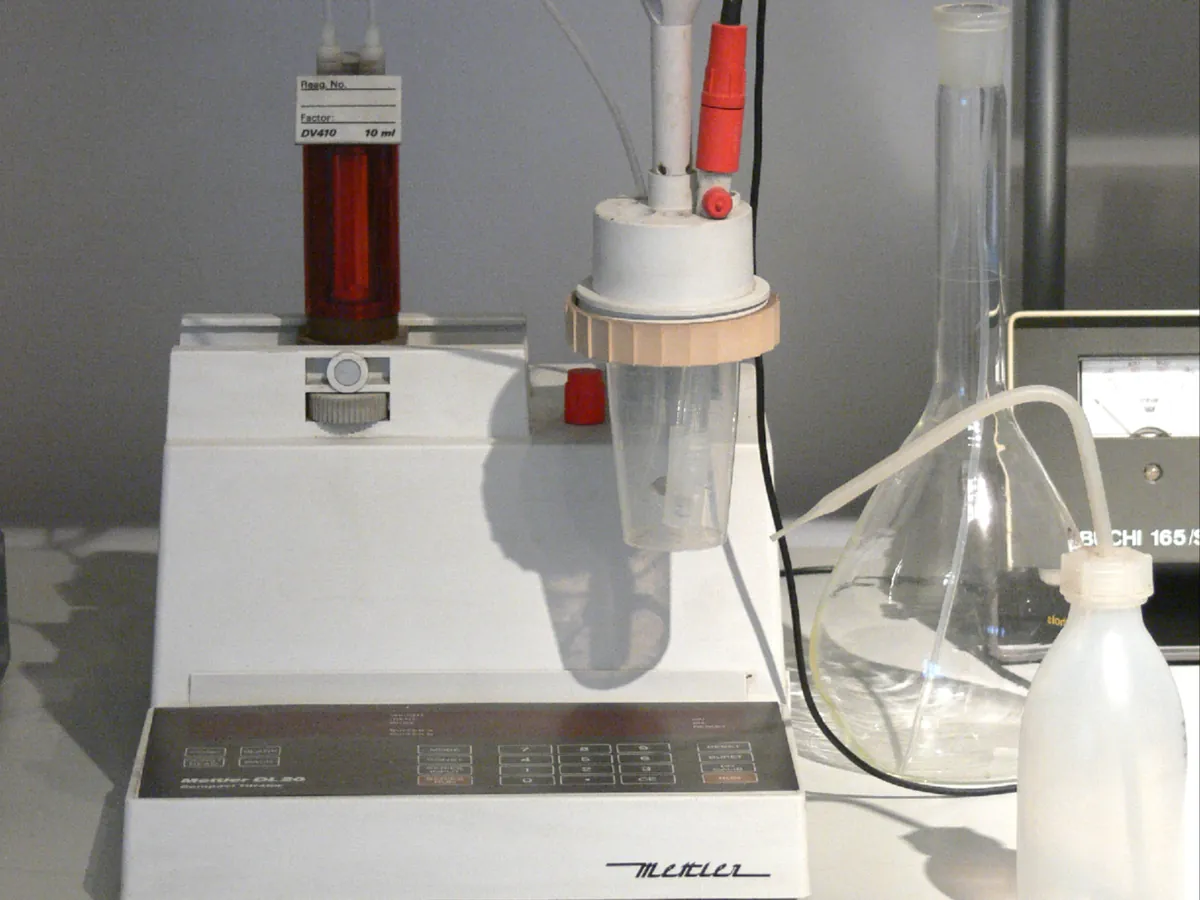
- Potentiometric titrator
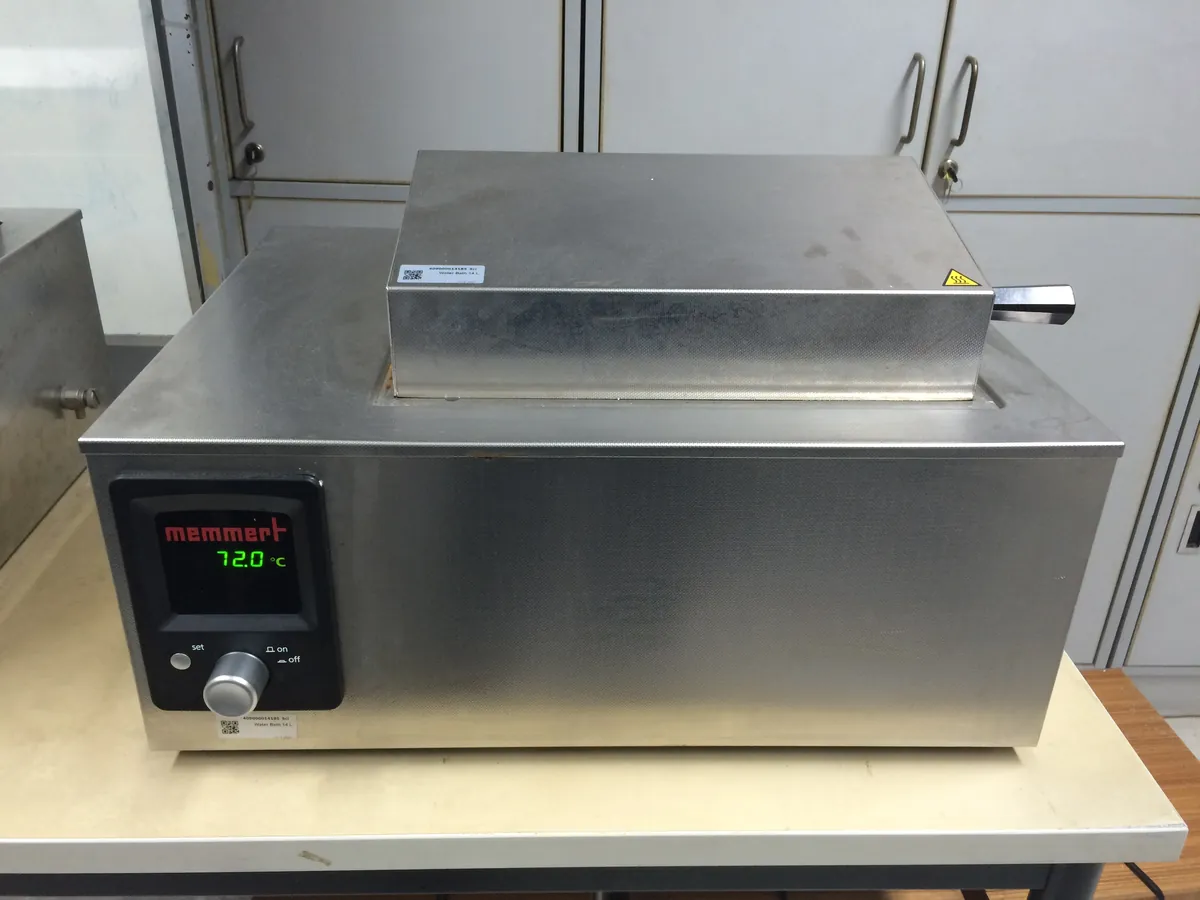
- Water bath
Reference: Typical method based on ISO 660, AOCS Cd 3d-63 and IS 548 (Part 1). Follow your method for solvent and sample mass.
Why this method works
Oils and fats are mostly triglycerides. Hydrolysis by moisture or enzymes releases free fatty acids, which make oil taste rancid and are removed in refining. Free acids react with KOH: RCOOH + KOH → RCOOK + H₂O. Since KOH has a molar mass of 56.1 g/mol, acid value = 56.1 × V × N ÷ W. Free fatty acid as oleic acid (molar mass 282.5) is about half the acid value (FFA % ≈ acid value × 0.503).
Instruments used
Reagents & standards
| Reagent | Grade / specification |
|---|---|
| Solvent | Mixture of ethanol (95%) and diethyl ether 1:1, or hot neutral ethanol, or as the method states; neutralised to faint pink with KOH just before use |
| Titrant | 0.1 N (0.1 mol/L) ethanolic or aqueous potassium hydroxide, standardised |
| Indicator | Phenolphthalein, 1% in ethanol |
Preparing the sample
- 01
Melt & mix
Melt solid fats gently and mix the sample well.
- 02
Weigh
Weigh oil into a conical flask; mass depends on the expected acid value.
- 03
Dissolve
Add neutralised solvent and swirl (warm if needed) to dissolve.
- 04
Titrate
Titrate with 0.1 N KOH to the first permanent pink lasting about 15 s.
Procedure
- 1Choose sample mass from the expected acid value (for example about 5–10 g for refined oils, 1–5 g for crude oils), as the method table gives.
- 2Weigh the sample accurately (to 0.001 g) into a 250 mL conical flask.
- 3Add about 50–100 mL of solvent previously neutralised with KOH to phenolphthalein.
- 4Swirl to dissolve; warm on a water bath if the fat is solid, then titrate while warm.
- 5Titrate with standardised 0.1 N KOH, shaking constantly, to a faint pink that lasts for about 15 s.
- 6For dark oils, titrate potentiometrically or use alkali blue / thymolphthalein indicator.
- 7Analyse in duplicate.
Standard preparation
- 1Standardise the KOH solution against potassium hydrogen phthalate and record its normality (N).
Notes for analysts
- Acid value and FFA % are two ways of expressing the same result; FFA may also be expressed as lauric (coconut, palm kernel) or palmitic (palm oil) acid.
- Dark oils hide the colour change; use a potentiometric end point.
- Neutralise the solvent immediately before use; ethanol absorbs CO₂ and becomes acidic.
Method parameters (typical)
| Titrant | 0.1 N KOH (0.5 N for very acidic oils) |
|---|---|
| End point | Faint pink persisting about 15 s (phenolphthalein) or the inflection point (potentiometric) |
| Sample mass | Chosen so the titre is in a convenient range (for example 1–10 mL) |
| Replicates | Duplicate |
System suitability & sequence
| Parameter | Limit |
|---|---|
| Duplicate agreement | Within the method repeatability limit |
| Titrant | Standardised within its validity period |
Typical sequence
- 1Standardise KOH
- 2Neutralise solvent
- 3Titrate sample in duplicate
Calculation with a worked example
Where
- V
- Volume of KOH used for the sample (mL)
- N
- Normality of the KOH solution (mol/L)
- W
- Mass of sample (g)
- 56.1
- Molar mass of KOH (g/mol)
- 28.2
- Molar mass of oleic acid (282) ÷ 10, to give a percentage
Given
- Sample mass (W)
- 5.012 g
- Titre (V)
- 1.85 mL
- KOH normality (N)
- 0.1012
Working
- 1Acid value = 56.1 × 1.85 × 0.1012 ÷ 5.012
- 2= 10.503 ÷ 5.012 = 2.10 mg KOH/g
- 3FFA as oleic = 28.2 × 1.85 × 0.1012 ÷ 5.012 = 1.05%
Acid value = 2.10 mg KOH/g (FFA ≈ 1.05% as oleic acid)
What result passes
- Compare with the product standard. For example, refined edible oils are commonly limited to about 0.6 mg KOH/g acid value (Codex refined oils), with higher limits for crude, virgin or cold-pressed oils. Check the current Codex / FSSAI / customer specification.
Validation parameters (ICH Q2(R2))
| Parameter | Typical requirement |
|---|---|
| Precision | Repeatability and reproducibility within the method's published limits |
| Accuracy | Recovery of a known amount of oleic or stearic acid added to a low-acid oil |
Run this method in LimsPulse: specifications and STPs under version control, results calculated and checked against limits, and a signed Certificate of Analysis.