Food & proximate analysis
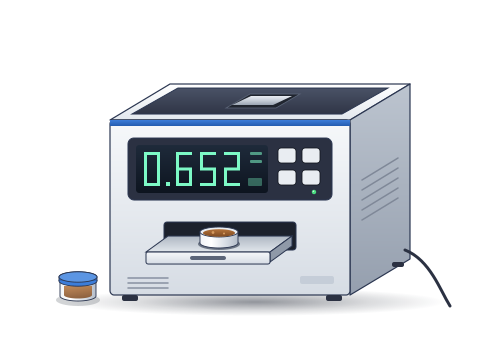
Water activity meter
Measures how much of the water in a food is free to support microbial growth and chemical change, as the ratio of the food's vapour pressure to that of pure water. Read on a scale from 0 to 1.
- Food & beverage
- Confectionery and bakery
- Meat and dairy
- Pet food
- Pharmaceutical
- Cosmetics
TROUBLESHOOTING
Common problems, causes and fixes
Reading drifts and never stabilises
Likely causes
- • Sample still warming or cooling
- • Volatile compounds in the sample
- • Dirty mirror or sensor
What to do
- • Equilibrate sample temperature first
- • Use a volatile-resistant method or sensor
- • Clean the mirror and sensor
Salt standard out of tolerance
Likely causes
- • Contaminated chamber
- • Standard old, dried out or not at temperature
- • Sensor drift
What to do
- • Clean the chamber and re-test
- • Use a fresh, sealed standard at the correct temperature
- • Adjust calibration as the manual allows, or send for service
Duplicates disagree
Likely causes
- • Non-uniform sample (layers, crust and crumb)
- • Sample lost water while preparing
- • Cup overfilled or lid not sealed
What to do
- • Homogenise or test each component separately
- • Prepare quickly in closed containers
- • Fill cups half full and check the seal
Condensation in the chamber
Likely causes
- • Sample warmer than chamber
- • High-aw sample left too long
What to do
- • Cool the sample before loading
- • Dry the chamber and run a dry cup before the next test
Results higher than expected for a dry product
Likely causes
- • Moisture uptake during sampling
- • Contaminated chamber from a previous wet sample
What to do
- • Seal samples immediately after collection
- • Clean and dry the chamber; run a low standard to confirm
In LimsPulse · Calibration Management
Keep every aw meter in control: usage logs, calibration and maintenance schedules, and automatic blocking of overdue instruments.