Construction materials testing
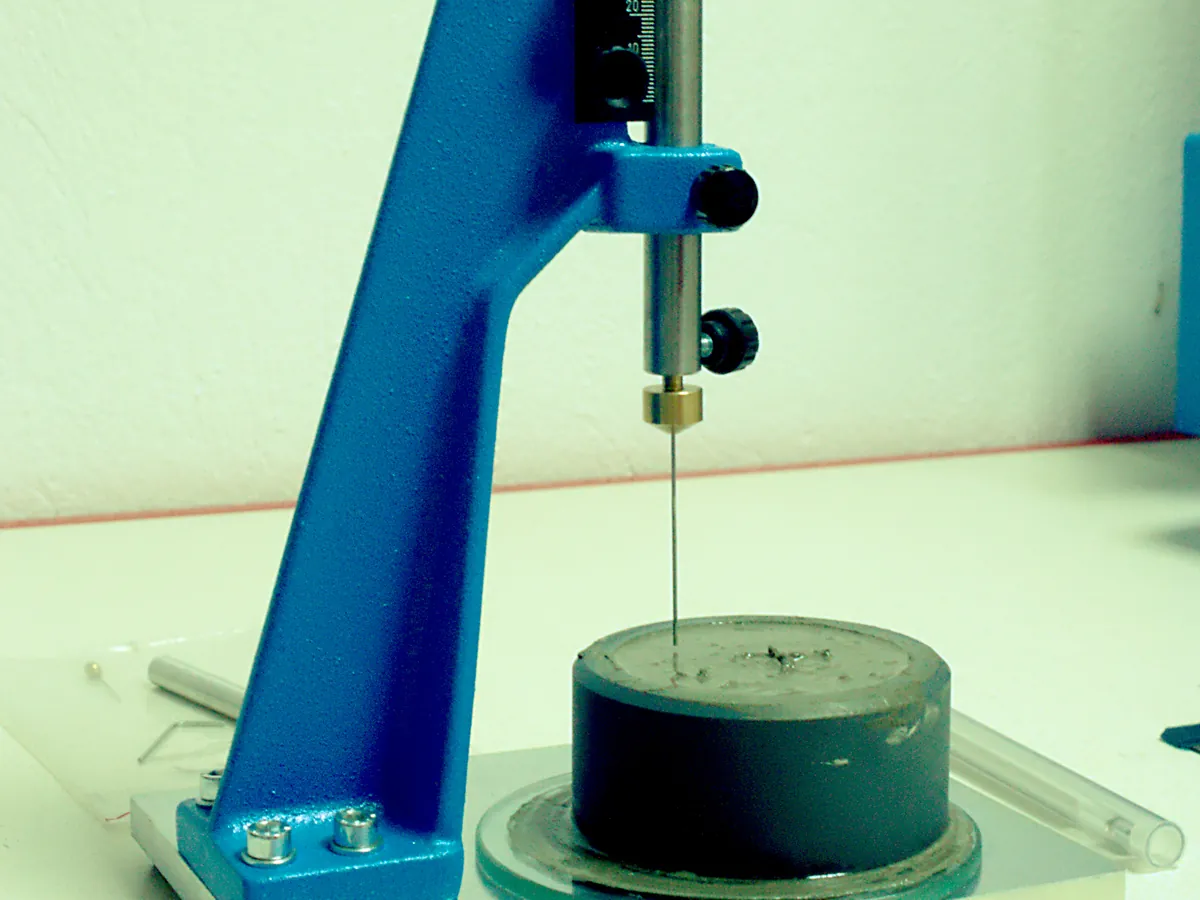
Vicat Apparatus
A weighted sliding rod with interchangeable plunger and needles used to find the standard consistency of cement paste and its initial and final setting times.
- Cement manufacturing
- Construction materials testing
- Ready-mix concrete
- Admixture manufacturers
- Academic labs
Follow your site SOP
This is a typical operating sequence for learning. Your instrument model and approved SOP take precedence.
STAGE 1
Before you start
- 1Check the room temperature and humidity are within the standard's limits and record them.
- 2Check the moving part slides freely and the pointer reads zero with the plunger resting on the base plate.
- 3Check the needle and plunger dimension check is in date; replace a bent needle.
- 4Lightly oil the inside of the mould and the base plate.
- Use distilled or potable water at room temperature; warm water shortens setting time.
STAGE 2
Standard consistency
- 1Weigh the cement and gauge it with a trial amount of water (for example 26% by mass), starting the stopwatch when water is added.
- 2Fill the mould within the gauging time, shake off air and strike the surface level.
- 3Lower the plunger gently to touch the paste, tighten, then release quickly.
- 4Read the penetration; repeat with fresh paste and different water until the plunger stops 5–7 mm from the bottom of the mould (IS 4031 Part 4).
- Do not reuse paste from a failed trial; it has started to hydrate.
STAGE 3
Setting times
- 1Prepare paste with 0.85 P water and fill the mould; note the time water was added.
- 2Fit the initial needle and release it at regular intervals (e.g. every few minutes), moving to a fresh spot each time.
- 3Record initial setting time when the needle stops about 5 ± 0.5 mm from the bottom.
- 4Change to the final-setting needle and record final setting time when only the needle, not the collar, marks the surface.
- Clean the needle after every penetration; paste on the needle reduces penetration.
- Keep the specimen in a humid cabinet between readings.
STAGE 4
After testing
- 1Remove and discard the paste before it hardens in the mould.
- 2Wash and dry the mould, plunger and needles.
- 3Record P, initial and final setting times with room conditions.
In LimsPulse · Calibration Management
Keep every Vicat in control: usage logs, calibration and maintenance schedules, and automatic blocking of overdue instruments.