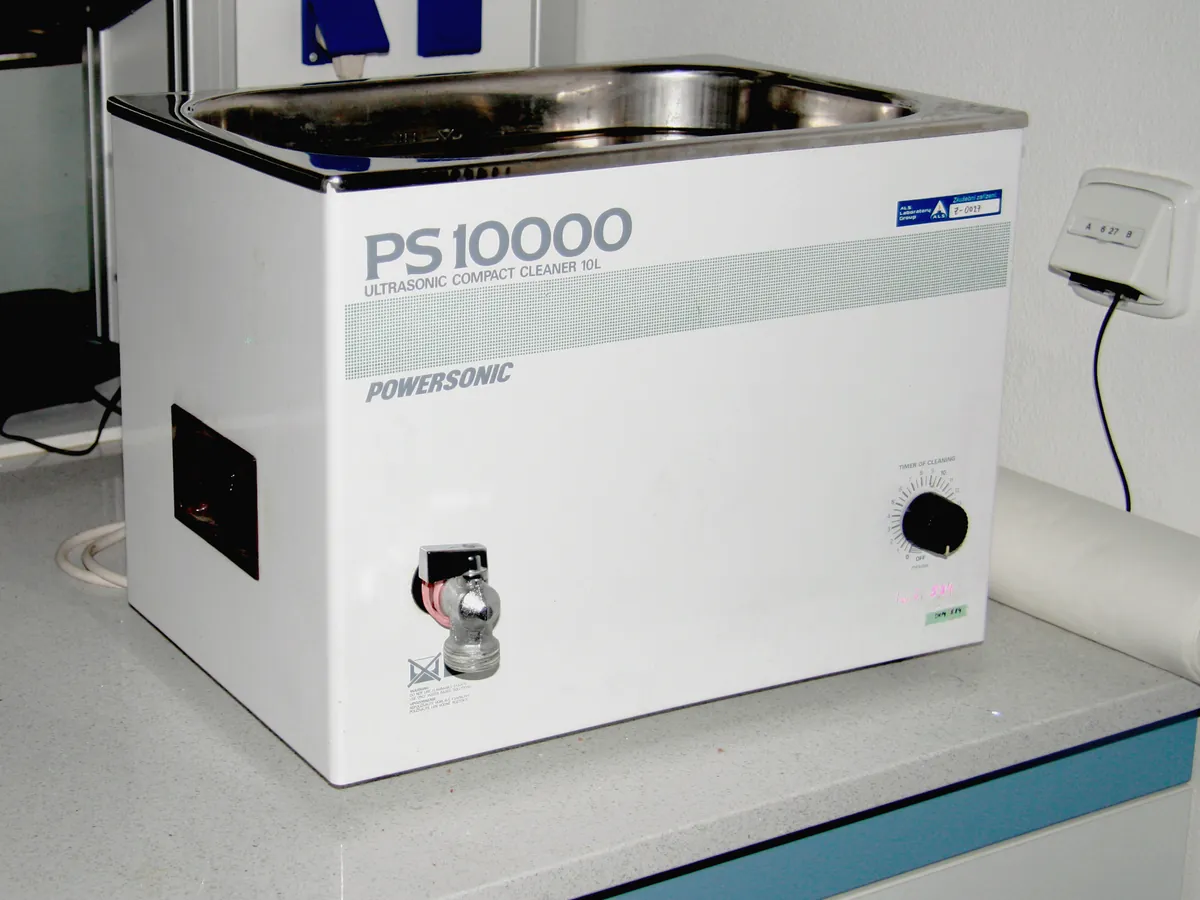
Ultrasonic bath (sonicator)
A stainless-steel tank of water vibrated by ultrasound. It is used to dissolve and extract samples, degas mobile phases and clean small glassware.
- Pharmaceutical
- Chemicals
- Food testing
- Electronics
- Jewellery and precision cleaning
Test your Sonicator knowledge
Multiple-choice questions
Pick an answer to see whether you are right and why.
Q1. What physical effect does the work in an ultrasonic bath?
basicQ2. What is a typical operating frequency for a laboratory ultrasonic bath?
basicQ3. After sonicating a sample in a volumetric flask, why must it cool before making up to volume?
intermediateQ4. Which simple test is often used to check ultrasonic activity across the bath?
intermediateQ5. What should you never do with an ultrasonic bath?
basic
Viva questions
Think of your answer first, then open it to compare.
1. Why is sonication time written into an assay method?
Extraction of the drug from tablet powder depends on sonication time. Too short gives low, variable recovery; too long can heat and degrade the analyte. A fixed, validated time gives consistent results.
2. Why should flasks not rest on the tank floor?
Contact with the floor dampens vibration, can damage the tank and gives uneven energy. A basket or rack keeps flasks suspended in the water so ultrasound reaches them evenly.
Keep every Sonicator in control: usage logs, calibration and maintenance schedules, and automatic blocking of overdue instruments.