General lab & storage
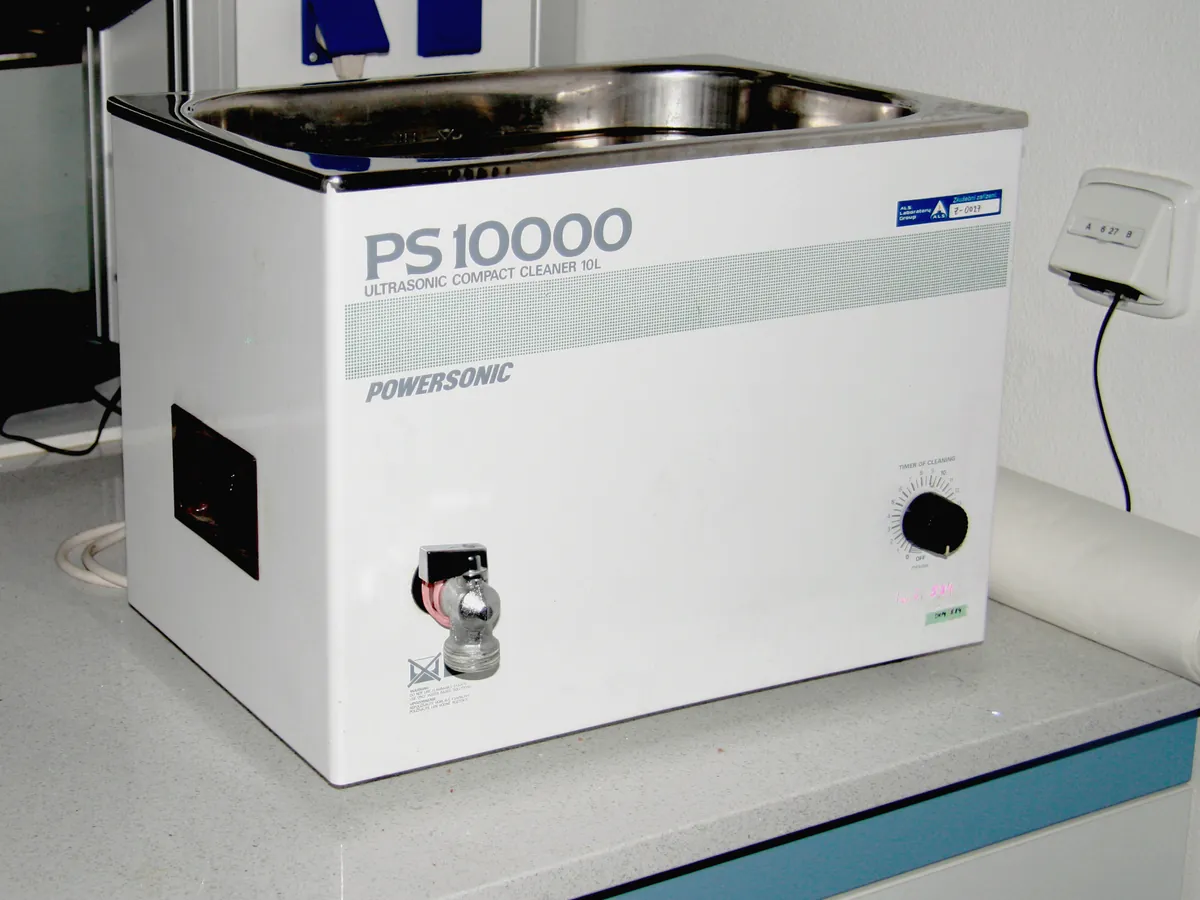
Ultrasonic bath (sonicator)
A stainless-steel tank of water vibrated by ultrasound. It is used to dissolve and extract samples, degas mobile phases and clean small glassware.
- Pharmaceutical
- Chemicals
- Food testing
- Electronics
- Jewellery and precision cleaning
Follow your site SOP
This is a typical operating sequence for learning. Your instrument model and approved SOP take precedence.
STAGE 1
Preparation
- 1Fill the tank with purified water to the marked fill line (usually about two-thirds full). A drop of surfactant can improve energy transfer.
- 2Degas fresh water by running the bath empty for a few minutes.
- 3Check the bath temperature and, if the method requires, add ice or wait for it to cool.
- Never run the bath without water; the transducers can be damaged.
STAGE 2
Sonicating samples
- 1Place flasks in the basket or rack so they do not touch the tank floor.
- 2Make sure the liquid level in the flask is at or below the bath water level.
- 3Set the time stated in the method and start; shake flasks by hand at intervals if the method says so.
- 4After sonication let solutions cool to room temperature before making up to volume.
- Do not put flammable solvents directly into the tank.
- Stopper flasks loosely or cover them to avoid splashing and evaporation.
STAGE 3
After use
- 1Switch off, drain the water and wipe the tank dry.
- 2Record use in the equipment log if required by your SOP.
In LimsPulse · Calibration Management
Keep every Sonicator in control: usage logs, calibration and maintenance schedules, and automatic blocking of overdue instruments.