Slump Cone (Abrams Cone)
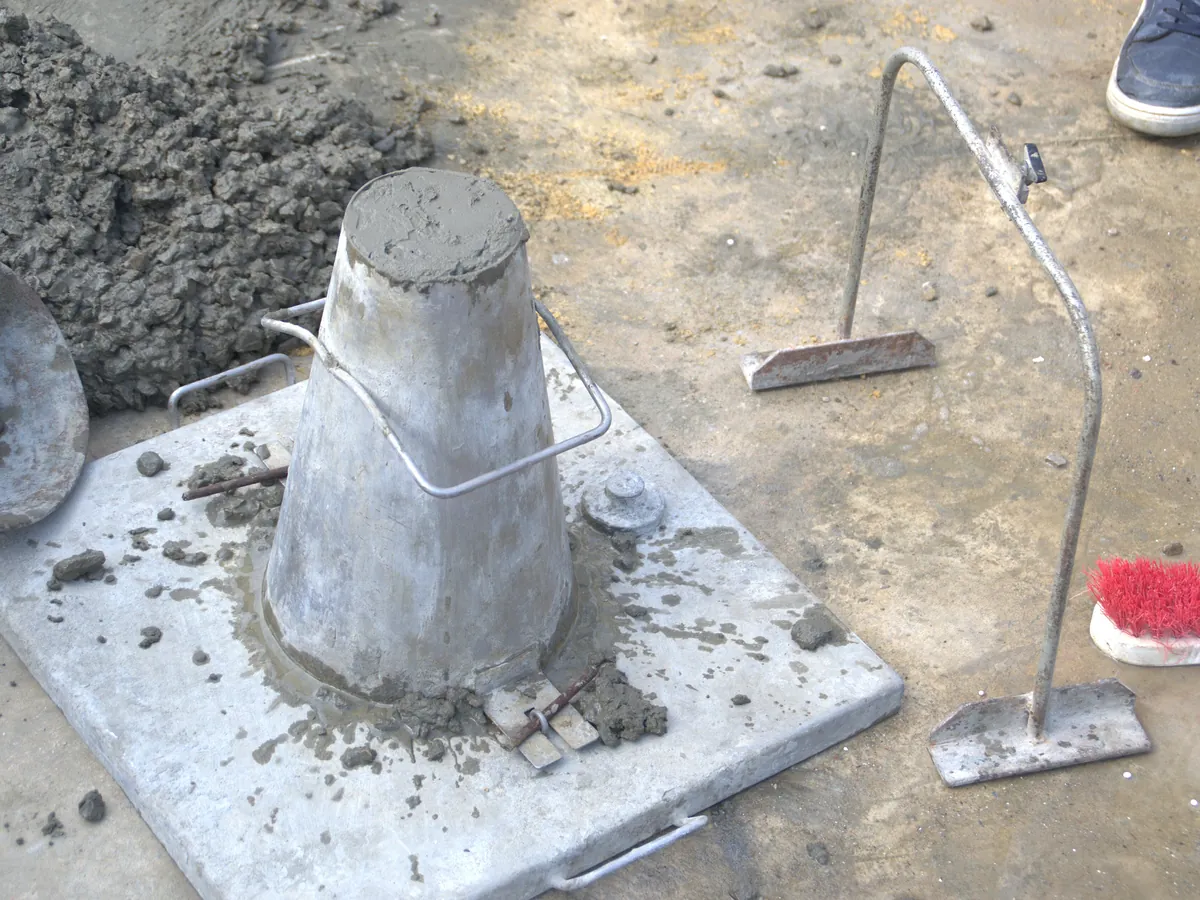
A hollow metal frustum used on site and in the lab to measure the workability of fresh concrete by how much it slumps when the cone is lifted.
- Construction sites
- Ready-mix concrete plants
- Precast concrete
- Construction materials testing
- Academic labs
Test your Slump cone knowledge
Multiple-choice questions
Pick an answer to see whether you are right and why.
Q1. What are the standard internal dimensions of a slump cone (top, base, height)?
basicQ2. How is the cone filled and compacted?
basicQ3. One side of the concrete shears off and slides down. What should you do?
intermediateQ4. Approximately how long should lifting the cone take?
intermediateQ5. A dimension check finds the top diameter of a site cone is 108 mm because of a dent. What is the correct action?
advanced
Viva questions
Think of your answer first, then open it to compare.
1. Name the three types of slump and which is valid.
True slump (even subsidence, shape retained), shear slump (one side shears off) and collapse slump (concrete collapses completely). Only a true slump is reported as a valid slump value; collapse usually indicates a very wet or flowing mix.
2. Why is the slump test unsuitable for very stiff mixes?
Very stiff mixes slump almost zero, so the test cannot distinguish between them. Tests such as compaction factor or Vee-Bee consistometer are used instead for low-workability concrete.
Keep every Slump cone in control: usage logs, calibration and maintenance schedules, and automatic blocking of overdue instruments.