Construction materials testing
Slump Cone (Abrams Cone)
A hollow metal frustum used on site and in the lab to measure the workability of fresh concrete by how much it slumps when the cone is lifted.
- Construction sites
- Ready-mix concrete plants
- Precast concrete
- Construction materials testing
- Academic labs
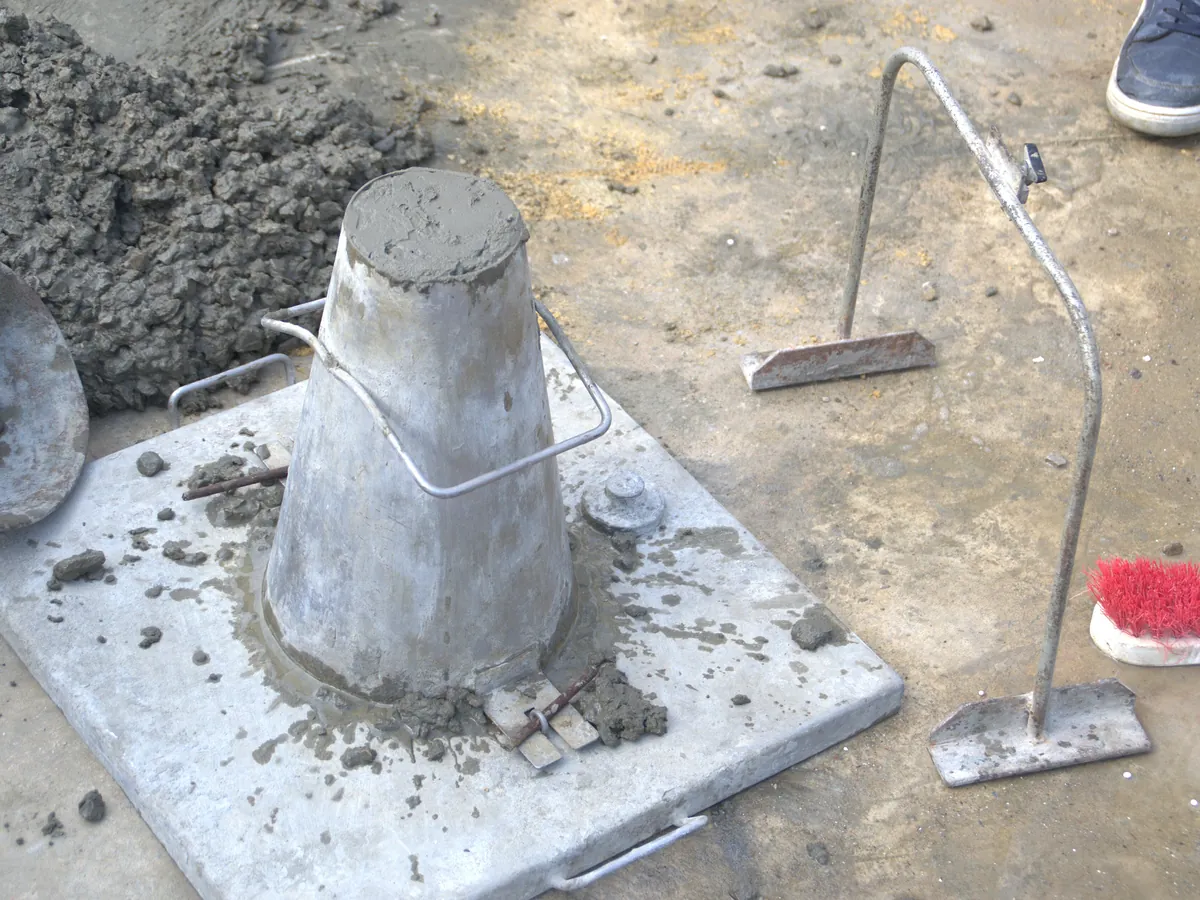
Follow your site SOP
This is a typical operating sequence for learning. Your instrument model and approved SOP take precedence.
STAGE 1
Before you start
- 1Check the cone is clean, undented and its dimension check is in date.
- 2Dampen the inside of the cone and the base plate; remove free water.
- 3Place the base plate on firm, level ground free from vibration.
- 4Take a representative sample of concrete and remix it on a non-absorbent surface.
- A dented or rusty cone changes the volume and friction; do not use it.
STAGE 2
Filling
- 1Stand on the foot pieces and fill the cone in three roughly equal layers.
- 2Rod each layer 25 times, spreading the strokes over the cross-section; for the second and third layers, just penetrate the layer below.
- 3Heap the concrete above the top before rodding the last layer, then strike off level with the rod.
- 4Clean spilled concrete from around the base.
- Do not let the cone move while filling.
STAGE 3
Lifting and measuring
- 1Lift the cone vertically and steadily in about 5 to 10 seconds without lateral or twisting movement.
- 2Place the cone upside down next to the concrete and lay the rod across it.
- 3Measure from the underside of the rod to the highest point of the concrete.
- 4Record the slump and the type of slump (true, shear or collapse).
- Complete the test, from start of filling to lifting, within about 2.5 minutes.
- If a shear slump occurs, repeat with a fresh portion.
STAGE 4
After testing
- 1Discard the tested concrete; do not return it to the batch for casting cubes.
- 2Wash the cone, rod and base plate immediately.
- 3Record batch ID, time, slump and type in the site register.
In LimsPulse · Calibration Management
Keep every Slump cone in control: usage logs, calibration and maintenance schedules, and automatic blocking of overdue instruments.