Thermal analysis & ovens
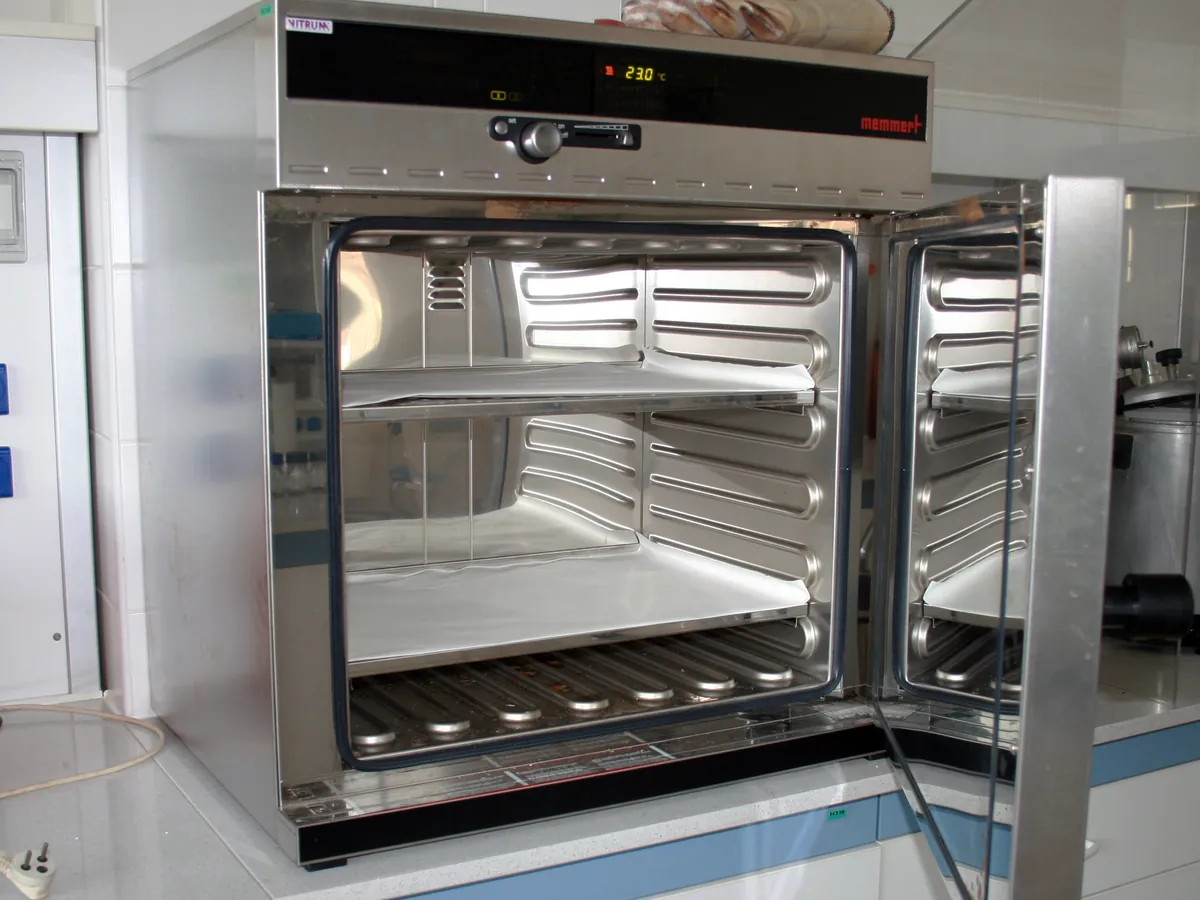
Hot Air Oven
An electrically heated, insulated cabinet that holds samples or glassware at a set temperature. In QC it is used mainly for loss on drying, drying of reference materials and drying of glassware.
- Pharmaceutical
- Food & beverage
- Chemicals
- Materials testing
- Education
Follow your site SOP
This is a typical operating sequence for learning. Your instrument model and approved SOP take precedence.
STAGE 1
Before you start
- 1Check the oven is within its calibration due date and the display shows the expected set point.
- 2Check the oven is clean and free of other samples that could contaminate yours.
- 3Switch the oven on in advance so it is stable at the set temperature before loading.
- Never put flammable solvents or solvent-wet materials in a standard oven.
STAGE 2
Loading
- 1Use the shelf positions shown as acceptable in the temperature mapping report.
- 2Leave space between containers so air can circulate.
- 3Remove the lid of the weighing bottle and place it beside the bottle in the oven.
- 4Close the door promptly and note the time when the oven returns to the set temperature.
- Avoid overloading; a full oven heats unevenly.
STAGE 3
Drying and weighing
- 1Dry for the time stated in the method or to constant weight.
- 2Close the weighing bottle in the oven, then transfer it to a desiccator to cool to room temperature.
- 3Weigh promptly once cool and record the weight.
- Use heat-resistant gloves or tongs. Hot surfaces cause burns.
- Weighing a warm bottle gives a falsely low weight because of air currents.
STAGE 4
After use
- 1Remove all samples and clean any spills.
- 2Switch off or leave at the standby temperature as per SOP, and complete the usage log.
In LimsPulse · Calibration Management
Keep every Hot air oven in control: usage logs, calibration and maintenance schedules, and automatic blocking of overdue instruments.