Physical testing
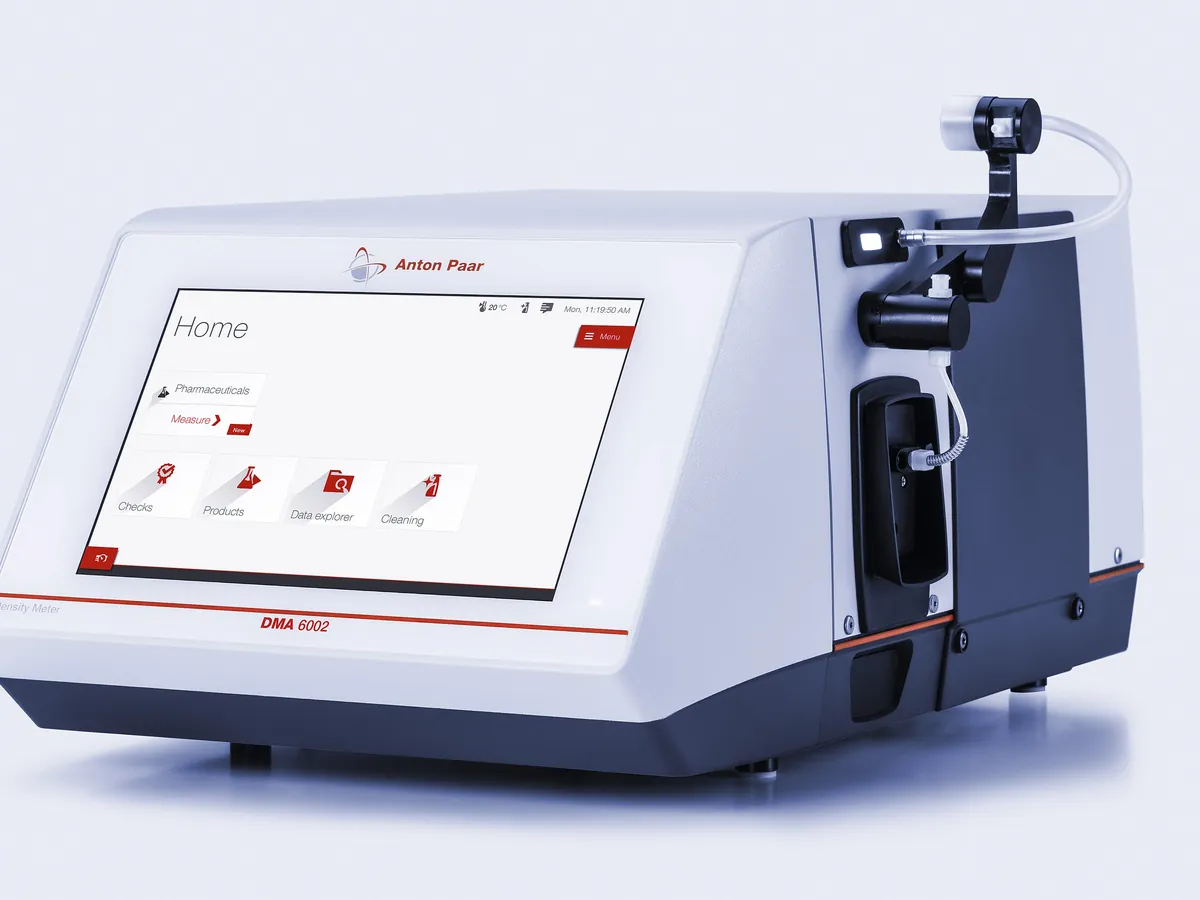
Density meter
Measures the density or specific gravity of a liquid in about a minute, using a vibrating glass U-tube. It replaces the pycnometer for most routine work.
- Pharmaceutical
- Food & beverage
- Spirits & brewing
- Chemicals
- Petrochemicals
Follow your site SOP
This is a typical operating sequence for learning. Your instrument model and approved SOP take precedence.
STAGE 1
Before you start
- 1Check the calibration status and that the daily air and water check has passed.
- 2Set the measuring temperature stated in the method (often 20 °C or 25 °C).
- 3Make sure the tube is clean and dry (it reads air correctly).
- Do not use the instrument if the water check is out of limit.
STAGE 2
Measurement
- 1Mix the sample well and let it reach room temperature; degas it if it contains dissolved gas.
- 2Fill the U-tube slowly and steadily with a syringe or the pump.
- 3Check on the camera or by eye that there are no bubbles in the tube.
- 4Start the measurement and wait for the stable result.
- 5Record density or specific gravity and temperature. Refill and repeat if your SOP asks for duplicates.
- Fill slowly; fast filling traps bubbles.
- Leave the syringe in place while measuring to stop the sample moving.
STAGE 3
After use
- 1Rinse the tube with a solvent that dissolves the sample, then with a volatile solvent such as ethanol or acetone.
- 2Dry with the air pump until the air reading is correct.
- 3Complete the log.
- Never leave sugar syrups or salts to dry in the tube; deposits change the tube mass and the calibration.
In LimsPulse · Calibration Management
Keep every Density meter in control: usage logs, calibration and maintenance schedules, and automatic blocking of overdue instruments.