Construction materials testing
Aggregate Impact Value Tester
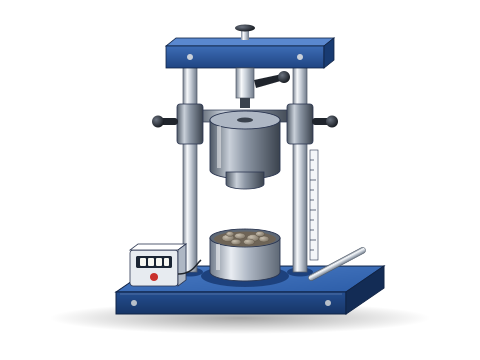
A drop-hammer machine that strikes a cup of coarse aggregate 15 times and measures how much it breaks into fines. The result, the aggregate impact value (AIV), shows the aggregate's toughness.
- Construction materials testing
- Road and highway construction
- Quarries and crushers
- Ready-mix concrete
- Academic labs
Follow your site SOP
This is a typical operating sequence for learning. Your instrument model and approved SOP take precedence.
STAGE 1
Before you start
- 1Check the hammer mass and drop height check is in date.
- 2Make sure the machine is level and firmly bedded and the hammer slides freely.
- 3Prepare the aggregate (passing 12.5 mm, retained on 10 mm), dried as the method requires.
- Never place hands under the raised hammer.
STAGE 2
Preparing the sample
- 1Fill the measure in three layers, tamping each 25 times with the rounded end of the rod.
- 2Strike off level and weigh the aggregate (A).
- 3Transfer it to the cup in one layer and tamp 25 times.
STAGE 3
Testing
- 1Adjust the hammer so its lower face is 380 ± 5 mm above the top of the aggregate (or as set by the stop).
- 2Give 15 blows, letting the hammer fall freely each time.
- 3Remove the crushed aggregate and sieve it on the 2.36 mm sieve.
- 4Weigh the fraction passing (B) and check that passing + retained is close to A.
- If the total differs from A by more than about 1 g (or as your SOP states), discard and repeat.
STAGE 4
After testing
- 1Calculate AIV for each test and report the mean of two.
- 2Brush the cup and hammer face clean.
- 3Record results with sample ID and machine ID.
In LimsPulse · Calibration Management
Keep every AIV tester in control: usage logs, calibration and maintenance schedules, and automatic blocking of overdue instruments.