Total Suspended Solids (TSS) Dried at 103–105 °C
A well-mixed sample is filtered through a weighed glass fibre filter. The filter and the solids retained on it are dried at 103–105 °C and weighed again. The increase in mass per litre of sample is the total suspended solids.
- Environmental & water
- Filtration through a glass fibre filter and gravimetry
- Filtration unit
- Hot air oven
- Analytical balance
Reference: Typical method based on APHA Standard Methods 2540 D, IS 3025 (Part 17) and ISO 11923.
Why this method works
Solids that cannot pass through a glass fibre filter with a nominal pore size of about 1.5 µm are, by definition, suspended solids. Drying at 103–105 °C removes water but leaves the solids (and some bound water). The mass gain is divided by the volume filtered.
Instruments used
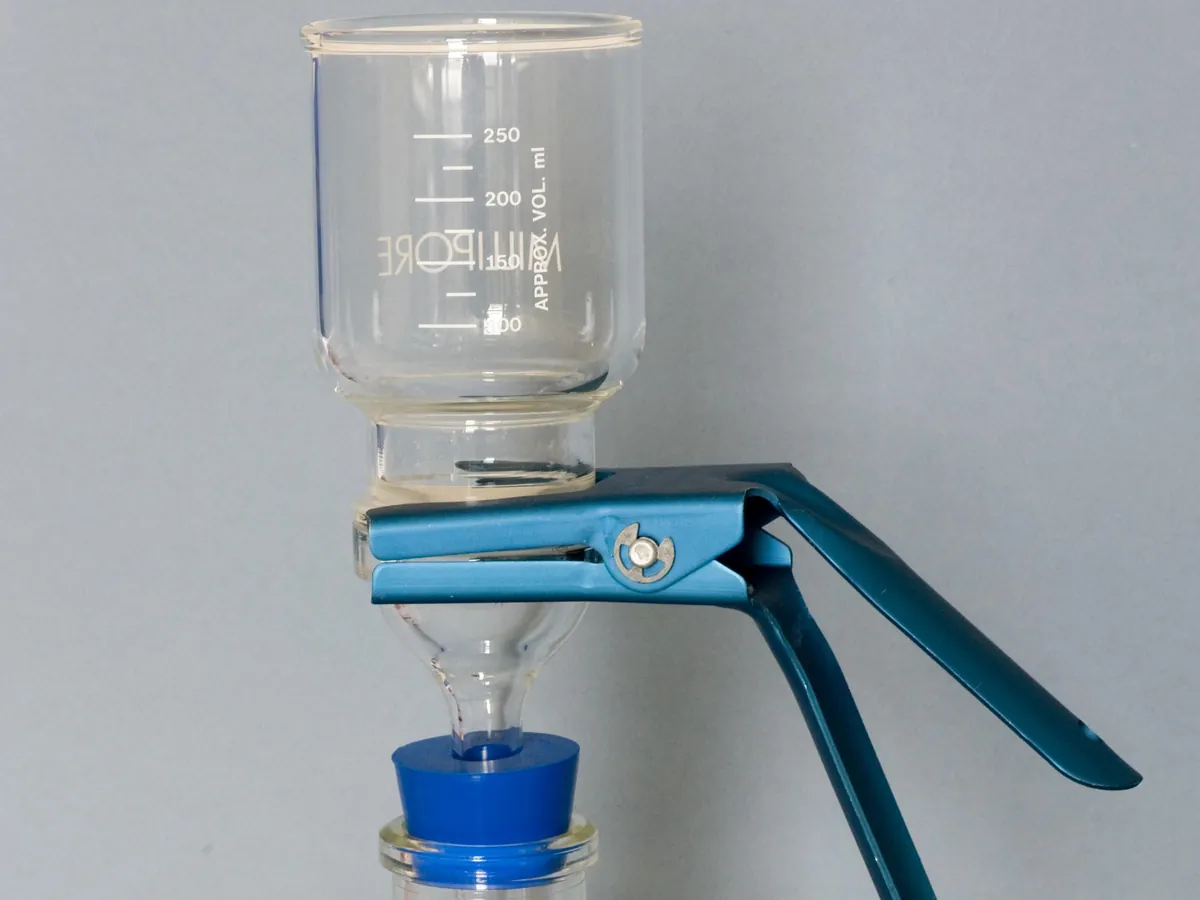
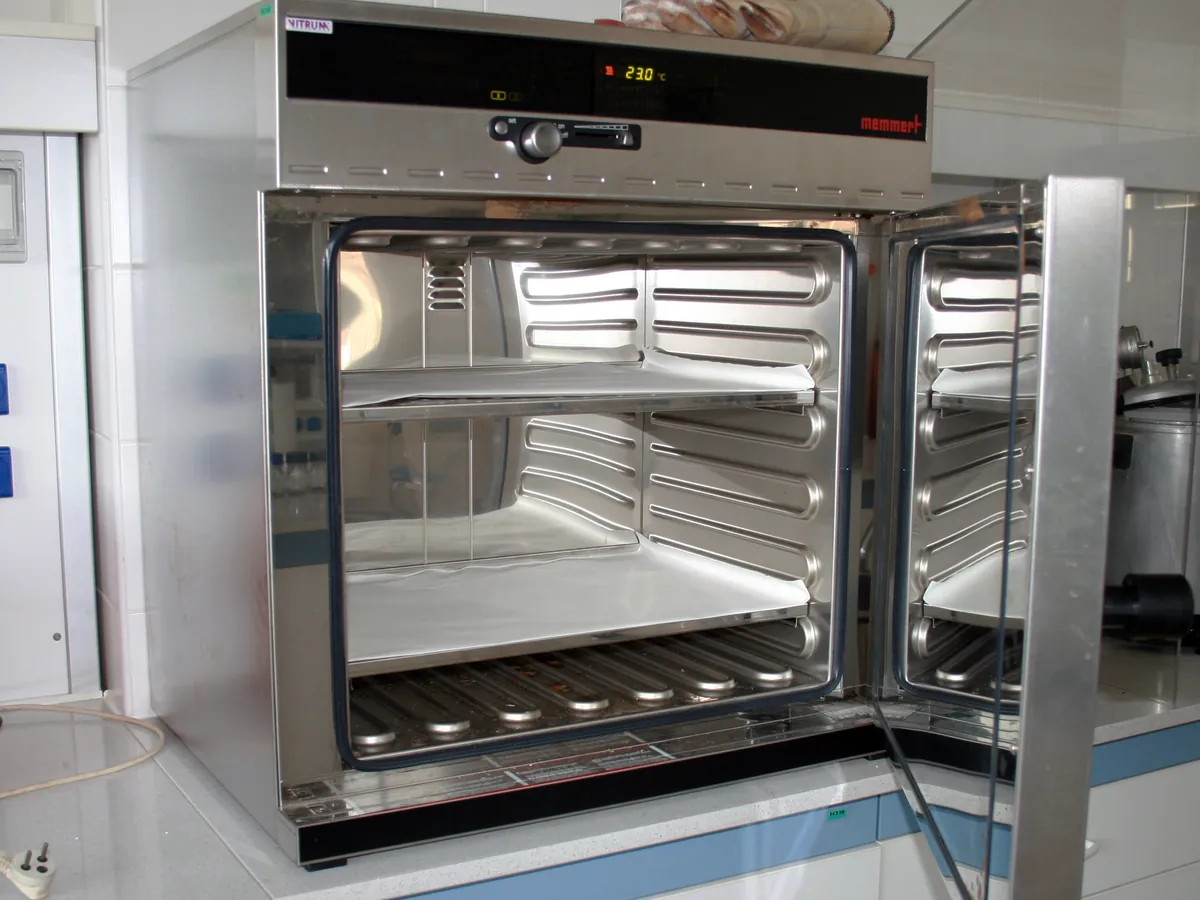
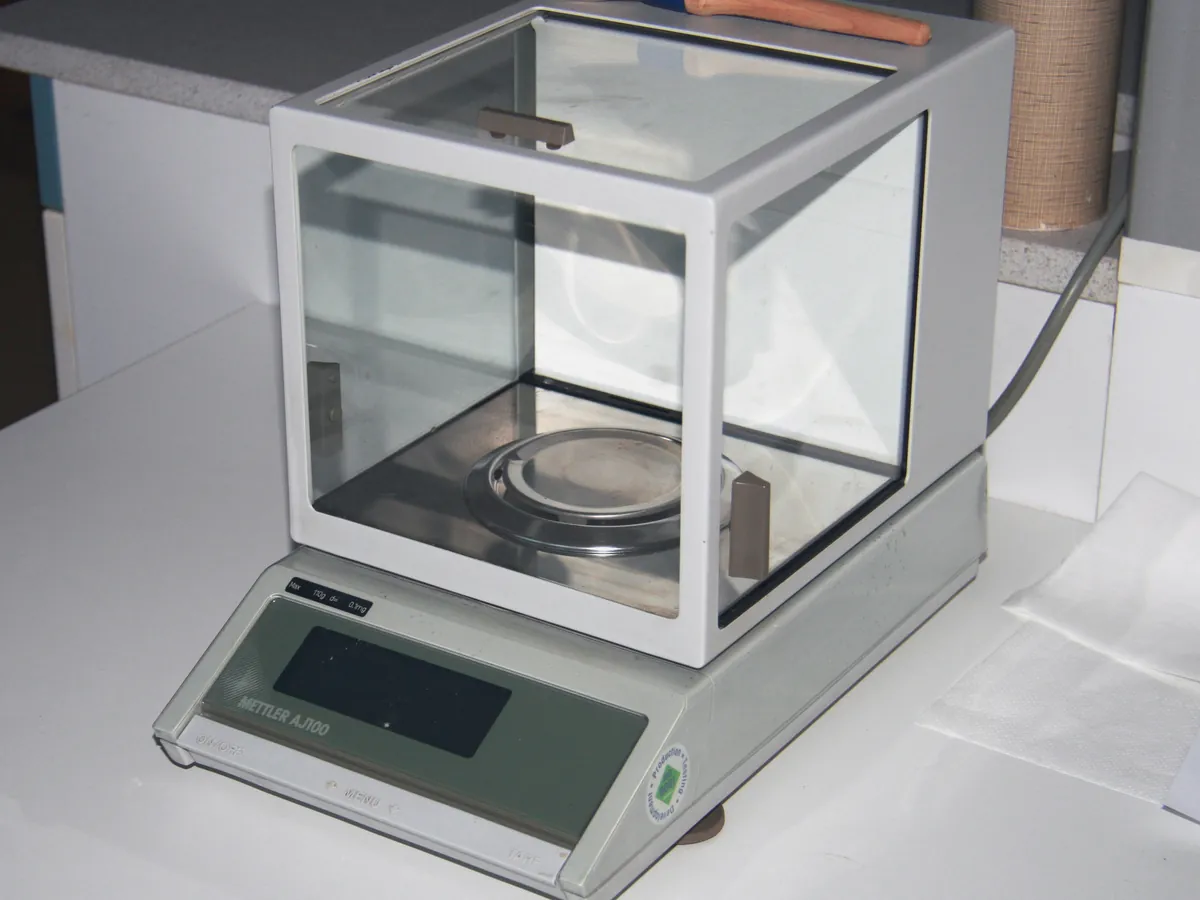
Reagents & standards
| Reagent | Grade / specification |
|---|---|
| Glass fibre filters | Without organic binder, 47 mm or 55 mm diameter, nominal retention about 1.5 µm |
| Purified water | For washing the filter and the filtered residue |
Preparing the sample
- 01
Prepare filter
Wash, dry at 103–105 °C, cool in a desiccator and weigh (B).
- 02
Mix sample
Stir the sample so solids are evenly suspended.
- 03
Filter
Filter a measured volume under vacuum.
- 04
Wash
Rinse with three portions of purified water.
- 05
Dry
Dry the filter at 103–105 °C for at least 1 hour.
- 06
Weigh
Cool in a desiccator and weigh (A); repeat to constant mass.
Procedure
- 1Place a filter in the filtration apparatus, apply vacuum and wash it with three 20 mL portions of purified water. Dry at 103–105 °C for 1 hour, cool in a desiccator and weigh. Repeat until the mass is constant; record it as B.
- 2Choose a sample volume that gives about 2.5 to 200 mg of dried residue. For example, 100 mL for a typical treated effluent or 25 mL for raw sewage.
- 3Mix the sample well with a magnetic stirrer and, while stirring, withdraw the volume with a wide-bore pipette or measuring cylinder.
- 4Filter under vacuum. Rinse the measuring vessel and the filter funnel walls with purified water, then wash the residue with three 10 mL portions, letting each drain fully.
- 5Continue suction for about 3 minutes after filtration ends.
- 6Transfer the filter to a support dish and dry at 103–105 °C for at least 1 hour.
- 7Cool in a desiccator to room temperature and weigh. Repeat drying, cooling and weighing until the change is less than 4% of the previous mass or 0.5 mg, whichever is less. Record the final mass as A.
Standard preparation
- 1No calibration standard is used. Run a filter blank (purified water through a weighed filter) with each batch to check for filter mass loss.
- 2Laboratories may use a suspension of a known material (for example microcrystalline cellulose) as a check sample.
Notes for analysts
- Exclude large floating particles or lumps that are not part of the representative sample, and note this in the report.
- If the filter clogs, filtration takes too long and dissolved solids can be retained; use a smaller volume.
- Igniting the dried residue at 550 °C gives volatile suspended solids (VSS), often reported for aeration tanks.
Method parameters (typical)
| Filter | Glass fibre, nominal 1.5 µm, no binder |
|---|---|
| Drying temperature | 103–105 °C |
| Drying time | At least 1 hour, then to constant mass |
| Target residue | About 2.5–200 mg |
| Balance | Analytical balance, readability 0.1 mg |
System suitability & sequence
| Parameter | Limit |
|---|---|
| Filter blank | Mass change typically within ±0.5 mg |
| Duplicate agreement | As defined in your SOP (for example RPD not more than 10–20% depending on level) |
| Constant mass | Change between weighings less than 4% or 0.5 mg, whichever is less |
Typical sequence
- 1Filter blank
- 2Samples
- 3Duplicate of one sample per batch
Calculation with a worked example
Where
- A
- Mass of filter + dried residue (mg)
- B
- Mass of prepared filter (mg)
- V
- Volume of sample filtered (mL)
- 1000
- Converts mL to L
Given
- A
- 118.76 mg
- B
- 105.32 mg
- V
- 100 mL
Working
- 1
Residue = 118.76 − 105.32 = 13.44 mg (within the 2.5–200 mg target)
- 2TSS = 13.44 × 1000 ÷ 100 = 134.4 mg/L
TSS = 134 mg/L
What result passes
- Compare with your consent limit. For example, the general standards for discharge into inland surface water in India typically set TSS at 100 mg/L; check the current notification.
- Results based on residues below about 2.5 mg have high uncertainty; filter a larger volume where possible.
Validation parameters (ICH Q2(R2))
| Parameter | Typical requirement |
|---|---|
| Precision | Duplicate samples and control-charted check samples |
| Range | Practical lower limit set by residue mass and volume filtered |
| Interferences | Large floating particles, oil and grease, very saline samples (wash well), and filter clogging |
Run this method in LimsPulse: specifications and STPs under version control, results calculated and checked against limits, and a signed Certificate of Analysis.