Phenolphthalein and Total Alkalinity (as CaCO₃)
Measures the capacity of water to neutralise acid. The sample is titrated with standard acid first to the phenolphthalein endpoint (pH 8.3) and then to the total alkalinity endpoint (about pH 4.5). From the two titres the hydroxide, carbonate and bicarbonate contributions can be estimated.
- Environmental & water
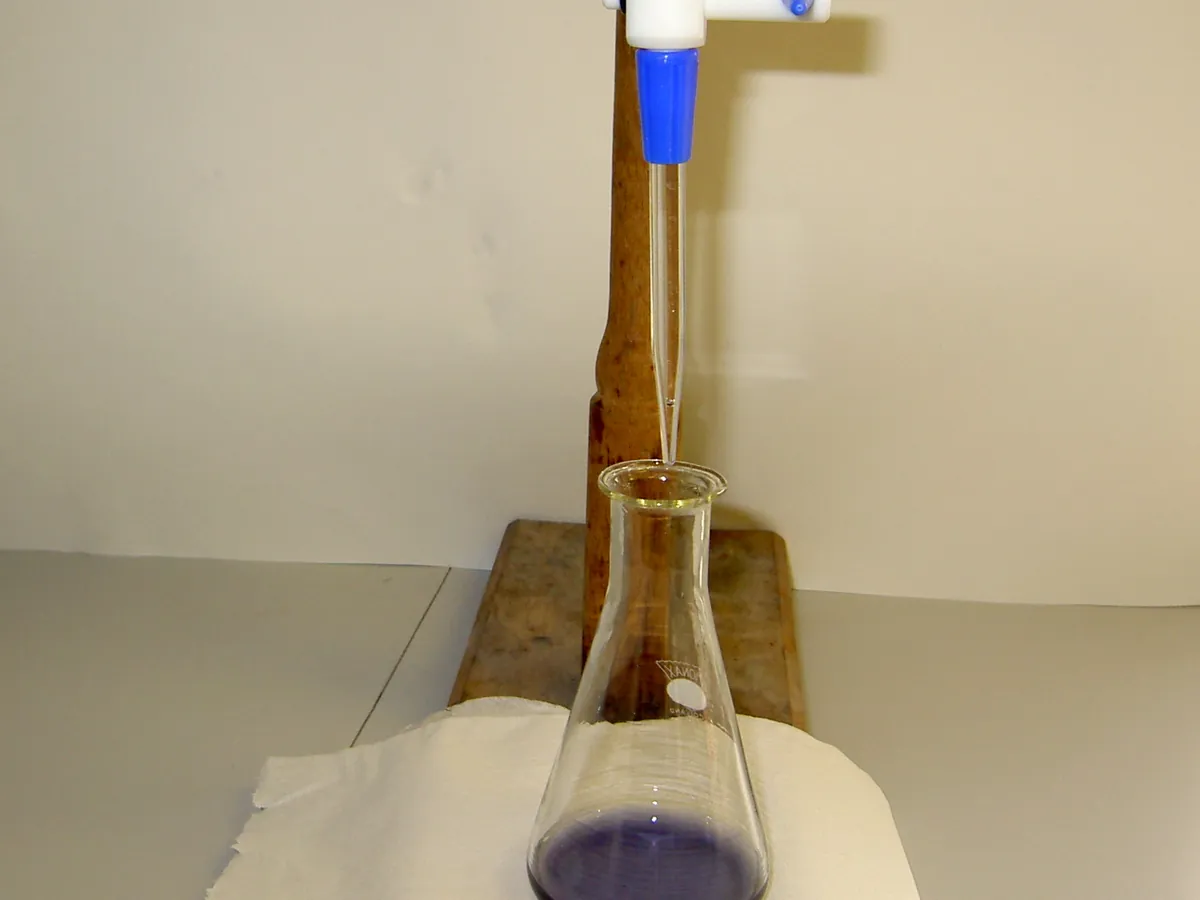
- Acid–base titration with 0.02 N sulphuric acid to pH 8.3 and to about pH 4.5 (indicator or potentiometric)
- Burette & glassware
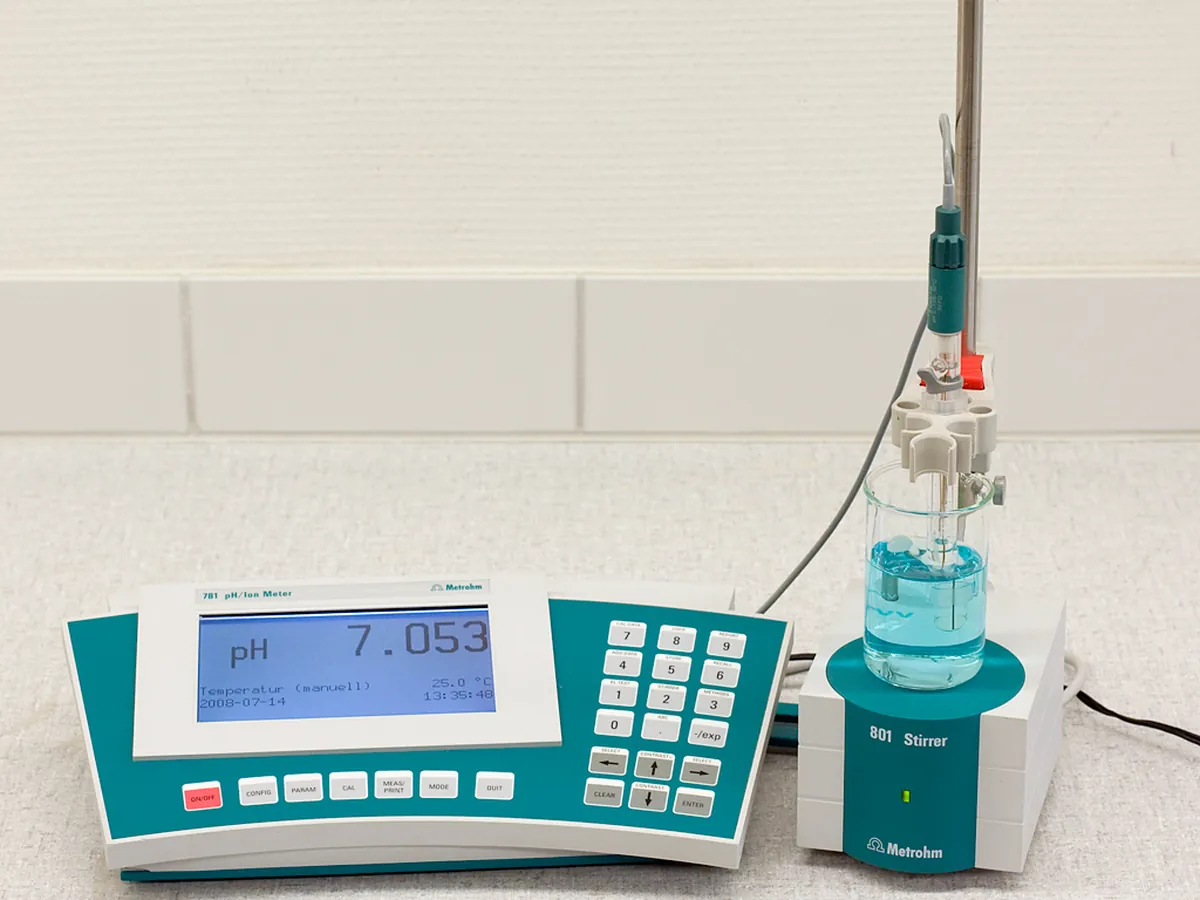
- pH meter
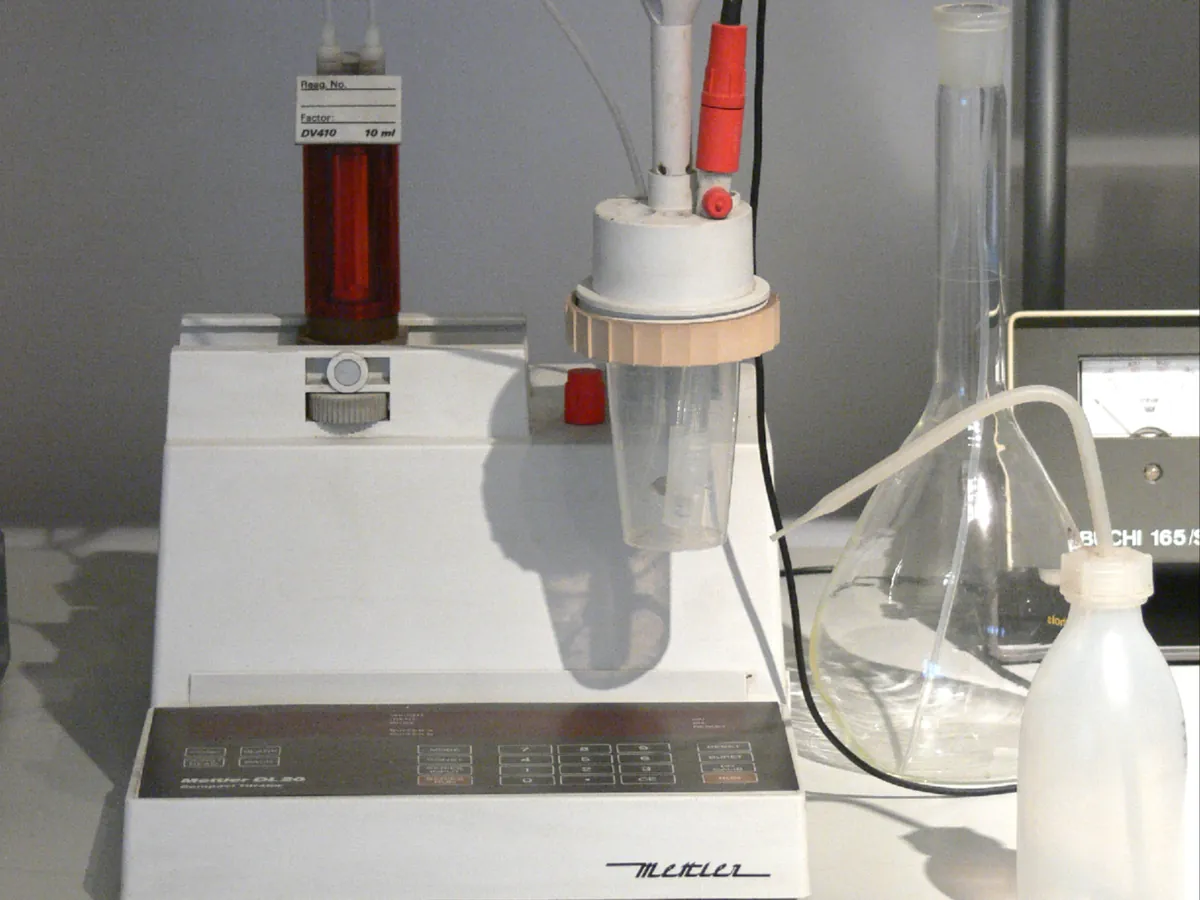
- Potentiometric titrator
Reference: Typical method based on APHA Standard Methods 2320 B (titration method) and the IS 3025 part for alkalinity. Follow your lab SOP.
Why this method works
In most natural waters alkalinity comes from bicarbonate, carbonate and (rarely) hydroxide. Titrating to pH 8.3 converts hydroxide to water and carbonate to bicarbonate — this is phenolphthalein alkalinity (P). Continuing to about pH 4.5 converts all bicarbonate to carbonic acid — the total is total alkalinity (T). Results are expressed as mg/L CaCO₃ using its equivalent weight of 50.
Instruments used
Reagents & standards
| Reagent | Grade / specification |
|---|---|
| Standard sulphuric acid | 0.02 N (0.01 M) H₂SO₄, standardised against sodium carbonate |
| Phenolphthalein indicator | Pink in alkaline solution, colourless below about pH 8.3 |
| Mixed indicator | Bromocresol green–methyl red (or methyl orange), endpoint about pH 4.5 |
| Sodium thiosulphate | A drop of 0.1 N solution to remove residual chlorine that would bleach the indicator |
Preparing the sample
- 01
Sample
Fill bottle full, cap, analyse within 24 h.
- 02
Aliquot
Pipette 100 mL; dechlorinate if needed.
- 03
P endpoint
Phenolphthalein; titrate pink → colourless.
- 04
T endpoint
Mixed indicator; titrate to pink/grey endpoint.
- 05
Calculate
P and T, then OH⁻, CO₃²⁻, HCO₃⁻.
Procedure
- 1Collect the sample in a completely filled, tightly capped bottle and analyse within 24 hours (avoid shaking, warming or opening, which lose CO₂).
- 2Pipette 100 mL into a conical flask (or beaker if titrating potentiometrically). Add a drop of thiosulphate if the sample contains chlorine.
- 3Add 2–3 drops of phenolphthalein. If the solution turns pink, titrate with 0.02 N H₂SO₄ until it just becomes colourless (pH 8.3). Record the titre P. If no pink colour appears, P = 0.
- 4Add the mixed indicator to the same flask and continue titrating to the endpoint (about pH 4.5, or as defined in the SOP for the alkalinity level). Record the total titre T from the start.
- 5For low alkalinity or coloured samples, use a pH meter and titrate to the defined pH values instead of indicators.
Standard preparation
- 1Standardise the 0.02 N H₂SO₄ against dried sodium carbonate (primary standard) or against a 0.02 N carbonate standard, titrating to about pH 4.5.
Notes for analysts
- Relationships commonly used: P = 0 → all bicarbonate; P < T/2 → carbonate 2P, bicarbonate T − 2P; P = T/2 → all carbonate; P > T/2 → hydroxide 2P − T, carbonate 2(T − P); P = T → all hydroxide.
- When total alkalinity is less than total hardness, the difference is 'non-carbonate' (permanent) hardness.
Method parameters (typical)
| Titrant | 0.02 N H₂SO₄ (1 mL = 1.00 mg CaCO₃) |
|---|---|
| Phenolphthalein endpoint | pH 8.3 |
| Total alkalinity endpoint | About pH 4.5 (SOP may specify 4.3–4.9 depending on alkalinity) |
| Sample volume | 100 mL |
System suitability & sequence
| Parameter | Limit |
|---|---|
| Acid standardisation | Replicate titres agree within the SOP limit |
| pH meter (if used) | Calibrated at pH 4 and 7 (and 10 if needed) |
| Duplicates | Agree within the SOP limit |
Typical sequence
- 1Standardise acid
- 2Sample in duplicate
- 3Check standard (sodium carbonate solution)
Calculation with a worked example
Where
- A
- Titre of acid to the relevant endpoint (mL): P to pH 8.3, T to pH 4.5
- N
- Normality of the acid
- 50 000
- Equivalent weight of CaCO₃ (50 g/eq) × 1000 mg/g
- V
- Sample volume (mL)
Given
- V
- 100 mL
- N
- 0.02 N H₂SO₄
- Titre to pH 8.3 (P)
- 1.2 mL
- Total titre to pH 4.5 (T)
- 11.6 mL
Working
- 1Phenolphthalein alkalinity P = 1.2 × 0.02 × 50 000 ÷ 100 = 12 mg/L as CaCO₃
- 2Total alkalinity T = 11.6 × 0.02 × 50 000 ÷ 100 = 116 mg/L as CaCO₃
- 3
P (12) is less than T/2 (58), so hydroxide = 0
- 4
Carbonate = 2P = 24 mg/L; bicarbonate = T − 2P = 116 − 24 = 92 mg/L (all as CaCO₃)
P alkalinity = 12 mg/L; total alkalinity = 116 mg/L as CaCO₃ (carbonate 24, bicarbonate 92)
What result passes
- As per IS 10500:2012: total alkalinity as CaCO₃ acceptable limit 200 mg/L, permissible limit 600 mg/L; check the current edition.
- The OH/CO₃/HCO₃ split from P and T is an approximation that assumes no other buffering species; borate, silicate or phosphate will distort it.
Validation parameters (ICH Q2(R2))
| Parameter | Typical requirement |
|---|---|
| Accuracy | Recovery of a sodium carbonate/bicarbonate standard |
| Precision | Duplicate titrations |
| Endpoint | Indicator endpoint confirmed against potentiometric endpoint for the water type |
Run this method in LimsPulse: specifications and STPs under version control, results calculated and checked against limits, and a signed Certificate of Analysis.