Soil Organic Carbon by Walkley–Black Wet Oxidation
Estimates the organic carbon in soil by oxidising it with a known excess of potassium dichromate in concentrated sulphuric acid, then titrating the unused dichromate with standardised ferrous ammonium sulphate. A blank gives the total dichromate added.
- Environmental & water
- Dichromate wet oxidation with back titration by ferrous ammonium sulphate
- Burette & glassware
- Analytical balance
- Fume hood
Reference: Based on Walkley and Black (1934) as described in standard soil-analysis manuals. Follow the reagent strengths, sample mass and factors given in your laboratory SOP.
Why this method works
Organic carbon in soil is oxidised to CO₂ by acid dichromate. The heat released when concentrated sulphuric acid is mixed with the dichromate solution drives the reaction; no external heating is used. Dichromate (Cr₂O₇²⁻) is reduced to Cr³⁺. The excess dichromate is then titrated with ferrous ion (Fe²⁺), using diphenylamine or ferroin indicator. The difference between the blank and the sample titre gives the dichromate used by the carbon. One milliequivalent of dichromate oxidises 3 mg of carbon (12 ÷ 4, because carbon goes from 0 to +4). Because the heat of dilution oxidises only part of the organic carbon, a recovery factor is applied. The conventional factor is 1.3, which assumes about 77% recovery.
Instruments used
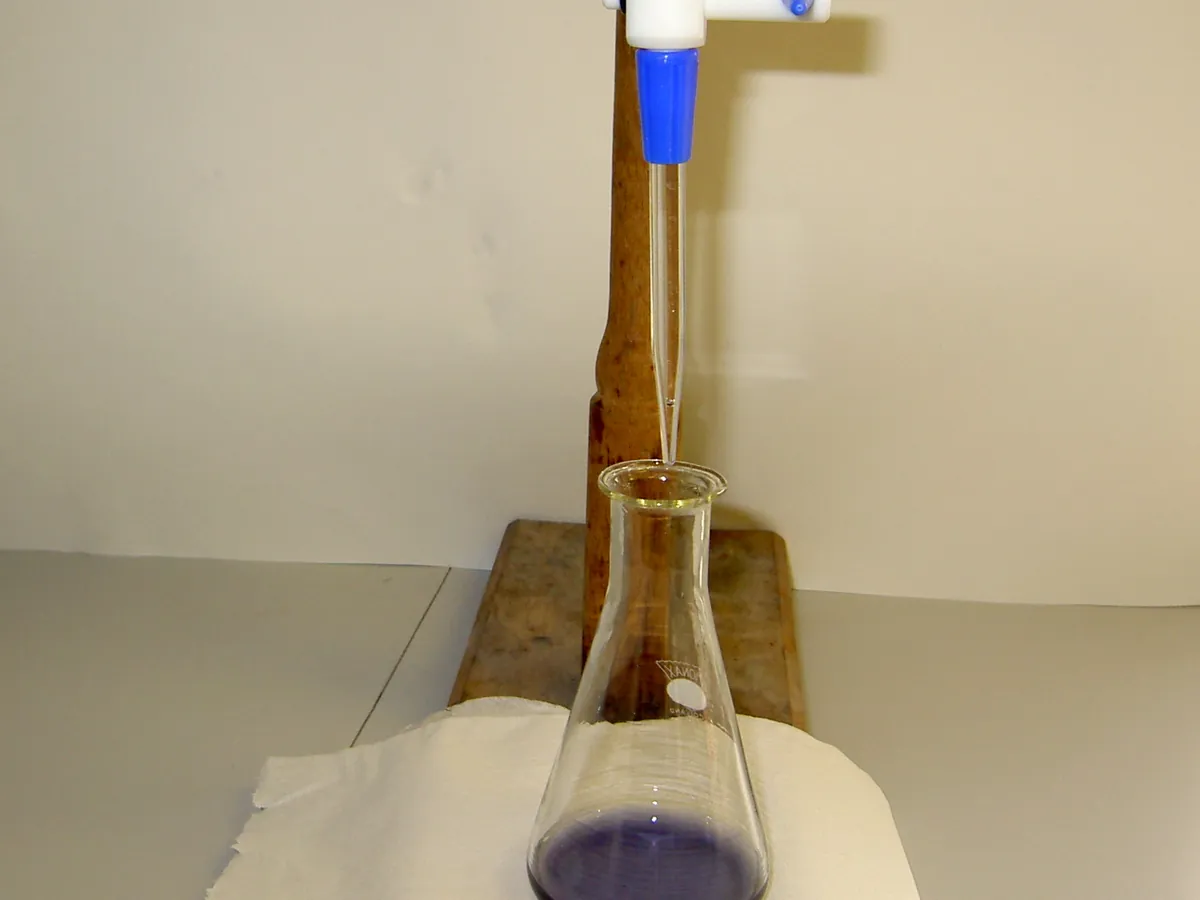
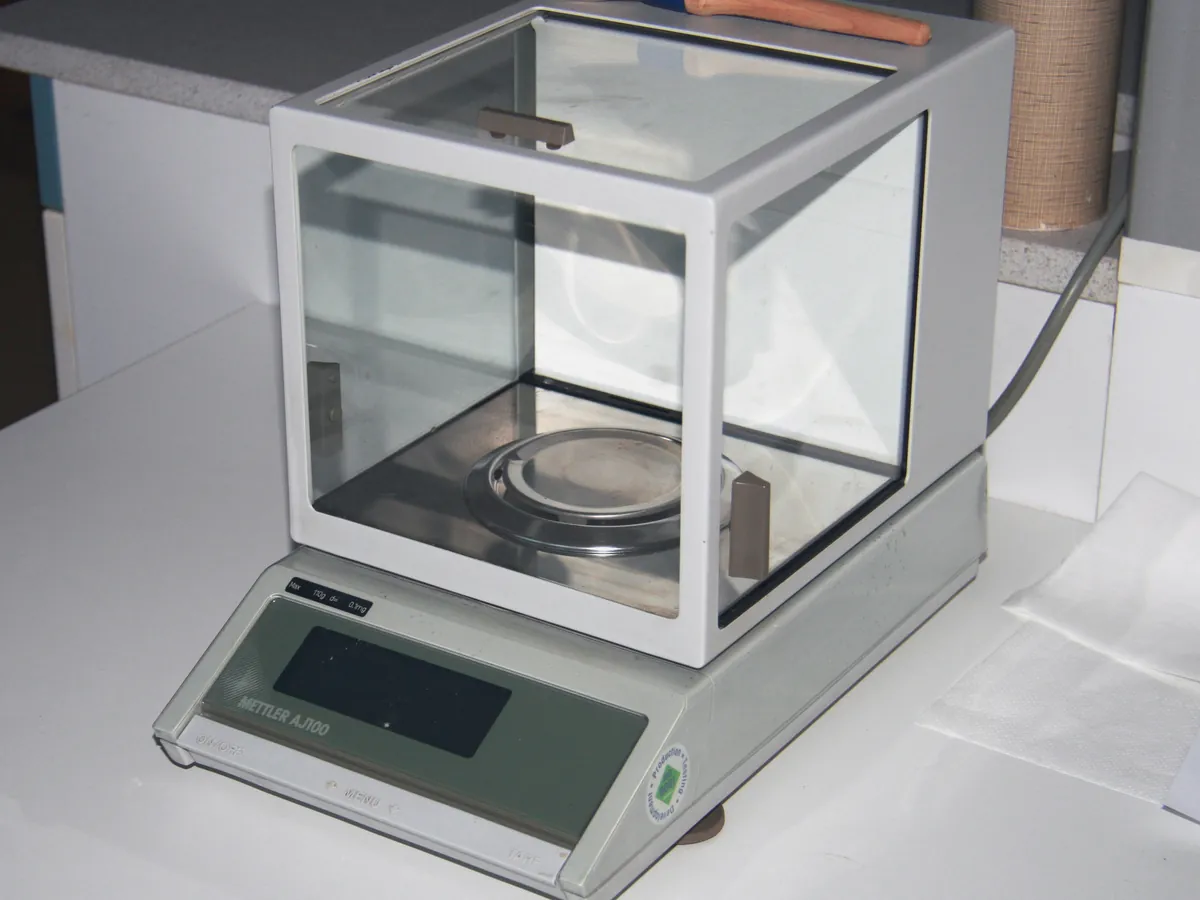
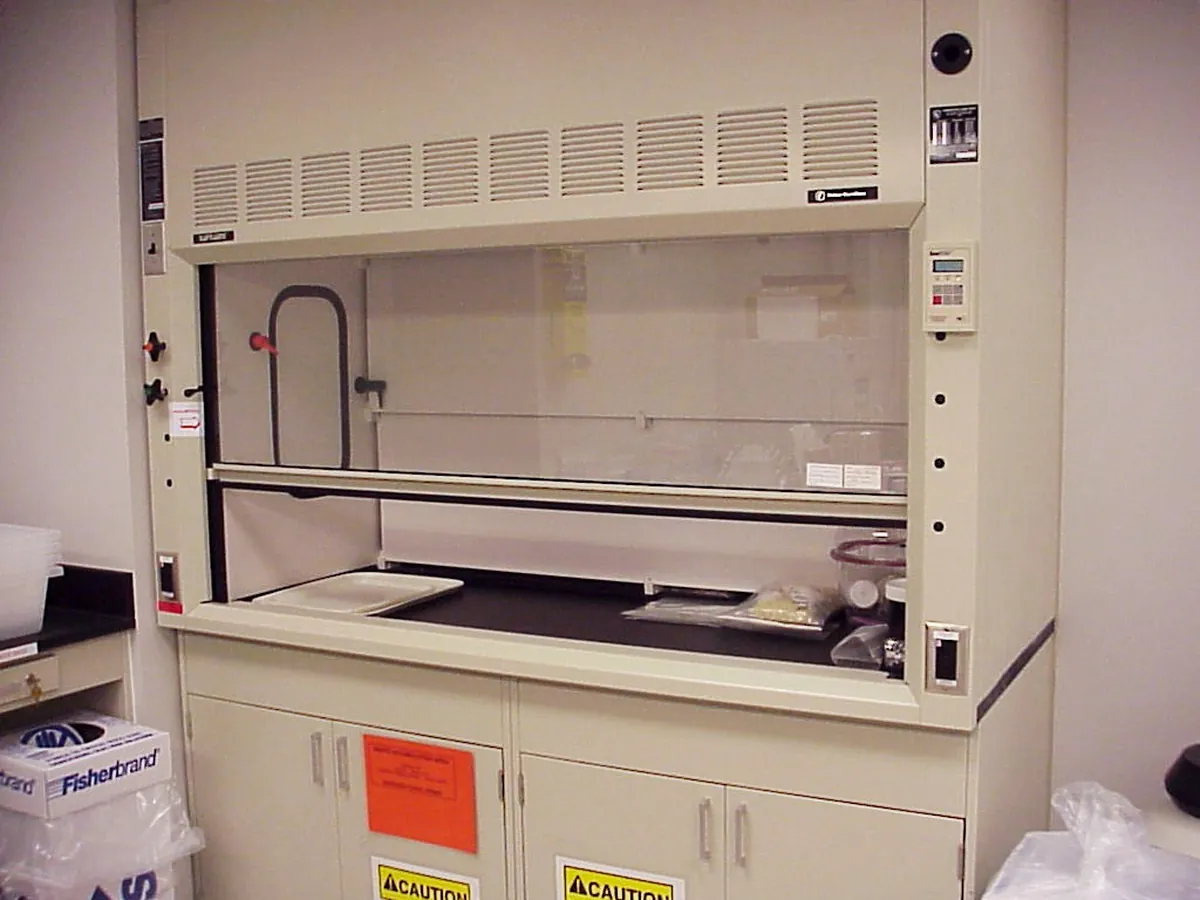
Reagents & standards
| Reagent | Grade / specification |
|---|---|
| Potassium dichromate, 1 N (0.1667 M) | Dissolve 49.04 g dried K₂Cr₂O₇ in water and make to 1 L |
| Sulphuric acid | Concentrated, at least 96% (containing Ag₂SO₄ if chloride interference is expected) |
| Orthophosphoric acid | About 85%, to sharpen the endpoint by complexing Fe³⁺ (used with diphenylamine) |
| Ferrous ammonium sulphate (FAS), about 0.5 N | Dissolve about 196 g Fe(NH₄)₂(SO₄)₂·6H₂O in water with 20 mL conc. H₂SO₄ and make to 1 L; standardise daily against the blank |
| Indicator | Diphenylamine in conc. H₂SO₄, or ferroin (o-phenanthroline ferrous complex) |
| Sodium fluoride (optional) | About 0.2 g, with diphenylamine, to remove Fe³⁺ interference |
Preparing the sample
- 01
Grind
Grind air-dried soil to pass a 0.5 mm sieve.
- 02
Weigh
Weigh 0.5–1.0 g into a 500 mL conical flask.
- 03
Add dichromate
Add exactly 10 mL of 1 N K₂Cr₂O₇ and swirl.
- 04
Add acid
Add 20 mL conc. H₂SO₄ quickly in a fume hood; swirl 1 minute.
- 05
Stand
Leave on an asbestos-free insulating sheet for 30 minutes.
- 06
Dilute & titrate
Add water, H₃PO₄ and indicator; titrate with FAS.
Procedure
- 1Grind a sub-sample of the < 2 mm soil in a mortar to pass a 0.5 mm sieve. Remove visible roots and plant debris.
- 2Weigh 1.000 g (use 0.5 g or less for dark, organic-rich soils) into a dry 500 mL conical flask.
- 3Prepare a blank flask with no soil and treat it exactly the same way.
- 4Pipette exactly 10 mL of 1 N potassium dichromate into each flask and swirl gently to wet the soil.
- 5In a fume hood, add 20 mL of concentrated sulphuric acid rapidly from a dispenser, directing it into the solution. Swirl gently for about 1 minute.
- 6Place the flask on a heat-insulating sheet and allow it to stand for 30 minutes.
- 7Add about 200 mL of water, then 10 mL of orthophosphoric acid (and NaF if used) and about 1 mL of diphenylamine indicator.
- 8Titrate with ferrous ammonium sulphate until the colour changes from violet-blue through to a bright green endpoint. Record the titre for the blank (B) and for each sample (S).
- 9If more than about 75% of the dichromate is consumed (sample titre less than about one quarter of the blank), repeat with a smaller sample mass.
Standard preparation
- 1The FAS is standardised by the blank titration each day: N(FAS) = (10 mL × 1 N) ÷ blank titre (mL).
- 2Run a reference soil with a known organic-carbon value in each batch.
Notes for analysts
- The 1.3 factor is a convention. Actual recovery varies with soil type; some laboratories derive their own factor against dry combustion.
- Walkley–Black does not measure charcoal or carbonate carbon well; it estimates easily oxidisable organic carbon.
- Potassium dichromate is toxic and a carcinogen (Cr VI). Collect the waste for hazardous-waste disposal; never pour it down the sink.
- Adding concentrated acid generates strong heat. Use a fume hood, face shield and acid-resistant gloves.
Method parameters (typical)
| Sample mass | 1.0 g (0.1–0.5 g for organic-rich soils) |
|---|---|
| Dichromate | 10.0 mL of 1 N K₂Cr₂O₇ (pipetted) |
| Acid | 20 mL concentrated H₂SO₄ |
| Reaction time | 30 minutes, heat of dilution only |
| Titrant | Ferrous ammonium sulphate, about 0.5 N |
| Indicator | Diphenylamine (with H₃PO₄) or ferroin |
| Recovery factor | 1.3 (conventional; assumes about 77% oxidation) |
System suitability & sequence
| Parameter | Limit |
|---|---|
| Blank titre | Consistent from day to day for the same FAS batch (drift shows FAS oxidation) |
| Dichromate consumed | Not more than about 75% of that added; otherwise reduce sample mass |
| Reference soil | Within control-chart limits |
| Duplicates | Agree within the relative difference set in your SOP |
Typical sequence
- 1Blank × 2
- 2Reference soil
- 3Samples (with one duplicate per ten)
- 4Blank at end if FAS stability is in doubt
Calculation with a worked example
Where
- B
- FAS titre for the blank (mL)
- S
- FAS titre for the sample (mL)
- N
- Normality of FAS = (10 × 1) ÷ B
- 0.003
- g of carbon per milliequivalent of dichromate (12 ÷ 4000)
- W
- Mass of soil taken (g)
- 1.3
- Conventional recovery factor (100 ÷ 77)
Given
- Dichromate added
- 10 mL of 1 N
- B (blank titre)
- 20.4 mL
- S (sample titre)
- 12.6 mL
- W
- 1.000 g
Working
- 1N(FAS) = (10 × 1) ÷ 20.4 = 0.4902 N
- 2
Dichromate used by the soil = (20.4 − 12.6) × 0.4902 = 7.8 × 0.4902 = 3.824 meq
- 3Check: 7.8 ÷ 20.4 = 38% of the dichromate consumed — within the working range (below about 75%)
- 4
Carbon oxidised = 3.824 × 0.003 g = 0.01147 g; per 1.000 g soil × 100 = 1.147%
- 5
Corrected for incomplete oxidation: 1.147 × 1.3 = 1.491%
- 6
If organic matter is required: 1.491 × 1.724 (conventional van Bemmelen factor) = 2.57%
Organic carbon = 1.49% (organic matter about 2.57%)
What result passes
- Organic carbon is reported and interpreted rather than passed or failed.
- Many Indian soil-testing programmes use rating classes of roughly below 0.5% (low), 0.5–0.75% (medium) and above 0.75% (high); check the classes adopted by your programme.
Validation parameters (ICH Q2(R2))
| Parameter | Typical requirement |
|---|---|
| Trueness | Comparison with dry-combustion (CHN/TOC) results on reference soils; this also confirms the local recovery factor |
| Precision | Duplicates and reference-soil control chart |
| Range | Adjust sample mass so 25–75% of dichromate is consumed |
| Interferences | Chloride, Fe²⁺ and Mn oxides can bias results; assess for the soils you test |
Run this method in LimsPulse: specifications and STPs under version control, results calculated and checked against limits, and a signed Certificate of Analysis.