Saponification value
The oil is boiled under reflux with a known excess of ethanolic potassium hydroxide, which saponifies all the esters. The unused KOH is titrated with standard hydrochloric acid. The difference from a blank gives the mg of KOH used per gram of oil.
- Chemicals & materials
- Back titration after alkaline hydrolysis
- Water bath
- Burette & glassware
- Analytical balance
Reference: Typical method based on ISO 3657, AOCS Cd 3-25 and IS 548 (Part 1).
Why this method works
Saponification splits each triglyceride into glycerol and three fatty acid soaps: triglyceride + 3 KOH → glycerol + 3 RCOOK. Free fatty acids also use KOH. The saponification value is inversely related to the average chain length: oils rich in short- and medium-chain fatty acids (coconut, palm kernel) have high values (about 250), while oils with mostly C18 acids have values around 190. It is used for identity and to calculate the alkali needed in soap making.
Instruments used
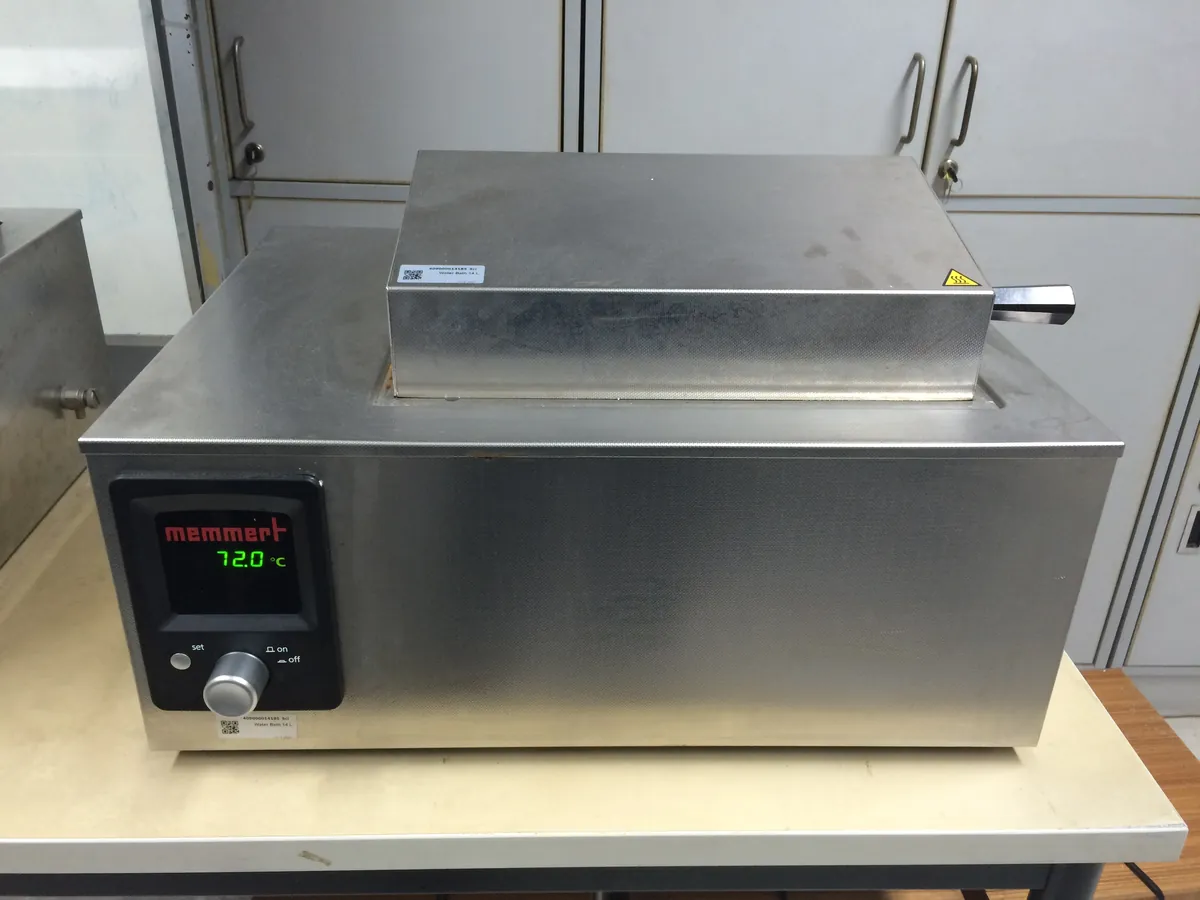
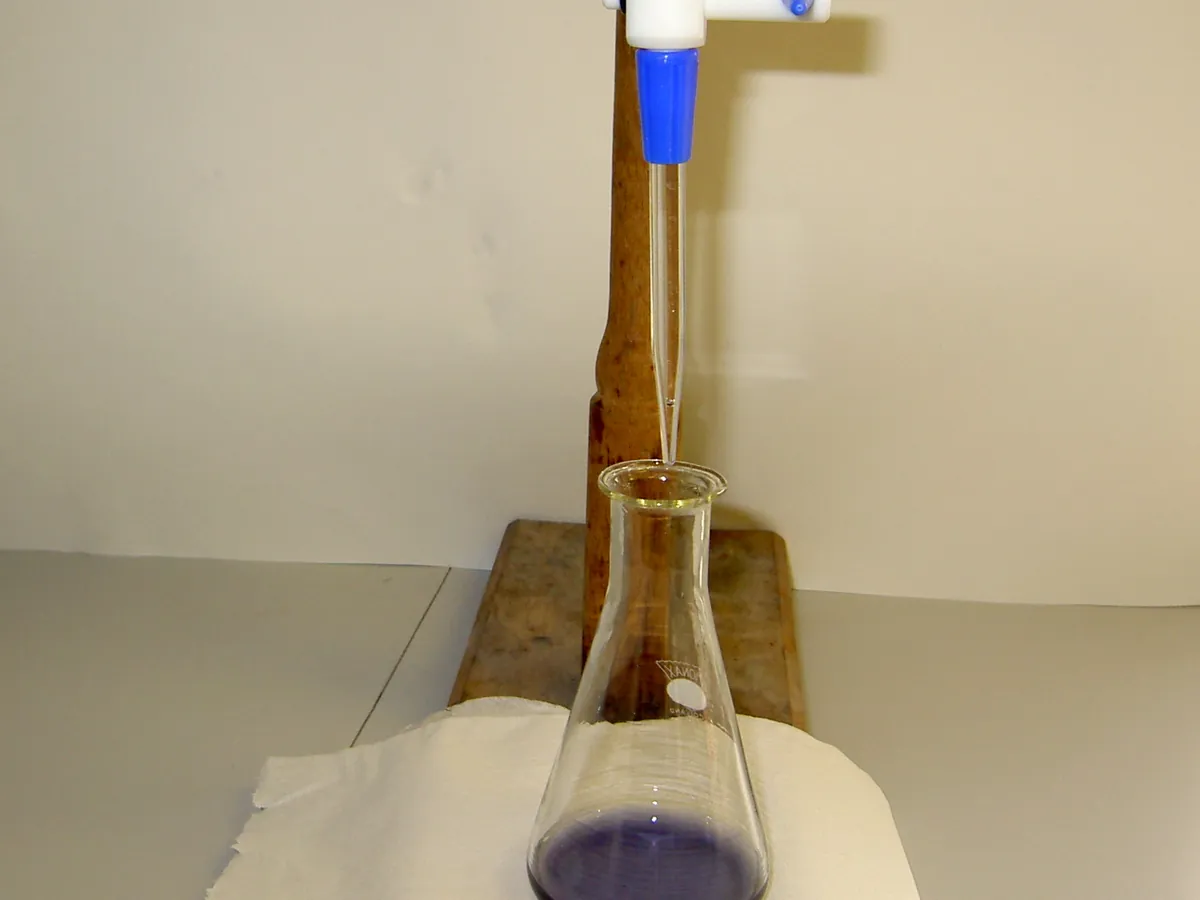
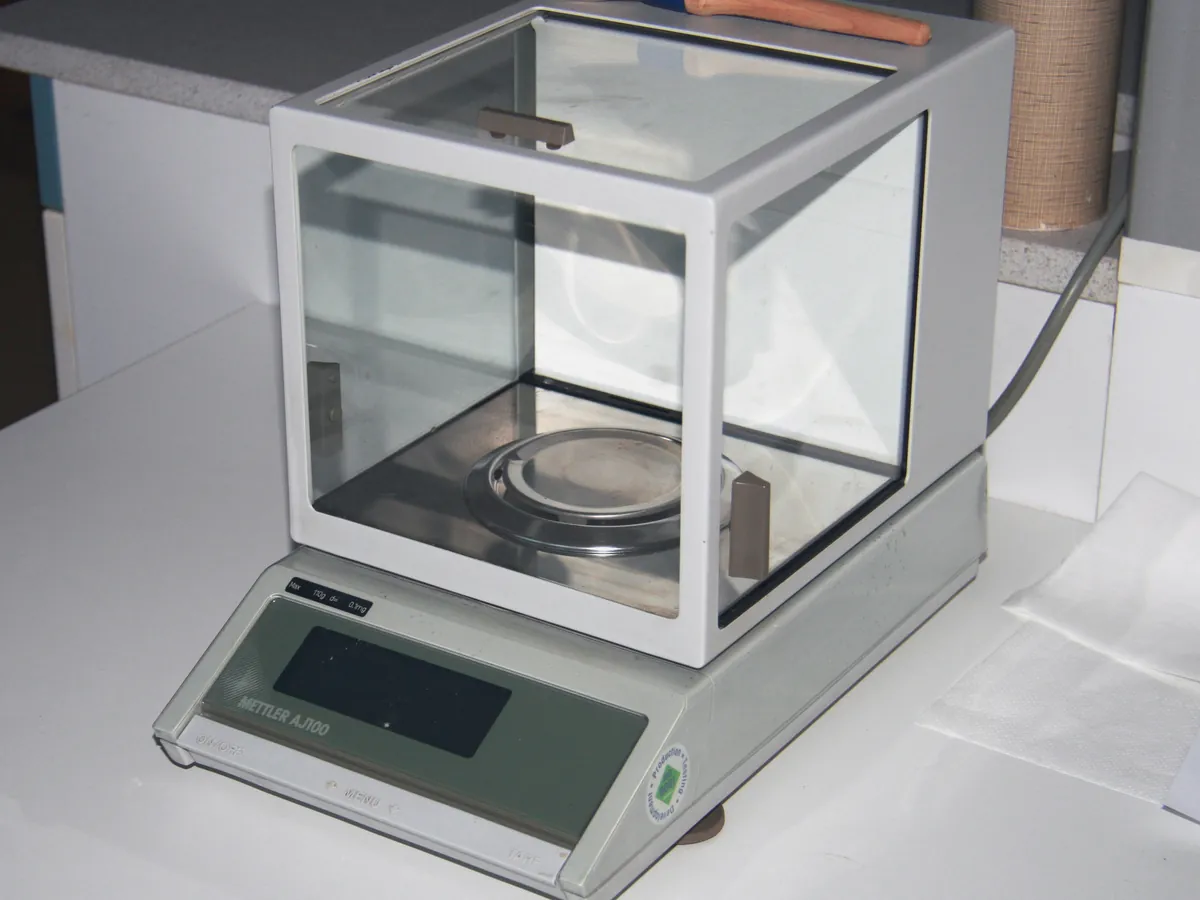
Reagents & standards
| Reagent | Grade / specification |
|---|---|
| Ethanolic KOH | About 0.5 N potassium hydroxide in ethanol (95%), left to stand and decanted if not clear |
| Titrant | 0.5 N hydrochloric acid, standardised |
| Indicator | Phenolphthalein, 1% in ethanol |
Preparing the sample
- 01
Weigh
Weigh about 2 g of oil into a round-bottom or conical flask.
- 02
Add KOH
Add exactly 25 mL ethanolic KOH by pipette.
- 03
Reflux
Boil gently under reflux for about 60 minutes.
- 04
Titrate
Titrate the hot solution with 0.5 N HCl to the end point.
Procedure
- 1Weigh about 2 g of oil accurately (to 1 mg) into a 250 mL alkali-resistant flask.
- 2Add exactly 25.0 mL of ethanolic KOH from a pipette, using the same pipette and draining time for blank and samples.
- 3Fit a reflux condenser and boil gently on a water bath (or heating block) for 60 minutes, swirling from time to time.
- 4Run a blank with 25.0 mL of ethanolic KOH alone under the same conditions.
- 5Add about 1 mL phenolphthalein and titrate the hot solution with 0.5 N HCl until the pink colour just disappears.
- 6Analyse in duplicate.
Standard preparation
- 1Standardise 0.5 N HCl against sodium carbonate or tris(hydroxymethyl)aminomethane and record its normality.
Notes for analysts
- Ester value = saponification value − acid value; it reflects the esters alone.
- Unsaponifiable matter (sterols, hydrocarbons) does not consume KOH and lowers the value; mineral oil adulteration shows as a low SV.
- Use the same pipette and draining time for blank and samples; small differences in KOH volume cause large errors.
Method parameters (typical)
| Sample mass | About 1.5–2.5 g |
|---|---|
| Reagent | 25.0 mL of about 0.5 N ethanolic KOH |
| Reflux time | About 60 minutes (longer for hard-to-saponify materials, as per method) |
| Titrant | 0.5 N HCl, phenolphthalein, titrate hot |
System suitability & sequence
| Parameter | Limit |
|---|---|
| Blank | Blank titre consistent with previous blanks (reagent strength) |
| Duplicate agreement | Within the method repeatability limit |
Typical sequence
- 1Standardise HCl
- 2Weigh samples, prepare blank
- 3Reflux 60 min
- 4Titrate blank and samples hot
Calculation with a worked example
Where
- B
- HCl used for the blank (mL)
- S
- HCl used for the sample (mL)
- N
- Normality of the HCl
- W
- Mass of sample (g)
- 56.1
- Molar mass of KOH (g/mol)
Given
- Sample mass (W)
- 2.005 g palm oil
- Blank titre (B)
- 24.80 mL
- Sample titre (S)
- 11.20 mL
- HCl normality (N)
- 0.5021
Working
- 1
B − S = 24.80 − 11.20 = 13.60 mL
- 2SV = 56.1 × 13.60 × 0.5021 ÷ 2.005
- 3= 383.08 ÷ 2.005 = 191.1 mg KOH/g
Saponification value = 191.1 mg KOH/g
What result passes
- Compare with the identity range for the oil. Typical published ranges: palm about 190–209, groundnut about 187–196, soybean about 189–195, sunflower about 188–194, coconut about 248–265 mg KOH/g. Use the current Codex, FSSAI or customer ranges.
Validation parameters (ICH Q2(R2))
| Parameter | Typical requirement |
|---|---|
| Precision | Repeatability within the method's published limits |
| Accuracy | Analysis of a reference oil or a pure triglyceride such as tristearin (theoretical value calculable) |
Run this method in LimsPulse: specifications and STPs under version control, results calculated and checked against limits, and a signed Certificate of Analysis.