Residual Solvents by Headspace GC-FID
Measures leftover organic solvents from synthesis or purification in an API or excipient. The sample is dissolved in DMSO in a sealed headspace vial, heated, and the vapour is injected into a GC-FID. Each solvent is quantified against a standard prepared at its ICH Q3C limit.
- Static headspace GC with flame ionisation detection
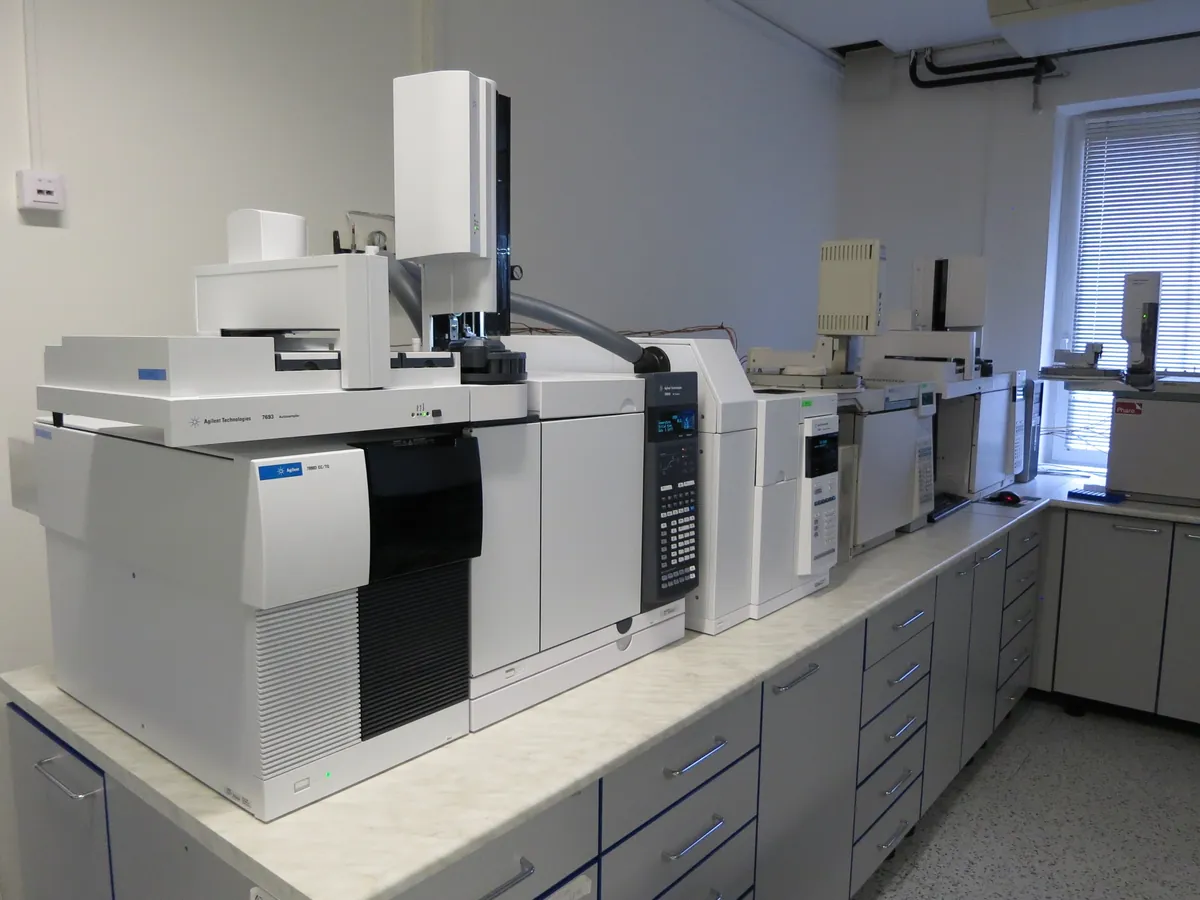
- GC
- Headspace
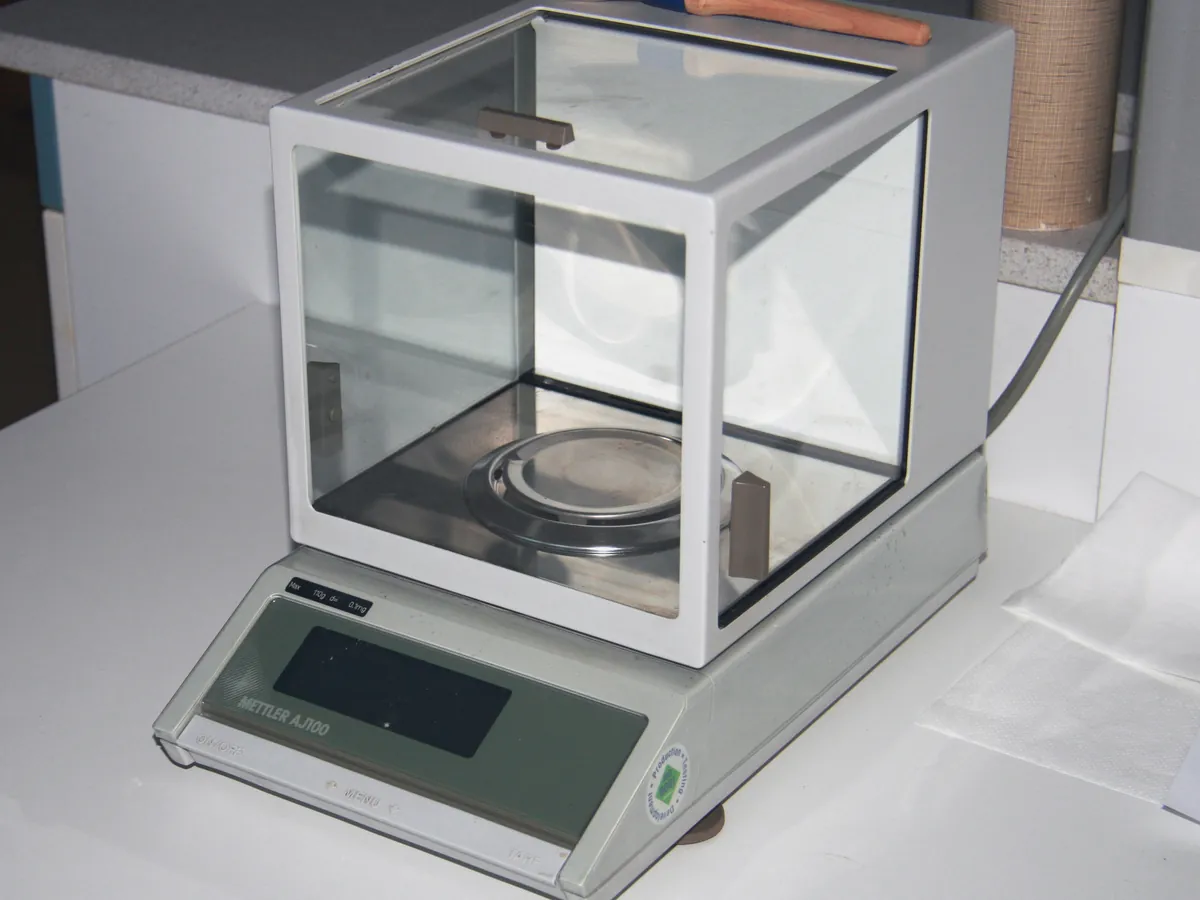
- Analytical balance
Reference: Illustrative method in the style of USP <467> / Ph. Eur. 2.4.24 with ICH Q3C limits. Always follow your approved specification, validated STP and the current chapter.
Why this method works
Residual solvents are volatile organic chemicals used or produced in manufacturing that are not completely removed. ICH Q3C groups them by risk. Class 1 solvents (e.g. benzene, carbon tetrachloride) are known or strongly suspected carcinogens or environmental hazards and should be avoided. Class 2 solvents (e.g. methanol 3000 ppm, dichloromethane 600 ppm, acetonitrile 410 ppm) have limits set from a permitted daily exposure (PDE). Class 3 solvents (e.g. ethanol, acetone) have low toxic potential and are acceptable up to 5000 ppm (0.5%) without further justification. In the headspace vial each solvent partitions into the gas phase; a fixed volume of that gas is injected and separated on a mid-polarity G43 (6% cyanopropylphenyl / 94% dimethylpolysiloxane) column, and the FID response of the sample is compared with that of a standard at the limit concentration.
Instruments used

Reagents & standards
| Reagent | Grade / specification |
|---|---|
| Dimethyl sulphoxide (DMSO) | Headspace grade, checked free of interfering peaks (DMF, DMA or water may be used depending on sample solubility) |
| Methanol | Reference standard or high-purity (≥ 99.8%) solvent of known purity |
| Ethanol | Reference standard or high-purity solvent of known purity |
| Acetone | Reference standard or high-purity solvent of known purity |
| Dichloromethane | Reference standard or high-purity solvent of known purity |
| Headspace vials | 20 mL, with PTFE/silicone septa and aluminium crimp caps |
| Gases | Carrier (helium or nitrogen), hydrogen and air for FID, all high purity |
Preparing the sample
- 01
Weigh
Weigh about 500 mg of sample directly into a 20 mL headspace vial.
- 02
Add diluent
Add 5.0 mL of DMSO with a calibrated pipette.
- 03
Seal
Crimp the cap immediately and check it is tight.
- 04
Dissolve
Swirl or vortex gently until dissolved (sample ≈ 100 mg/mL).
- 05
Equilibrate
Load into the headspace sampler; the vial is heated for the equilibration time.
- 06
Inject
The sampler transfers 1 mL of headspace gas to the GC.
Procedure
- 1Accurately weigh about 500 mg of the sample into a 20 mL headspace vial and record the weight.
- 2Add 5.0 mL of DMSO using a calibrated pipette and crimp the vial immediately.
- 3Mix gently until the sample dissolves completely; do not shake liquid onto the septum.
- 4Prepare the sample in duplicate.
- 5Prepare a blank vial containing 5.0 mL of DMSO only.
Standard preparation
- 1Stock solution: into a 100 mL volumetric flask containing about 50 mL of DMSO, accurately weigh about 300 mg methanol, 500 mg ethanol, 500 mg acetone and 60 mg dichloromethane (add each below the DMSO surface and weigh by difference). Make up to volume with DMSO and mix.
- 2Standard solution: dilute 10.0 mL of the stock solution to 100.0 mL with DMSO (about 0.30 mg/mL methanol, 0.50 mg/mL ethanol, 0.50 mg/mL acetone and 0.060 mg/mL dichloromethane).
- 3Because the sample is 100 mg/mL, these concentrations correspond to 3000, 5000, 5000 and 600 ppm, the ICH Q3C limits for each solvent.
- 4Transfer 5.0 mL of standard solution into each of six headspace vials and crimp immediately.
Notes for analysts
- This is an illustrative training example. Retention times and responses are typical, not taken from a specific instrument; the real elution order and critical pairs depend on your column and conditions.
- Pharmacopoeial residual solvent testing usually starts with identification (Procedure A on G43, confirmation on a G16 column, Procedure B) before quantification (Procedure C); follow the current chapter.
- The FID responds weakly to dichloromethane and other chlorinated solvents; check S/N carefully at low limits.
- Weigh volatile solvents below the surface of the diluent and keep flasks closed, or the standard will be low and sample results will be overestimated.
- If the sample matrix changes partitioning, use standard addition or a matrix-matched standard.
- Only test for solvents used or produced in the manufacturing process, as declared by the supplier, unless your specification says otherwise.
Method parameters (typical)
| Column | G43 (6% cyanopropylphenyl / 94% dimethylpolysiloxane), 30 m × 0.53 mm, 3 µm film |
|---|---|
| Carrier gas | Helium (or nitrogen), linear velocity about 35 cm/s, constant flow |
| Inlet | Split, 140–200 °C, split ratio about 1:5 |
| Oven programme | 40 °C for 20 min, then 10 °C/min to 240 °C, hold 20 min |
| Detector | FID at 250 °C |
| Headspace oven | 80 °C, equilibration 45–60 min with shaking |
| Loop / transfer line | 85 °C / 90 °C |
| Vial pressurisation | About 1 min; injection volume 1 mL of headspace gas |
| Run time | About 60 minutes (DMSO elutes during the temperature ramp) |
System suitability & sequence
| Parameter | Limit |
|---|---|
| Blank | No interfering peak at the retention time of any solvent |
| Resolution | Not less than 1.5 between any two adjacent solvent peaks in the standard (USP <467> Procedure A uses a named critical pair with its own limit; follow the current chapter) |
| %RSD of peak area (6 standard vials) | Typically not more than 10–15% for each solvent, as set in your validated method |
| Signal-to-noise | Not less than 10 for each solvent at the reporting / LOQ level (≥ 3 where only detection is required) |
Typical sequence
- 1Blank (DMSO) × 1
- 2Standard × 6 (system suitability)
- 3Sample preparation 1 × 1
- 4Sample preparation 2 × 1
- 5Bracketing standard × 1
Calculation with a worked example
Where
- AT
- Peak area of the solvent in the sample vial
- AS
- Mean peak area of the solvent in the standard vials
- CS
- Concentration of the solvent in the standard solution (mg/mL)
- CT
- Concentration of the sample in the sample solution (mg/mL) = sample weight (mg) ÷ 5.0 mL
Given
- Solvent
- Methanol (ICH Q3C Class 2, limit 3000 ppm)
- AT
- 41,250
- AS
- 52,880
- CS
- 0.3012 mg/mL (301.2 mg in 100 mL, diluted 10 → 100 mL)
- Sample weight
- 502.0 mg in 5.0 mL DMSO
- CT
- 502.0 ÷ 5.0 = 100.4 mg/mL
Working
- AT / AS = 41,250 / 52,880 = 0.78007
- CS / CT = 0.3012 / 100.4 = 0.0030000
- 0.78007 × 0.0030000 × 10^6 = 2340.2
Methanol = 2340 ppm, which is within the ICH Q3C limit of 3000 ppm
What result passes
- Each solvent not more than its limit in the specification. ICH Q3C Option 1 limits used here: methanol 3000 ppm, dichloromethane 600 ppm, ethanol 5000 ppm, acetone 5000 ppm.
- Class 1 solvents, if they could be present, must be controlled to their much lower limits (e.g. benzene 2 ppm).
Validation parameters (ICH Q2(R2))
| Parameter | Typical requirement |
|---|---|
| Specificity | Blank and sample show no interference; all solvents resolved from each other and from the diluent |
| LOD / LOQ | Determined by S/N about 3 and 10, LOQ well below the reporting threshold (often ≤ 10% of the limit) |
| Linearity | Typically LOQ to 120–150% of the limit, correlation coefficient ≥ 0.99 |
| Accuracy | Recovery of spiked solvents typically 80–120% at LOQ, 100% and 120% of the limit |
| Precision | Repeatability of six spiked preparations, %RSD typically ≤ 10–15% |
| Robustness | Small changes in equilibration temperature and time, carrier flow and oven ramp |
Run this method in LimsPulse: specifications and STPs under version control, results calculated and checked against limits, and a signed Certificate of Analysis.