pH of Cosmetic Products
Measures pH of a cosmetic either directly (fluid products such as toners and shampoos) or on a 10% dispersion in freshly boiled and cooled purified water (thick creams, pastes and anhydrous products). The meter is calibrated with two or three buffers that bracket the expected pH.
- Cosmetics & personal care
- Potentiometry with a glass combination electrode
- pH meter
- Analytical balance
- Lab water system
Reference: Typical method based on general potentiometric pH practice and the pH clauses in BIS and company cosmetic product specifications. Many product specifications state whether pH is read neat or on a 10% (or 1%) dispersion.
Why this method works
A glass electrode develops a potential that changes by about 59.16 mV per pH unit at 25 °C (the Nernst slope). The meter compares it with a stable reference electrode and converts the potential to pH using a calibration with standard buffers. Thick emulsions can coat the glass membrane and the junction, giving slow or drifting readings, so many methods disperse the product in water first. A 10% dispersion gives a reproducible, comparable value, but it is not the same as the pH of the neat product, so the report must say which was measured.
Instruments used
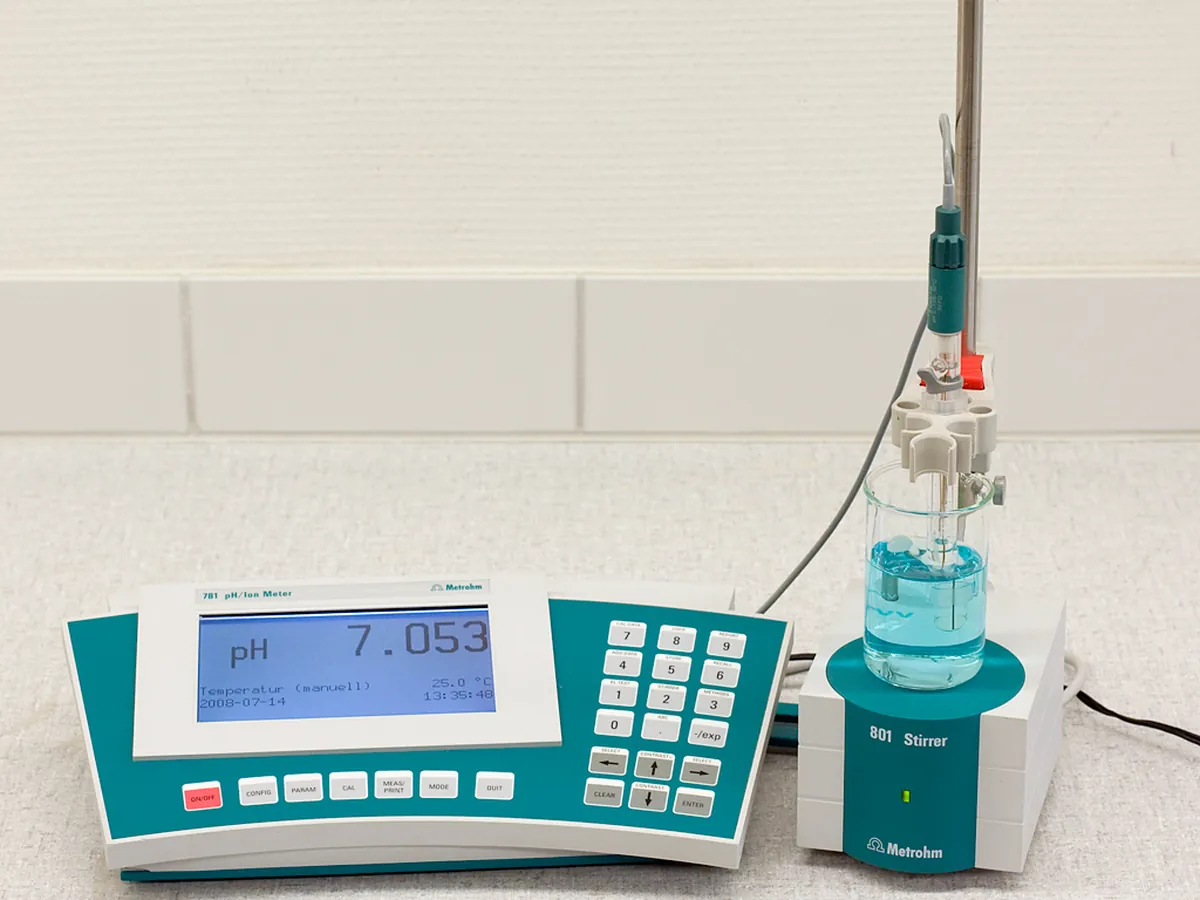

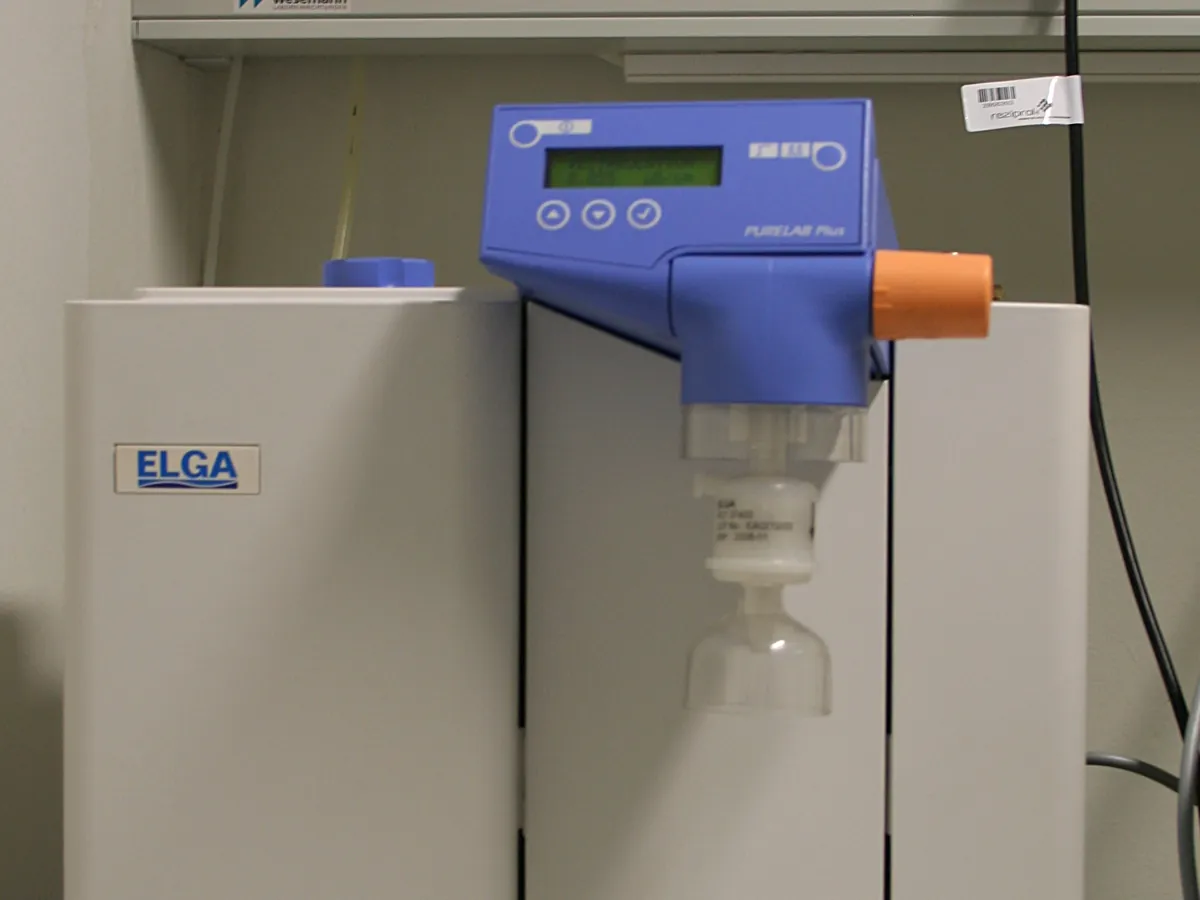
Reagents & standards
| Reagent | Grade / specification |
|---|---|
| pH buffers | Certified buffers at pH 4.01, 7.00 and (if needed) 10.01, traceable |
| Water | Purified water, freshly boiled and cooled to remove carbon dioxide |
| Electrode storage solution | 3 M KCl or as the electrode supplier recommends |
Preparing the sample
- 01
Calibrate
Calibrate the meter with buffers that bracket the expected pH.
- 02
Choose mode
Fluid product: measure neat. Thick or anhydrous product: prepare a 10% dispersion.
- 03
Disperse
Weigh 10 g product, add 90 g CO₂-free water and mix until uniform.
- 04
Equilibrate
Bring to 25 °C (or record the temperature) with ATC on.
- 05
Measure
Immerse the electrode, stir gently and read when stable.
Procedure
- 1Calibrate the pH meter with pH 4.01 and 7.00 buffers (add 10.01 for alkaline products such as soaps). Check slope and offset are within limits.
- 2For fluid products, pour about 50 mL into a clean beaker and measure directly at 25 ± 2 °C.
- 3For thick creams and pastes, weigh 10.0 g into a beaker, add 90 g of freshly boiled and cooled purified water and mix (stirrer or gentle homogeniser) until the dispersion is uniform.
- 4Immerse the electrode and temperature probe, stir gently and record the reading once it is stable (for example drift less than 0.01 pH in 30 s).
- 5Rinse the electrode with water between samples and blot gently; clean with a mild detergent or the supplier's cleaner if cream residue builds up.
- 6Measure in duplicate and report the mean, stating 'neat' or '10% dispersion'.
Notes for analysts
- Always state whether pH was measured neat or on a dispersion; the values are not interchangeable.
- Emulsions can foul the junction. A sleeve-junction or open-junction electrode works better for creams.
- pH drift during stability studies is an early sign of emulsion breakdown, preservative hydrolysis or microbial growth.
Method parameters (typical)
| Temperature | 25 ± 2 °C, with automatic temperature compensation |
|---|---|
| Dispersion | 10% w/w in CO₂-free purified water (or as the product specification states) |
| Calibration | Two or three buffers bracketing the expected pH |
| Stability criterion | For example drift < 0.01 pH in 30 s, as set in the meter |
| Replicates | Duplicate |
System suitability & sequence
| Parameter | Limit |
|---|---|
| Electrode slope | Typically 95–105% of the theoretical Nernst slope |
| Offset at pH 7 | Typically within ± 30 mV (or the supplier's limit) |
| Check buffer | An independent buffer reads within ± 0.05 pH of its value |
Typical sequence
- 1Calibrate with buffers
- 2Read check buffer
- 3Measure samples in duplicate
- 4Re-read check buffer at end of series
Calculation with a worked example
Where
- E₄
- Electrode potential in pH 4.01 buffer (mV)
- E₇
- Electrode potential in pH 7.00 buffer (mV)
- 59.16
- Theoretical Nernst slope at 25 °C (mV per pH unit)
Given
- E in pH 4.01 buffer
- +172.5 mV
- E in pH 7.00 buffer
- −2.0 mV
Working
- 1
ΔE = 172.5 − (−2.0) = 174.5 mV; ΔpH = 7.00 − 4.01 = 2.99
- 2Slope = 174.5 ÷ 2.99 = 58.36 mV/pH
- 3Slope (%) = 58.36 ÷ 59.16 × 100 = 98.6%
Slope 98.6% and offset −2.0 mV: calibration acceptable. A face cream 10% dispersion then reads, for example, pH 5.6.
What result passes
- Compare with the product specification. Typical targets: leave-on skin products about pH 4.5–7, shampoos about 4.5–7, hair dyes and depilatories often alkaline; soaps about 9–11.
- Any BIS or other national product standard that applies sets its own range; check the current edition.
Validation parameters (ICH Q2(R2))
| Parameter | Typical requirement |
|---|---|
| Precision | Duplicates typically within 0.1 pH |
| Robustness | Effect of dispersion ratio, mixing time and temperature |
| Specificity | Neat vs dispersion results compared during development |
Run this method in LimsPulse: specifications and STPs under version control, results calculated and checked against limits, and a signed Certificate of Analysis.