Melt flow index of plastics
A few grams of polymer are melted in the heated barrel of a melt flow indexer and extruded through a standard die under a fixed load. Timed cut-offs are weighed and the result is expressed as grams per 10 minutes.
- Chemicals & materials
- Extrusion plastometer (Procedure A, mass method)
- MFI tester
- Analytical balance
- Vacuum oven
Reference: Typical method based on ISO 1133-1 and ASTM D1238 (Procedure A). Use the test condition from the material specification.
Why this method works
At a fixed temperature and load, the rate at which polymer melt flows through the standard die depends on its viscosity. A higher MFR means an easier-flowing, usually lower-molecular-weight grade. The mean mass of cut-offs taken over a known time is scaled to 600 s (10 minutes).
Instruments used
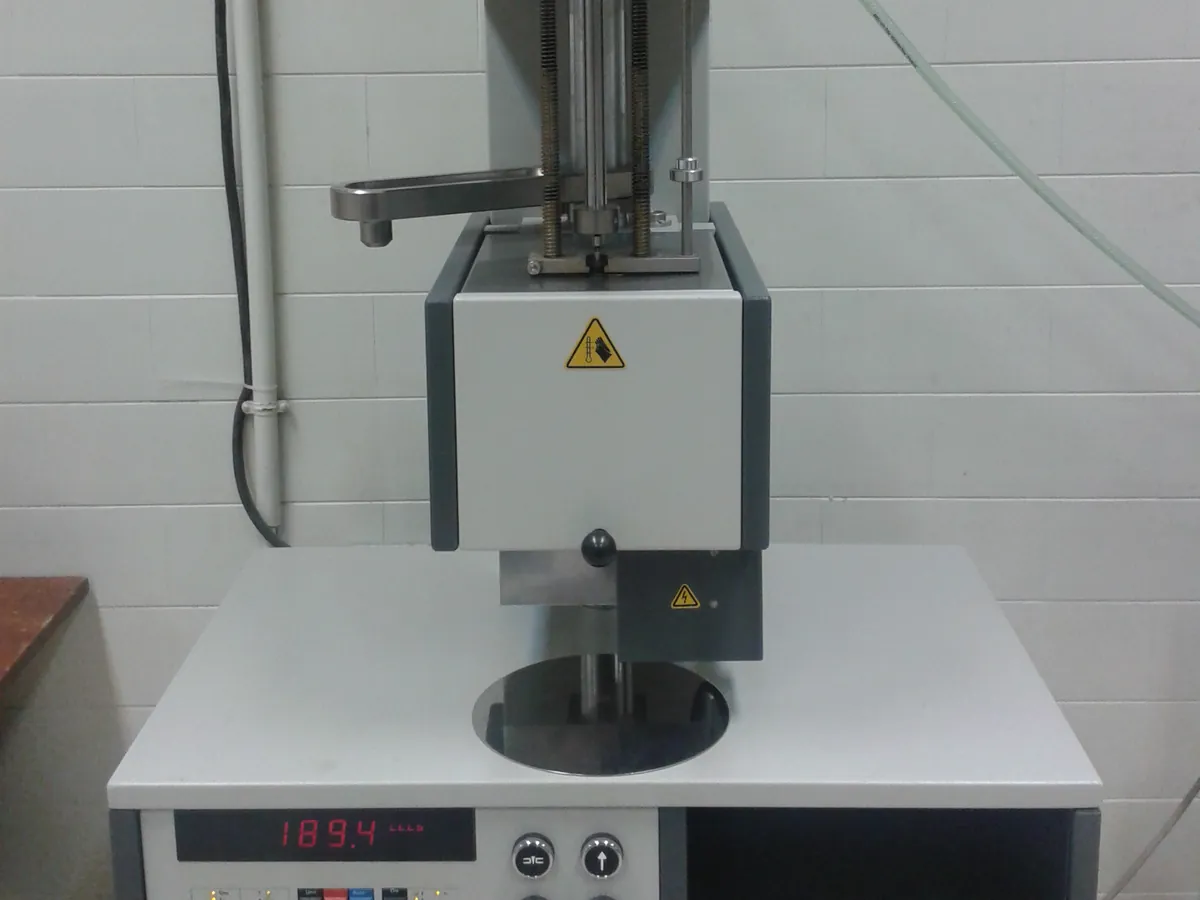
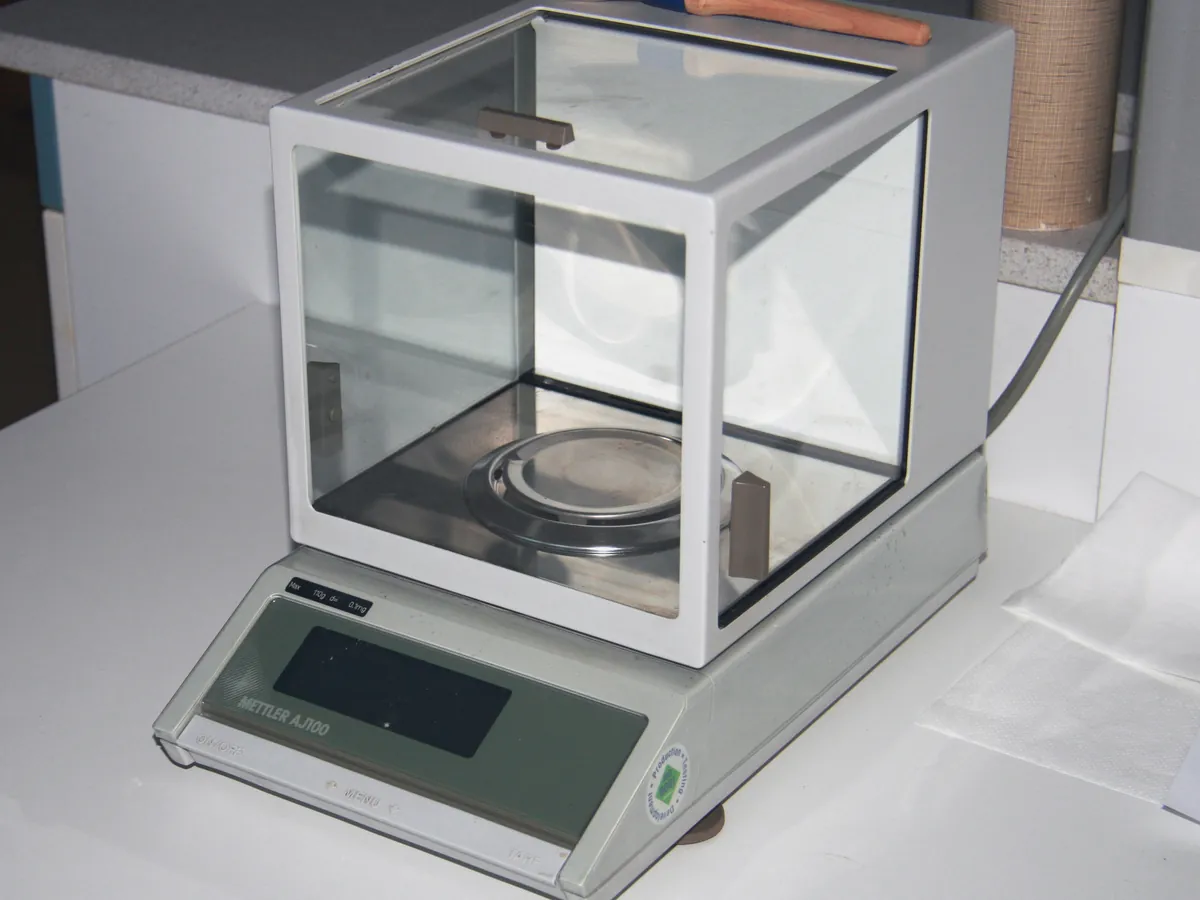
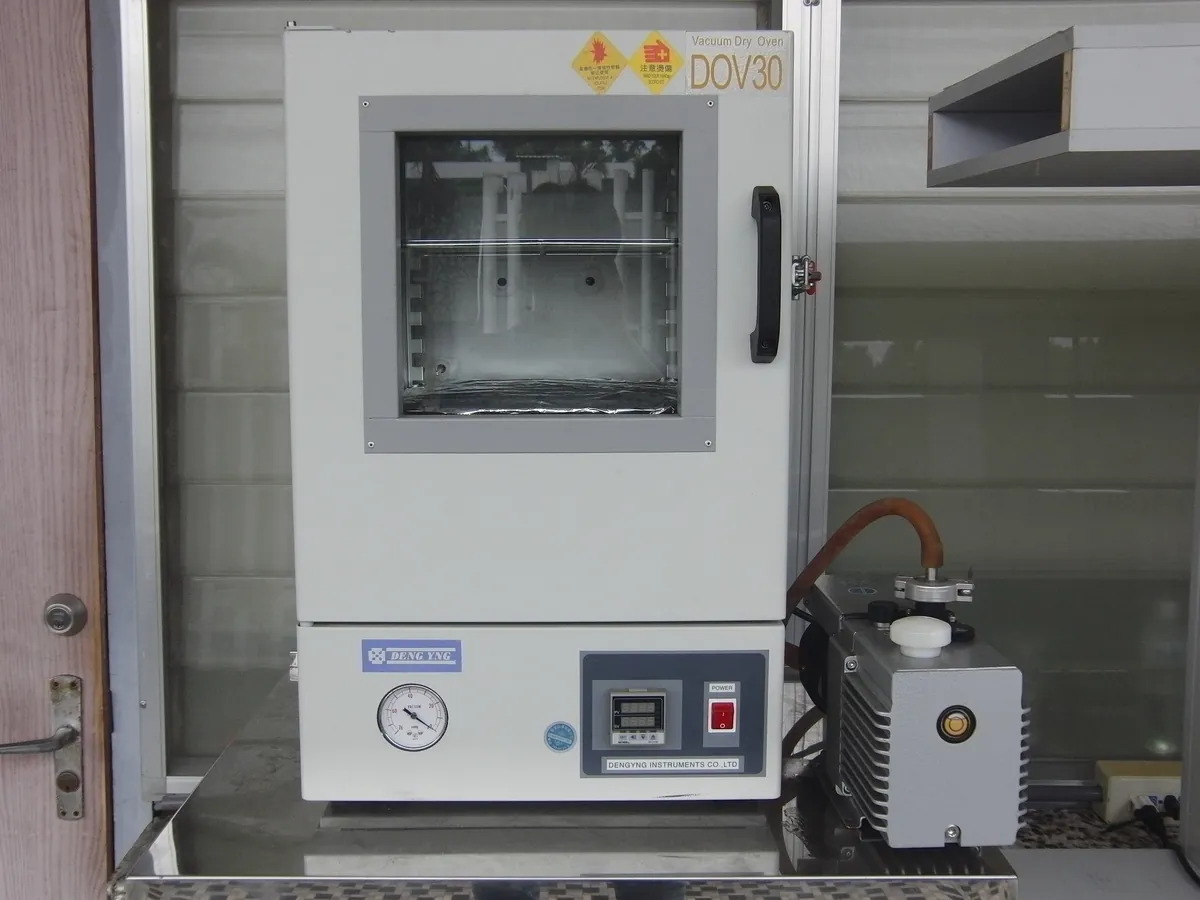
Preparing the sample
- 01
Condition
Dry the polymer if it is hygroscopic or if the specification says so.
- 02
Weigh charge
Weigh 4–8 g of granules, depending on the expected MFR.
- 03
Load & preheat
Charge the barrel, compact and preheat for 5 minutes.
- 04
Extrude & cut
Apply the load and take timed cut-offs in the measuring zone.
- 05
Weigh
Weigh the cooled cut-offs and calculate MFR.
Procedure
- 1Set the instrument to the test condition, for example 190 °C/2.16 kg for polyethylene or 230 °C/2.16 kg for polypropylene, and let it stabilise.
- 2Dry hygroscopic polymers (for example PA, PET, PC) as specified; polyolefins usually need no drying.
- 3Charge the barrel within about 1 minute and compact the granules with the packing rod.
- 4Insert the piston and preheat for 5 minutes.
- 5Add the test weight. Discard the extrudate until the piston's lower reference mark reaches the barrel top.
- 6Cut the extrudate at a fixed time interval (for example every 30 s for MFR 3–10 g/10 min) and collect at least three bubble-free cut-offs.
- 7Weigh each cut-off to 1 mg when cool and calculate the mean.
Standard preparation
- 1Run a reference polymer of known MFR periodically as a check on the instrument.
Notes for analysts
- MVR (cm³/10 min) is measured by piston travel (Procedure B). MFR = MVR × melt density.
- A rise in MFR of moulded parts or regrind compared with virgin resin indicates chain scission during processing.
- Moisture in hygroscopic polymers causes hydrolysis and high, erratic MFR; dry first.
Method parameters (typical)
| Test condition | Polymer-specific, for example PE 190 °C/2.16 kg; PP 230 °C/2.16 kg; PS 200 °C/5 kg |
|---|---|
| Die | 2.095 mm bore, 8.000 mm length |
| Preheat time | 5 minutes |
| Charge mass | About 4–8 g, depending on expected MFR |
| Cut-off interval | Chosen from the expected MFR (shorter for high MFR), as the standard's table suggests |
| Replicates | At least three cut-offs per test |
System suitability & sequence
| Parameter | Limit |
|---|---|
| Cut-off agreement | Masses of individual cut-offs typically agree within about 10% (or the limit in the standard) |
| Reference polymer | Within its assigned range |
Typical sequence
- 1Stabilise temperature
- 2Reference polymer check (periodically)
- 3Sample test
- 4Clean barrel and die
Calculation with a worked example
Where
- m
- Mean mass of the cut-offs (g)
- t
- Cut-off time interval (s)
- 600
- Seconds in 10 minutes
Given
- Condition
- Polyethylene, 190 °C / 2.16 kg
- Cut-off interval (t)
- 30 s
- Cut-off masses
- 0.312, 0.318, 0.315, 0.309, 0.316 g
Working
- 1Mean mass m = (0.312 + 0.318 + 0.315 + 0.309 + 0.316) ÷ 5 = 1.570 ÷ 5 = 0.314 g
- 2MFR = 0.314 × 600 ÷ 30 = 6.28 g/10 min
MFR (190 °C/2.16 kg) = 6.3 g/10 min
What result passes
- Compare with the grade specification or supplier CoA, for example nominal MFR ± a stated tolerance (often about ±10–20% of nominal, depending on grade).
- Always report the test condition with the result, for example 'MFR (190 °C/2.16 kg) = 6.3 g/10 min'.
Validation parameters (ICH Q2(R2))
| Parameter | Typical requirement |
|---|---|
| Precision | Repeatability on replicate charges; compare with precision data in ISO 1133 / ASTM D1238 |
| Accuracy | Reference polymer of assigned MFR |
Run this method in LimsPulse: specifications and STPs under version control, results calculated and checked against limits, and a signed Certificate of Analysis.