Fluoride by Ion-Selective Electrode (with TISAB)
A fluoride-selective electrode develops a potential that depends on the logarithm of fluoride activity. Mixing each sample and standard 1 : 1 with TISAB fixes the ionic strength and pH and frees fluoride bound to aluminium or iron, so the meter reading can be converted to concentration using a calibration curve.
- Environmental & water
- Potentiometry with a lanthanum fluoride crystal electrode after 1 : 1 dilution with TISAB
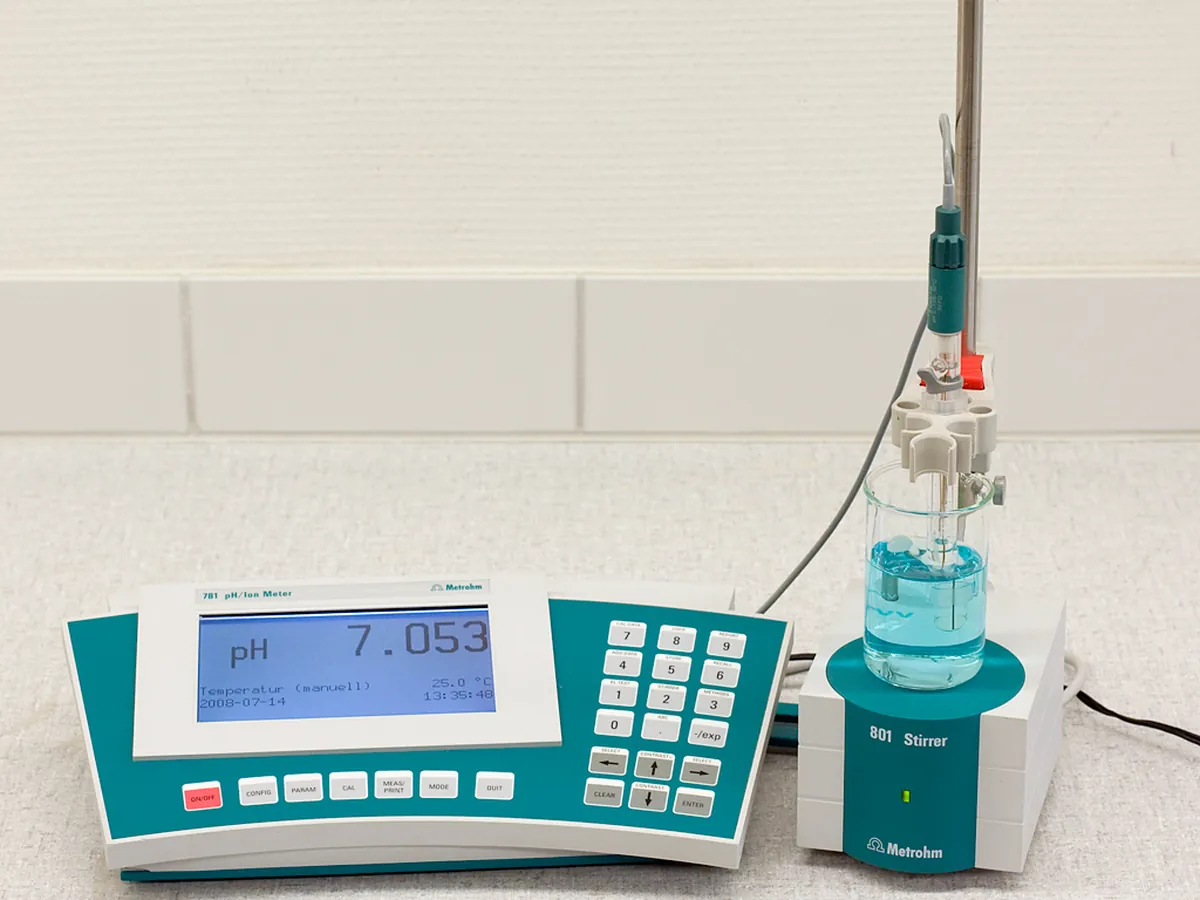
- pH meter
- Analytical balance
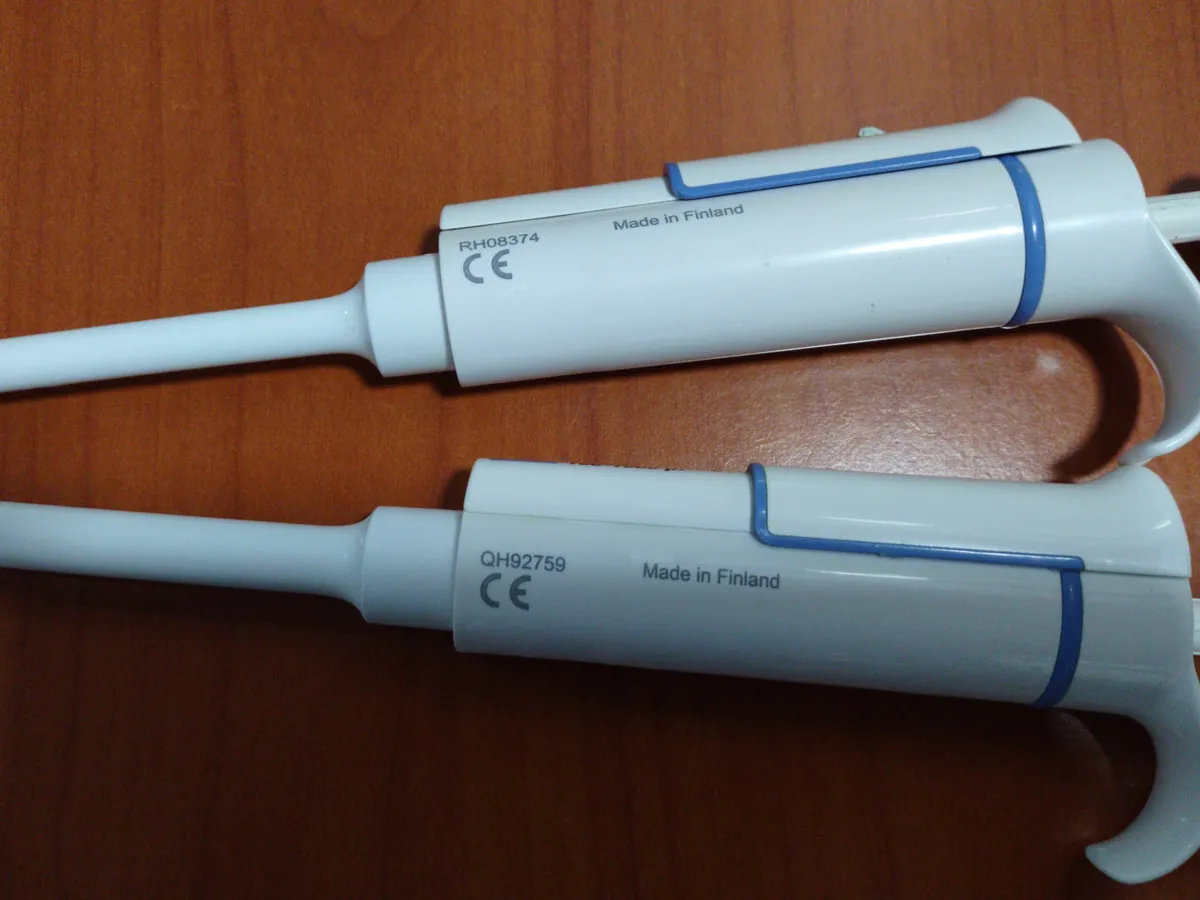
- Micropipette
Reference: Typical method based on APHA Standard Methods 4500-F⁻ C (ion-selective electrode method) and the IS 3025 part for fluoride. The pH meter is used in mV / ion mode. Follow your lab SOP.
Why this method works
The sensing element is a lanthanum fluoride (LaF₃) single crystal. The potential across it follows the Nernst equation: E = E⁰ − S × log[F⁻], where S is about 59 mV per tenfold change at 25 °C. Total Ionic Strength Adjustment Buffer (TISAB) does three jobs: it sets a high, constant ionic strength so that activity is proportional to concentration; it buffers the pH at about 5–5.5, where neither HF formation (low pH) nor OH⁻ interference (high pH) matters; and it contains a complexing agent (such as CDTA) that releases fluoride from Al³⁺ and Fe³⁺ complexes.
Instruments used

Reagents & standards
| Reagent | Grade / specification |
|---|---|
| TISAB | Acetate buffer pH about 5.0–5.5 with NaCl and CDTA (commercial TISAB II or prepared as per SOP) |
| Fluoride stock | Sodium fluoride (dried) in water, e.g. 100 mg/L F⁻; store in plastic |
| Working standards | e.g. 0.2, 0.5, 1.0, 2.0 mg/L F⁻, bracketing the expected range |
Preparing the sample
- 01
Collect
Plastic (polyethylene) bottle; no preservative needed.
- 02
Mix with TISAB
25 mL sample + 25 mL TISAB.
- 03
Standards
Treat standards exactly the same way.
- 04
Calibrate
Read mV of standards, low to high; check slope.
- 05
Measure
Read sample mV at same temperature and stirring.
Procedure
- 1Collect samples in polyethylene bottles (fluoride can react with glass over time).
- 2Bring standards and samples to the same temperature (±1 °C).
- 3Pipette 25 mL of each standard and sample into plastic beakers and add 25 mL of TISAB to each. Mix.
- 4Set the meter to mV (or concentration) mode. Immerse the fluoride and reference electrodes in the lowest standard with gentle, constant magnetic stirring and record the stable reading. Repeat for each standard from low to high, rinsing and blotting the electrodes between solutions.
- 5Check that the slope is within the SOP range (typically −54 to −60 mV per decade at 25 °C).
- 6Measure each sample in the same way and read the concentration from the calibration. Re-read a mid standard every 10 samples or so.
Standard preparation
- 1Stock: dissolve 221.0 mg of dried NaF in water and make up to 1000 mL (1.00 mL = 100 µg F⁻). Store in a polyethylene bottle.
- 2Working standards: dilute the stock with water; each is then mixed 1 : 1 with TISAB like the samples.
Notes for analysts
- In much of India, high fluoride in groundwater causes dental and skeletal fluorosis — fluoride is one of the most important health parameters for borewell sources.
- Slow response or drifting readings usually point to a fouled crystal; polish or clean as per the manufacturer.
- Never use glass beakers for low-level fluoride standards stored for long periods.
Method parameters (typical)
| Electrodes | LaF₃ fluoride ISE + reference electrode (or combination) |
|---|---|
| Sample : TISAB | 1 : 1 by volume |
| Temperature | Standards and samples within ±1 °C of each other |
| Stirring | Same speed for all solutions |
| Calibration | At least three standards bracketing the samples |
System suitability & sequence
| Parameter | Limit |
|---|---|
| Electrode slope | Typically −54 to −60 mV/decade at 25 °C (or as per SOP) |
| Check standard | Mid standard re-read within ±5–10% of nominal (as per SOP) |
| Spike recovery | Typically 90–110% |
Typical sequence
- 1Standards low → high
- 2Check slope
- 3Samples
- 4Mid-standard drift check every ~10 samples
- 5Spiked sample
Calculation with a worked example
Where
- E
- Sample potential (mV)
- E₁
- Potential of a reference standard of concentration C₁ (mV)
- S
- Electrode slope (mV per decade; negative for an anion electrode)
- C
- Fluoride concentration of the sample (mg/L)
Given
- Standards (mg/L F⁻) and mV
- 0.5 → +17.6; 1.0 → 0.0; 2.0 → −17.6
- Slope S
- −58.5 mV/decade (17.6 mV per doubling = 58.5 × log 2)
- Sample reading
- +5.2 mV
Working
- 1
Take C₁ = 1.0 mg/L, E₁ = 0.0 mV
- 2(E − E₁) ÷ S = (5.2 − 0.0) ÷ (−58.5) = −0.0889
- 3C = 1.0 × 10^(−0.0889) = 0.815 mg/L
- 4
Samples and standards were both diluted 1 : 1 with TISAB, so no further dilution factor is needed
Fluoride = 0.81 mg/L (below the IS 10500 acceptable limit of 1.0 mg/L)
What result passes
- As per IS 10500:2012: acceptable limit 1.0 mg/L, permissible limit 1.5 mg/L in the absence of an alternative source; check the current edition.
- WHO guideline value: 1.5 mg/L; national authorities may set lower values considering climate and water intake.
Validation parameters (ICH Q2(R2))
| Parameter | Typical requirement |
|---|---|
| Linearity | Nernstian response across the calibration range |
| Accuracy | Spike recovery and comparison with a certified reference water |
| Interferences | High aluminium may exceed the complexing capacity of TISAB; check with spikes |
Run this method in LimsPulse: specifications and STPs under version control, results calculated and checked against limits, and a signed Certificate of Analysis.