Flakiness Index and Elongation Index of Coarse Aggregate
The aggregate is sieved into narrow size fractions. Each particle is tried in a thickness gauge (flaky if it passes) and a length gauge (elongated if it does not pass). The masses give the flakiness index and elongation index.
- Construction materials
- Hand gauging with thickness (slot) and length gauges
- Sieve shaker
- Analytical balance
- Hot air oven
Reference: Typical method based on IS 2386 (Part 1); limits from IS 383 and road specifications. Always follow the current editions and your approved SOP.
Why this method works
Good concrete and road aggregate should be roughly cubical. Flaky particles (thin) and elongated particles (long) pack poorly, need more cement paste and water, and break easily under load. IS 2386 Part 1 defines a particle as flaky when its least dimension (thickness) is less than 0.6 times its mean sieve size, and as elongated when its greatest dimension (length) is more than 1.8 times its mean sieve size. The mean sieve size is the average of the two sieves that define the fraction. Gauges with slots and pins cut to these sizes let each particle be classified quickly.
Instruments used
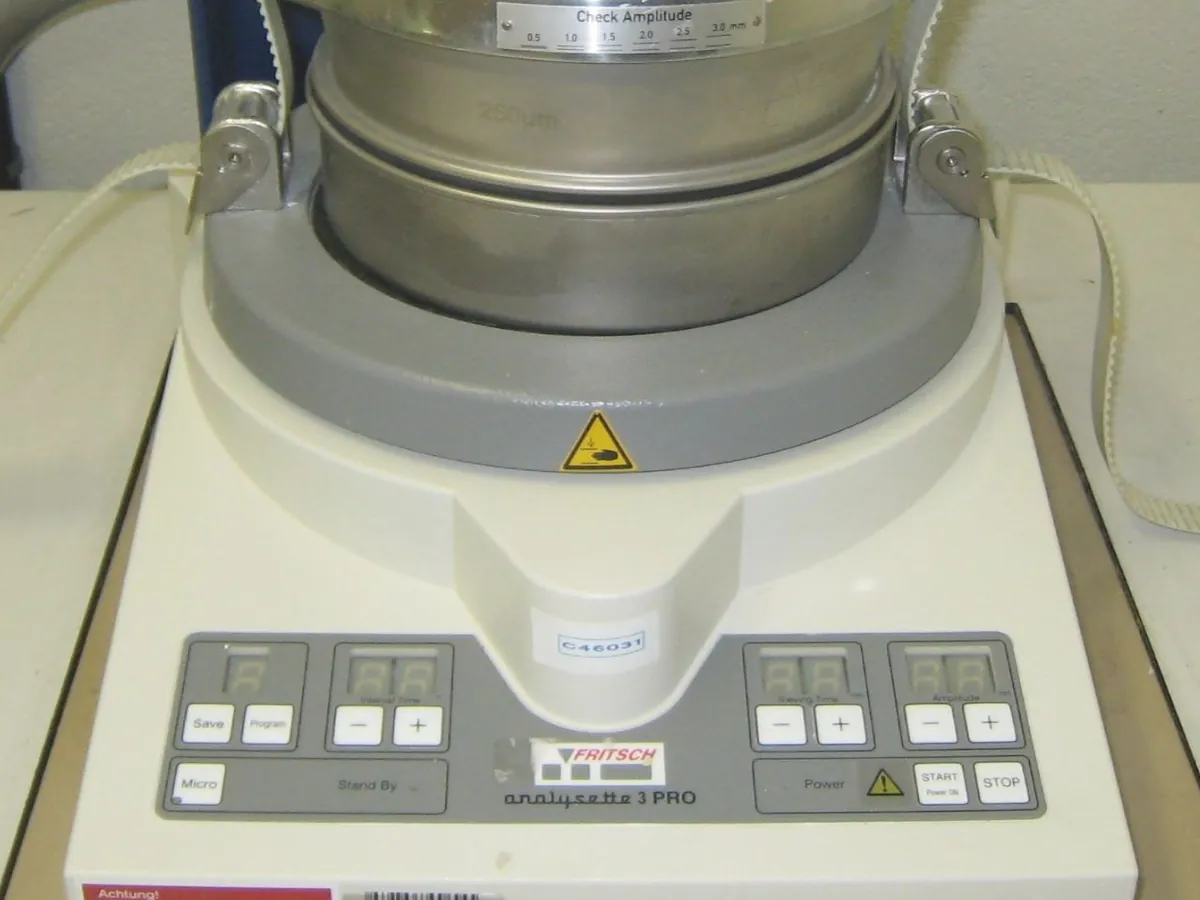
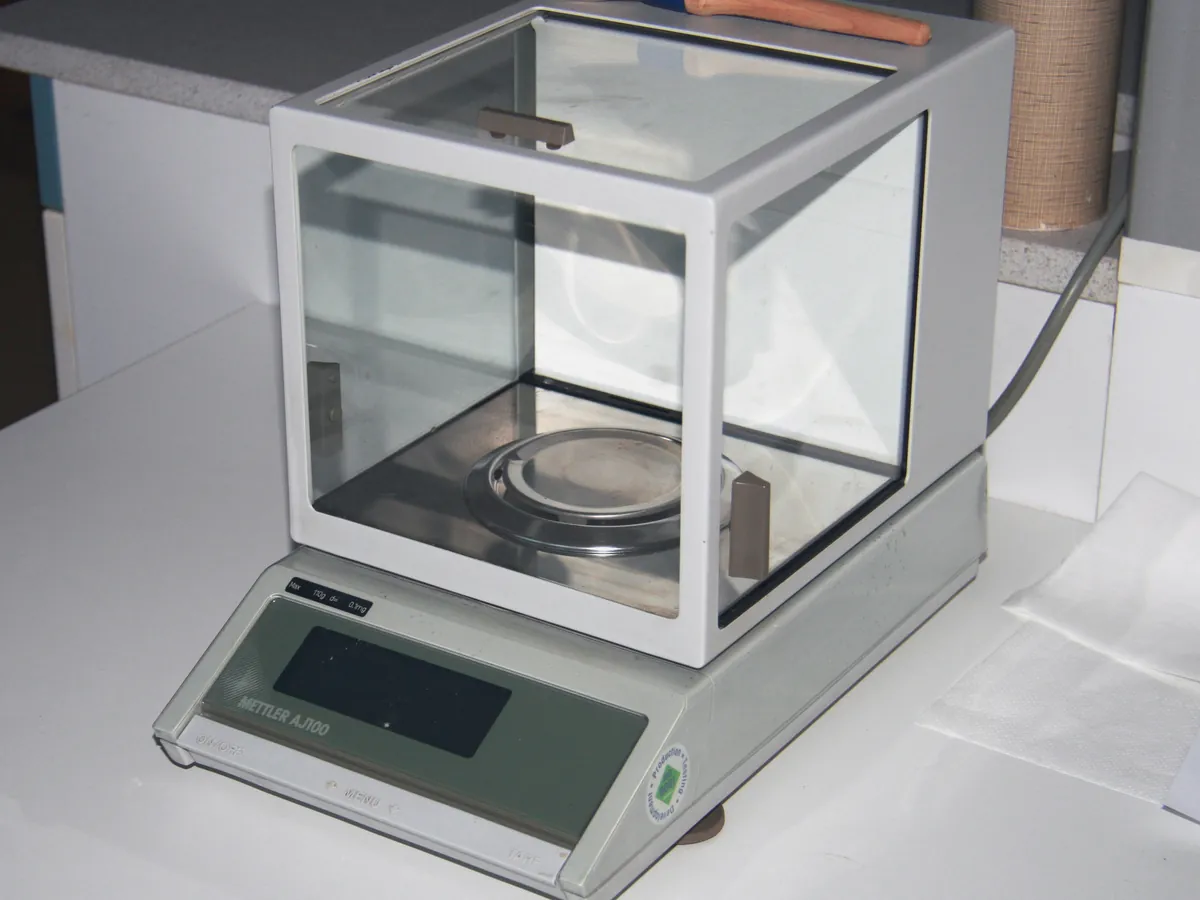
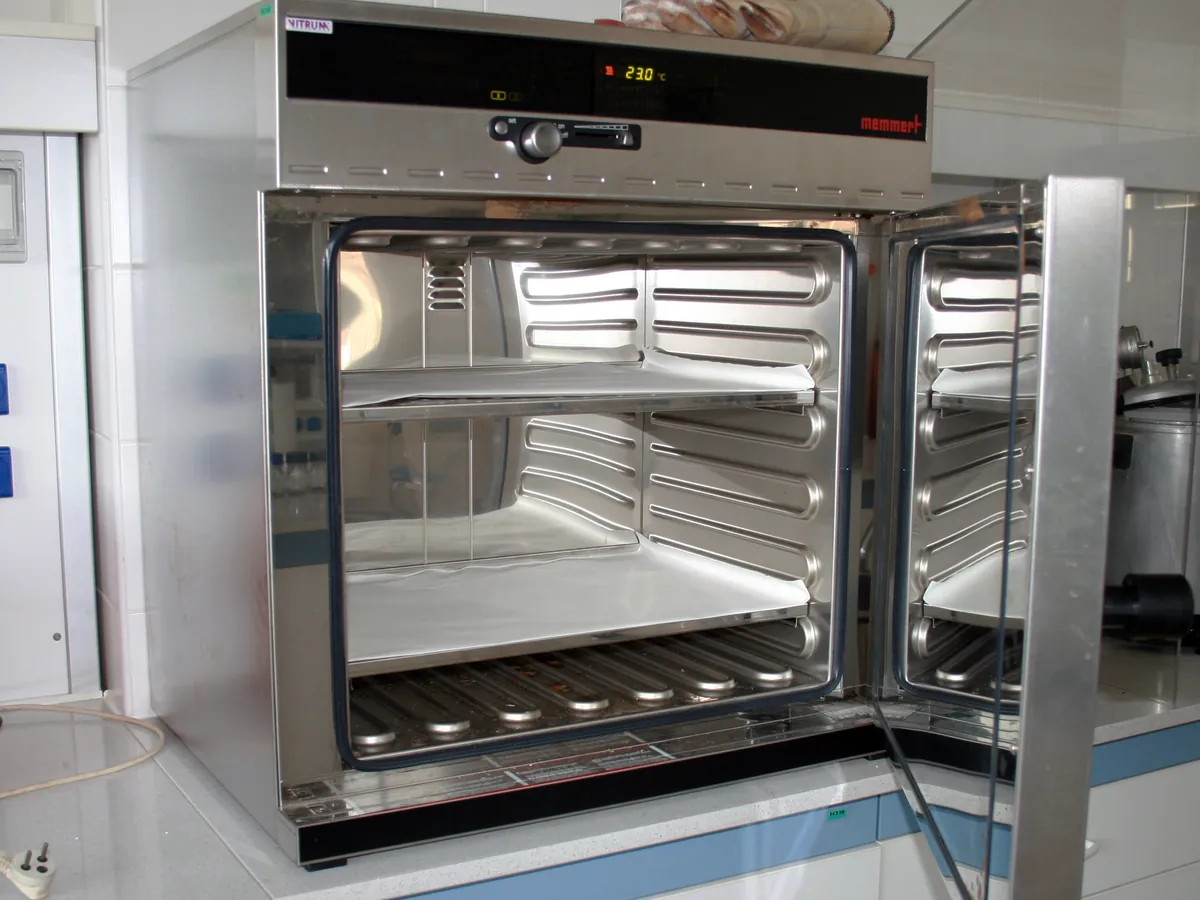
Reagents & standards
| Reagent | Grade / specification |
|---|---|
| Thickness gauge | Metal plate with slots of width 0.6 × mean size of each fraction (e.g. 10.8 mm for 20–16 mm, 8.55 mm for 16–12.5 mm, 6.75 mm for 12.5–10 mm) |
| Length gauge | Pins set 1.8 × mean size apart (e.g. 32.4 mm for 20–16 mm, about 25.6 mm for 16–12.5 mm, about 20.2 mm for 12.5–10 mm) |
| Test sieves | Size-fraction sieves, e.g. 63, 50, 40, 31.5, 25, 20, 16, 12.5, 10 and 6.3 mm |
Preparing the sample
- 01
Sieve
Sieve the sample into the standard size fractions.
- 02
Count
Take at least 200 pieces of each fraction tested; weigh it.
- 03
Thickness gauge
Try each particle in the matching slot; collect the flaky ones.
- 04
Length gauge
Try particles lengthwise between the pins; collect elongated ones.
- 05
Weigh
Weigh the flaky and elongated portions of each fraction.
- 06
Calculate
Express each as % of the mass gauged.
Procedure
- 1Dry the sample (or use it surface-dry) and sieve it into the size fractions. Fractions passing 6.3 mm or retained on 63 mm are not tested.
- 2For each fraction, take a portion with at least 200 pieces and weigh it.
- 3Flakiness: try each particle in the slot of the thickness gauge that matches its fraction. Particles that pass through the slot are flaky. Weigh the flaky particles from each fraction.
- 4Elongation: try each particle lengthwise through the pins of the length gauge for its fraction. Particles whose greatest dimension stops them passing between the pins are elongated. Weigh the elongated particles.
- 5IS 2386 Part 1 gauges elongation on the whole fraction. Many road specifications (for example MoRTH) gauge elongation only on the non-flaky particles and add the two indices into a combined index. Follow the method your specification names and state it in the report.
Standard preparation
- 1Check gauge slot widths and pin spacings against the standard table, for example with a calibrated vernier caliper.
- 2Check sieves for damage and valid aperture verification.
Notes for analysts
- A particle can be both flaky and elongated. That is why many road specifications gauge elongation only on the non-flaky part before adding the indices.
- High flakiness often points to the crusher type or settings; cone or vertical-shaft impact crushers usually give a more cubical product than jaw crushers alone.
- ASTM D4791 measures flat and elongated particles with a proportional caliper using dimension ratios. It is not numerically the same as the IS indices.
Method parameters (typical)
| Flaky | Least dimension < 0.6 × mean sieve size |
|---|---|
| Elongated | Greatest dimension > 1.8 × mean sieve size |
| Size range tested | Passing 63 mm and retained on 6.3 mm |
| Minimum pieces | 200 per fraction tested |
| Balance | Readable to 0.1% of the sample mass |
System suitability & sequence
| Parameter | Limit |
|---|---|
| Gauge dimensions | Slots and pins match the standard table |
| Mass check | Sum of gauged fractions equals the starting mass within the SOP tolerance |
Typical sequence
- 1Sieve into size fractions
- 2Weigh each fraction
- 3Thickness gauge → flaky mass
- 4Length gauge → elongated mass
- 5Calculate FI, EI and combined index
Calculation with a worked example
Where
- Mf
- Total mass of flaky particles (g)
- Mt
- Total mass of all fractions gauged (g)
- Me
- Total mass of elongated particles (g)
- Mn
- Mass gauged for elongation — here the non-flaky mass, Mt − Mf (g)
Given
- 20–16 mm fraction
- 1200 g; flaky 180 g; elongated (of non-flaky) 150 g
- 16–12.5 mm fraction
- 1500 g; flaky 260 g; elongated (of non-flaky) 210 g
- 12.5–10 mm fraction
- 1000 g; flaky 190 g; elongated (of non-flaky) 120 g
- Method
- Elongation gauged on the non-flaky particles (combined index method)
Working
- 1
Mt = 1200 + 1500 + 1000 = 3700 g; Mf = 180 + 260 + 190 = 630 g
- 2FI = 630 ÷ 3700 × 100 = 17.0%
- 3
Mn = 3700 − 630 = 3070 g; Me = 150 + 210 + 120 = 480 g
- 4EI = 480 ÷ 3070 × 100 = 15.6%
- 5
Combined index = 17.0 + 15.6 = 32.7% (from unrounded values 17.03 + 15.64)
Flakiness index 17.0%, elongation index 15.6%, combined flakiness and elongation index 32.7%.
What result passes
- Typically, the current edition of IS 383 limits the combined flakiness and elongation index of coarse aggregate for concrete (commonly quoted as not more than 40%). Check the current edition.
- Road specifications set their own limits by layer (for example a combined index of about 30–35% for bituminous layers). Use the project specification.
- Always state in the report whether elongation was gauged on the whole fraction or on the non-flaky portion.
Validation parameters (ICH Q2(R2))
| Parameter | Typical requirement |
|---|---|
| Approach | Standard method; competence shown by repeat tests and proficiency testing |
| Operator effect | Particles must be tried in the gauge, not forced; compare results between analysts |
| Equipment control | Gauge dimensions checked periodically |
Run this method in LimsPulse: specifications and STPs under version control, results calculated and checked against limits, and a signed Certificate of Analysis.