Dissolution of Immediate-Release Tablets (Paracetamol 500 mg example)
Measures the percentage of paracetamol released from each of six tablets after 30 minutes in 900 mL of phosphate buffer at 37 °C, stirred by a paddle at 50 rpm, and judges the batch against the Q value using the staged acceptance criteria.
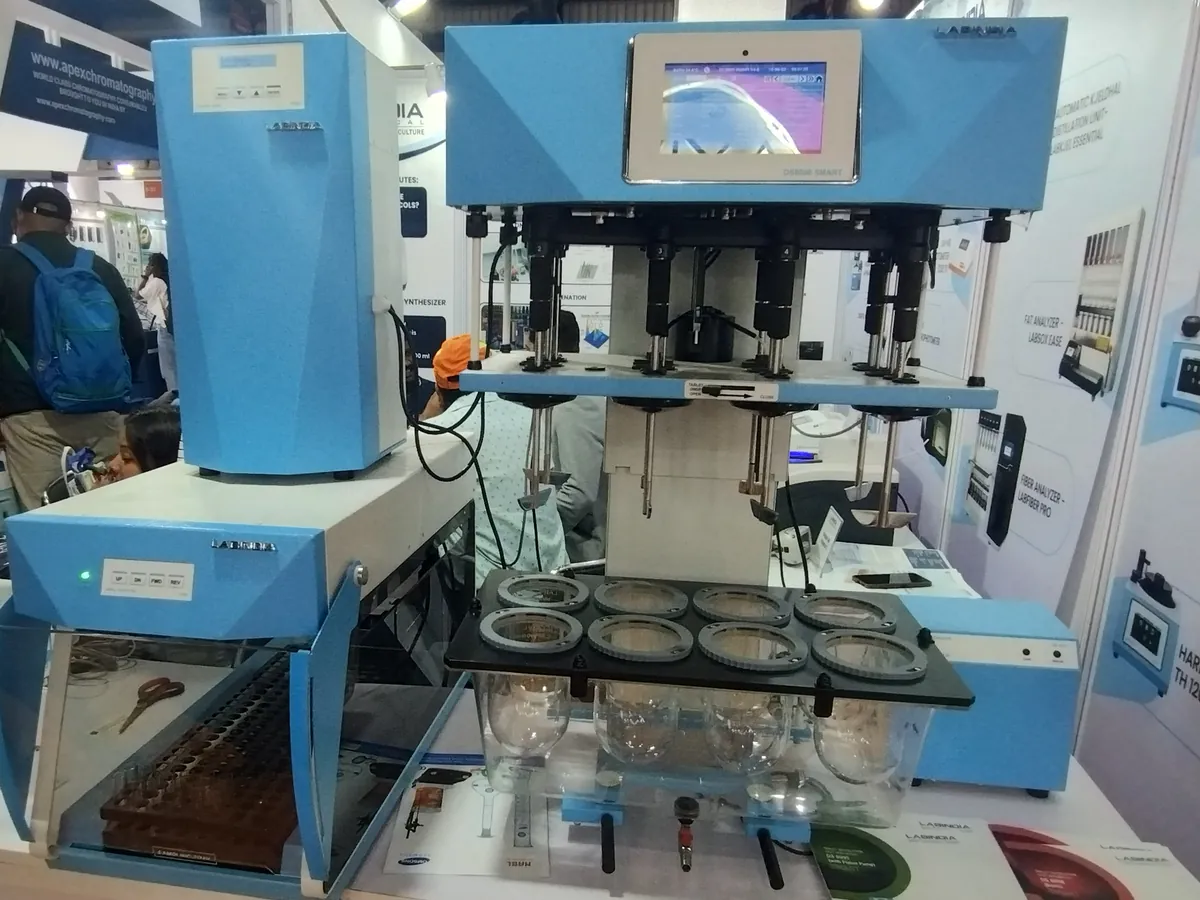
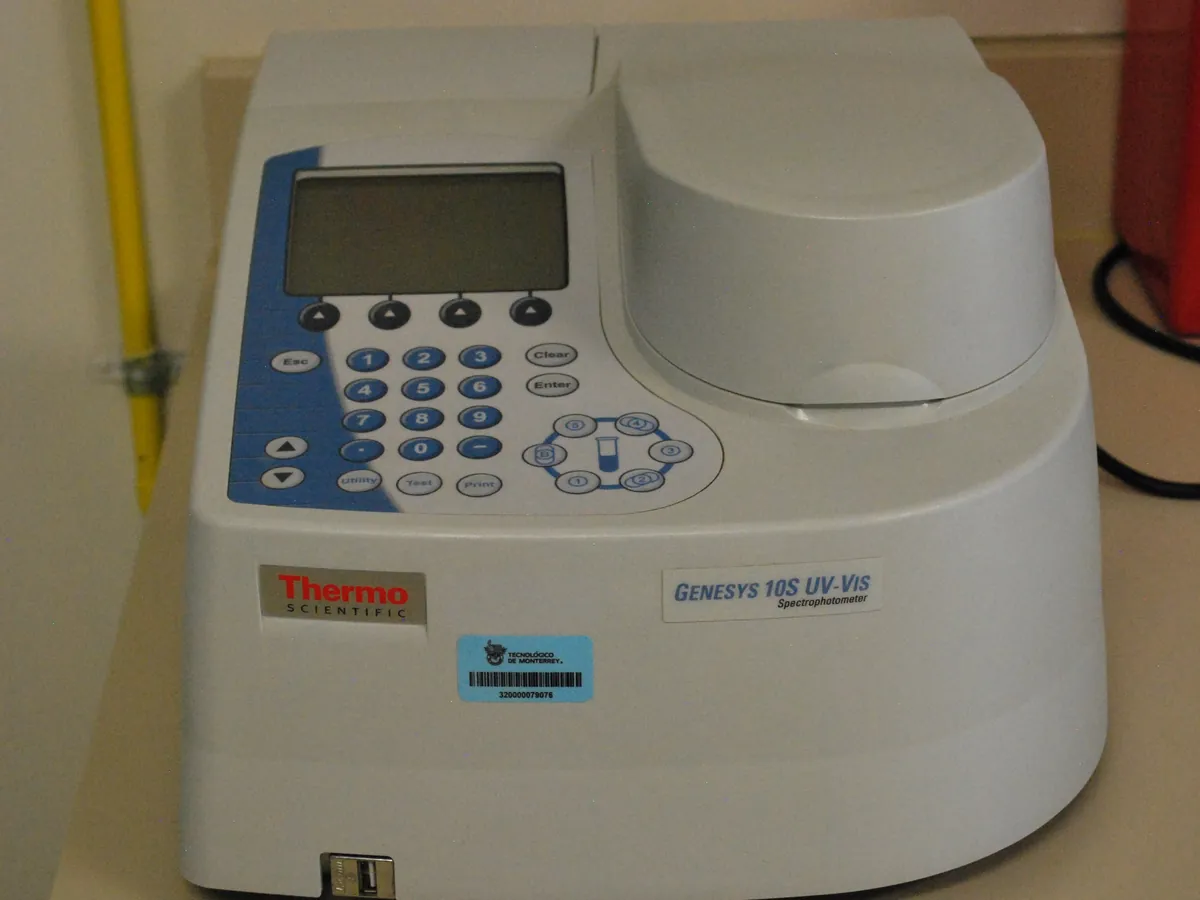
- Dissolution (apparatus 2, paddle) with UV-Vis spectrophotometry
- Dissolution tester
- UV-Vis
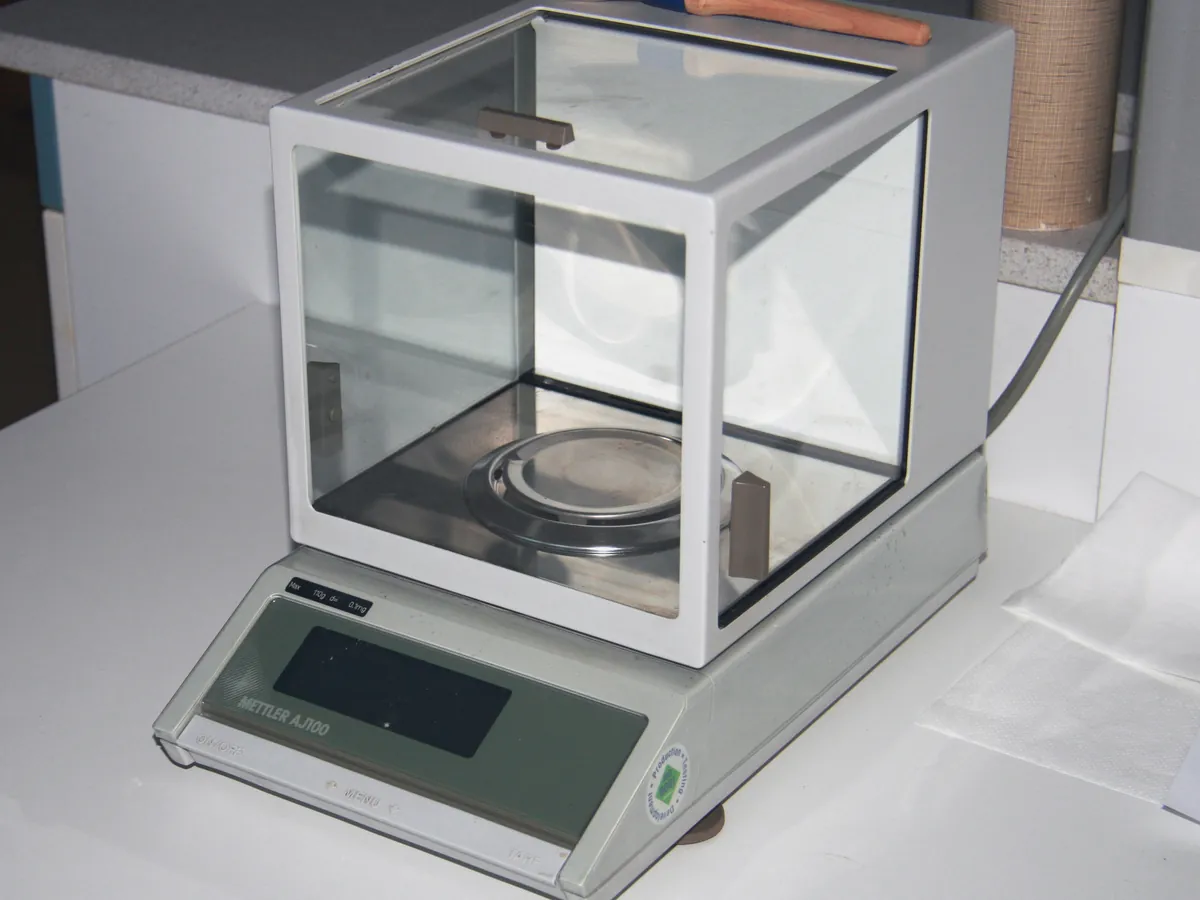
- Analytical balance
Reference: Typical conditions based on pharmacopoeial approaches for paracetamol / acetaminophen tablets. Always follow your approved specification and STP.
Why this method works
Each tablet is placed in a vessel of buffer at body temperature under gentle, standardised agitation. After the stated time, a filtered sample of the medium is diluted and its UV absorbance near 243 nm is compared with that of a paracetamol reference standard of known concentration. Because the medium volume is known, the absorbance ratio gives the amount dissolved, which is expressed as a percentage of the label claim.
Instruments used
Reagents & standards
| Reagent | Grade / specification |
|---|---|
| Dissolution medium | Phosphate buffer pH 5.8 (or pH 6.8 if your monograph states), prepared from potassium dihydrogen phosphate and sodium hydroxide as per the pharmacopoeial buffer recipe |
| Paracetamol reference standard | Certified purity (pharmacopoeial RS or a qualified working standard) |
| Water | Purified water |
| Filters | Validated syringe filters (e.g. 0.45 µm) or cannula filters, shown not to adsorb paracetamol |
Preparing the sample
- 01
Prepare medium
Prepare 6 × 900 mL buffer, check pH and deaerate.
- 02
Equilibrate
Fill vessels and bring to 37 ± 0.5 °C with paddles at 25 mm.
- 03
Add tablets
Drop one tablet into each vessel and start at 50 rpm.
- 04
Sample at 30 min
Withdraw about 10 mL from the sampling zone and filter.
- 05
Dilute
Dilute 1.0 mL of filtrate to 100 mL with medium.
- 06
Measure
Read absorbance at about 243 nm against medium as blank.
Procedure
- 1Prepare the buffer, check that pH is within the stated range, and deaerate it.
- 2Place 900 mL of medium in each of six vessels and allow it to reach 37 ± 0.5 °C. Confirm the temperature in each vessel.
- 3Set the paddles at 25 ± 2 mm above the vessel bottom and the speed to 50 rpm.
- 4Weigh each tablet if the procedure asks, then drop one tablet into each vessel, starting the timer with the first tablet and staggering the others if needed.
- 5At 30 minutes withdraw about 10 mL from the zone midway between the paddle top and the medium surface, at least 1 cm from the wall.
- 6Filter immediately, discarding the first few mL of filtrate as established in validation.
- 7Pipette 1.0 mL of the filtrate into a 100 mL volumetric flask and make up to volume with medium (about 5.5 µg/mL at 100% release).
- 8Measure the absorbance of each sample at the maximum near 243 nm in a 1 cm cell, using medium as the blank.
Standard preparation
- 1Accurately weigh about 50 mg of paracetamol reference standard into a 100 mL volumetric flask.
- 2Dissolve in medium (a small amount of methanol may be used first if your method allows) and make up to volume with medium.
- 3Pipette 1.0 mL into a 100 mL volumetric flask and make up to volume with medium (about 5 µg/mL).
- 4Measure the standard in replicate (e.g. five readings) to confirm precision.
Notes for analysts
- Do not change the apparatus, speed, medium or Q on your own: these are fixed by the specification.
- Note any coning, floating or sticking in the raw data; it may explain unexpected results.
- If the medium is not deaerated, document the validation that showed deaeration is not needed.
- HPLC can be used instead of UV when excipients or other actives interfere at the measuring wavelength.
- When samples are withdrawn at several time points without replacing medium, correct the calculation for the volume removed.
Method parameters (typical)
| Apparatus | USP apparatus 2 (paddle); some monographs use apparatus 1 (basket) at 100 rpm |
|---|---|
| Medium | Phosphate buffer pH 5.8 (or pH 6.8), deaerated |
| Volume | 900 mL |
| Temperature | 37 ± 0.5 °C |
| Rotation speed | 50 rpm |
| Time | 30 minutes |
| Sample volume | About 10 mL, filtered |
| Measurement | UV absorbance at about 243 nm, 1 cm cell, medium as blank |
| Tolerance (Q) | Typically not less than 80% (Q) of the labelled amount dissolved in 30 minutes |
System suitability & sequence
| Parameter | Limit |
|---|---|
| Apparatus status | Mechanical calibration, speed, temperature (and PVT if required) within due date |
| Standard absorbance %RSD | Typically not more than 2.0% for replicate readings |
| Standard absorbance range | Within the validated linear range of the spectrophotometer (commonly 0.2–0.8 AU) |
| Medium temperature | 37 ± 0.5 °C at start and end of the test |
Typical sequence
- 1Blank (medium)
- 2Standard × 5 (precision check)
- 3Samples from vessels 1–6
- 4Standard check at end
Calculation with a worked example
Where
- AT
- Absorbance of the sample solution
- AS
- Mean absorbance of the standard solution
- CS
- Concentration of paracetamol in the standard solution, corrected for purity (mg/mL)
- D
- Dilution factor of the sample (here 100)
- V
- Volume of medium in the vessel (mL)
- LC
- Label claim (mg per tablet)
Given
- AT (vessel 1)
- 0.352
- AS (mean of 5)
- 0.3584
- Standard weight
- 50.2 mg in 100 mL, then 1 → 100 mL
- Standard purity
- 99.8%
- CS
- 50.2 ÷ 100 ÷ 100 × 0.998 = 0.005010 mg/mL
- D
- 100
- V
- 900 mL
- LC
- 500 mg
Working
- AT ÷ AS = 0.352 ÷ 0.3584 = 0.9821
- Concentration in diluted sample = 0.9821 × 0.005010 = 0.004920 mg/mL
- Concentration in vessel = 0.004920 × 100 = 0.4920 mg/mL
- Amount dissolved = 0.4920 × 900 = 442.8 mg
- % dissolved = 442.8 ÷ 500 × 100 = 88.6%
- All six vessels: 88.6, 90.8, 87.3, 92.1, 89.6, 90.1% (mean 89.7%)
- S1 criterion: each unit not less than Q + 5% = 85%. Lowest is 87.3%, so the batch passes at S1.
Vessel 1 = 88.6% dissolved in 30 minutes; all six units ≥ 85% (Q + 5%), so the batch passes at stage S1.
What result passes
- Stage S1 (6 units): each unit not less than Q + 5%.
- Stage S2 (6 more units, 12 in total): average of 12 units not less than Q, and no unit less than Q − 15%.
- Stage S3 (12 more units, 24 in total): average of 24 units not less than Q, not more than 2 units less than Q − 15%, and no unit less than Q − 25%.
- For paracetamol tablets Q is typically 80% at 30 minutes; use the Q and time in your approved specification.
Validation parameters (ICH Q2(R2))
| Parameter | Typical requirement |
|---|---|
| Specificity | No interference from placebo, medium or filter at the measuring wavelength |
| Linearity | Typically from about 10% to 120% of the expected concentration, r ≥ 0.999 |
| Accuracy (recovery) | Drug spiked into placebo in medium recovered within about 95–105% |
| Precision | Repeatability and intermediate precision across analysts, days and apparatus |
| Filter validation | Filtered versus centrifuged (or unfiltered standard) results agree, typically within 2% |
| Solution stability | Samples and standards stable for the analysis period at room temperature |
| Discriminating power | Method detects meaningful formulation or process changes (shown during development) |
Run this method in LimsPulse: specifications and STPs under version control, results calculated and checked against limits, and a signed Certificate of Analysis.