Crude Fibre in Food by Acid–Alkali Digestion
A defatted sample is boiled for 30 minutes in dilute sulphuric acid and then 30 minutes in dilute sodium hydroxide. The residue is dried, weighed, ashed and weighed again. The loss on ashing is crude fibre.
- Food & beverage
- Sequential acid and alkali digestion, gravimetric
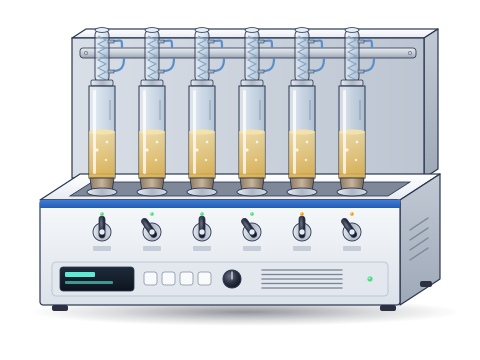
- Fibre analyser
- Analytical balance
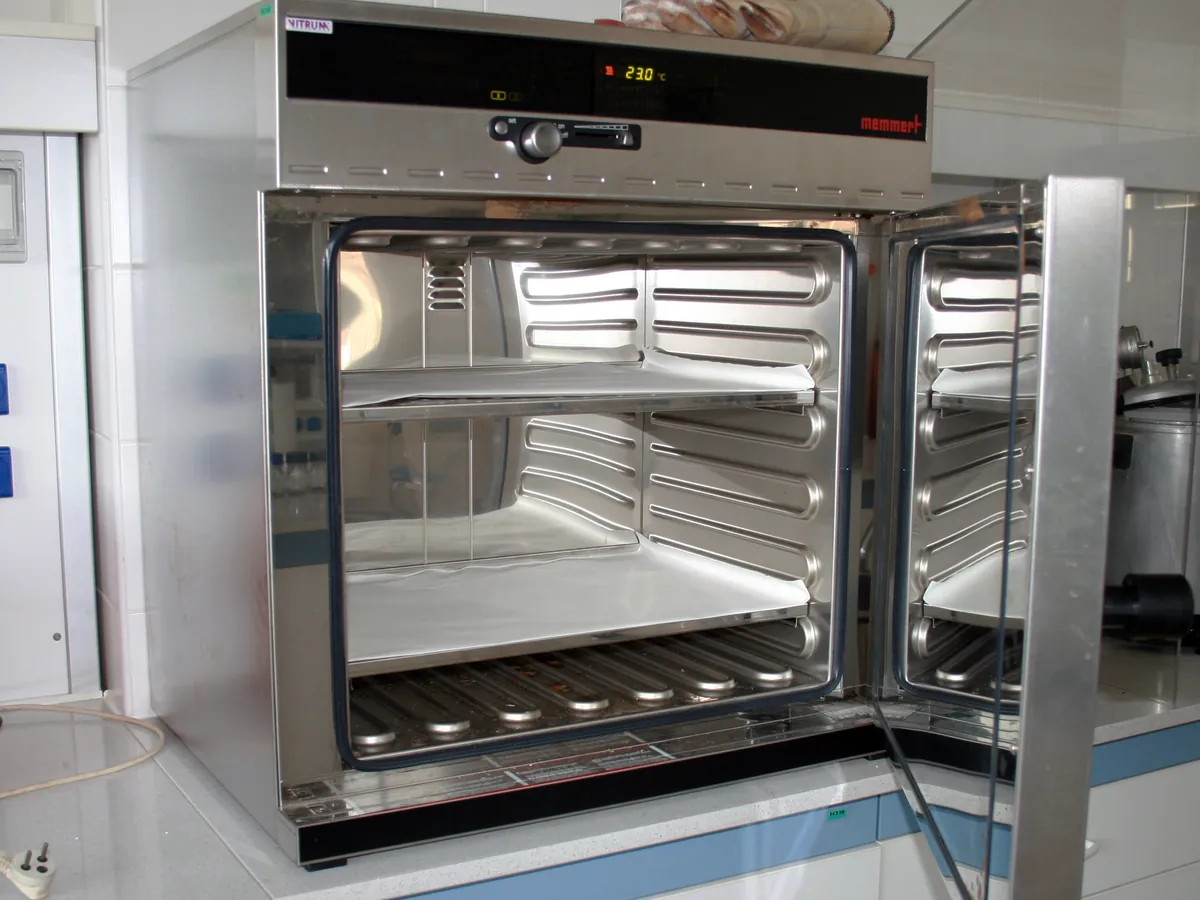
- Hot air oven
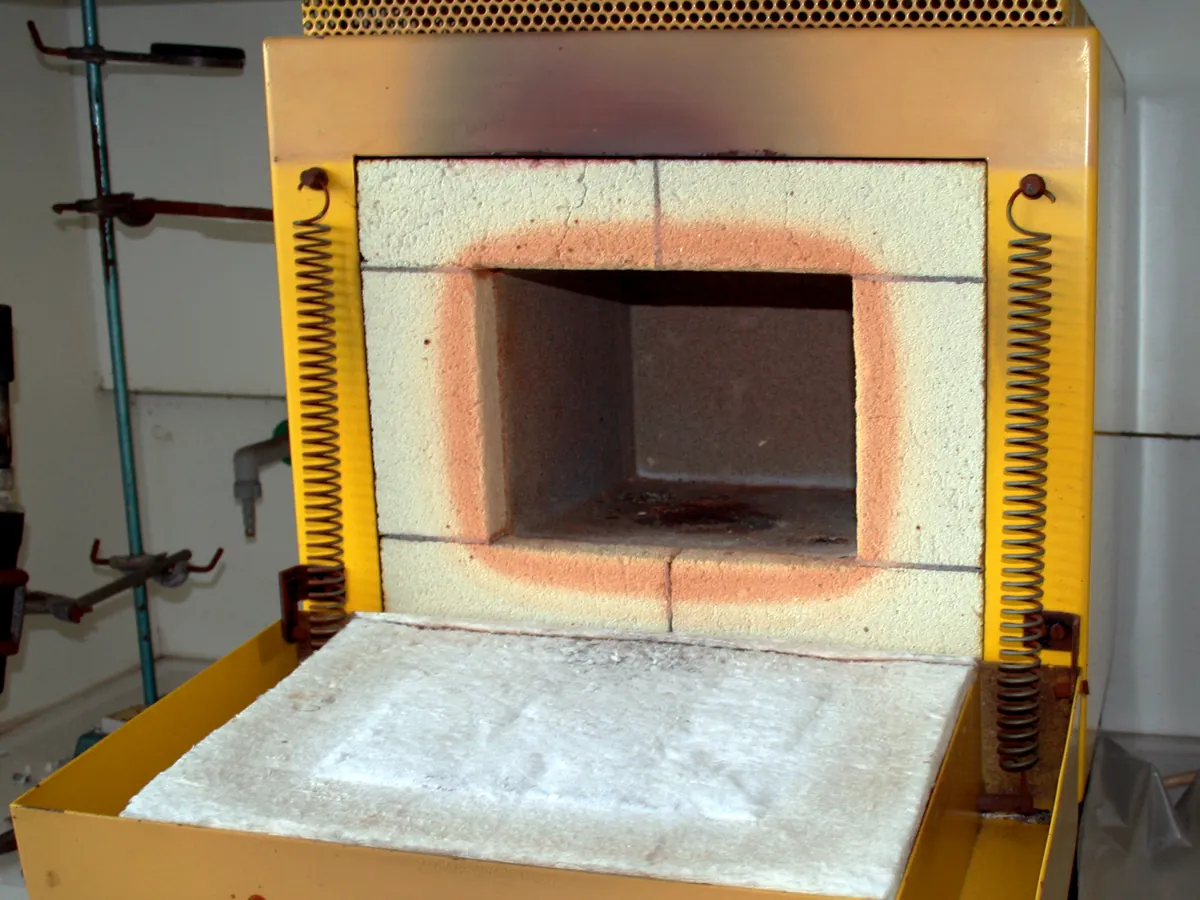
- Muffle furnace
Reference: Typical method based on AOAC 962.09 and ISO 6865, as also described in the FSSAI Manual of Methods of Analysis of Foods.
Why this method works
Dilute acid hydrolyses starch, sugars and part of the protein. Dilute alkali then dissolves remaining protein, some hemicellulose and lignin, and saponifies any fat. The insoluble organic residue, mostly cellulose and some lignin, is weighed after drying. Ashing removes the organic residue, and the mass lost is the crude fibre. The ash correction ensures minerals in the residue are not counted as fibre.
Instruments used

Reagents & standards
| Reagent | Grade / specification |
|---|---|
| Sulphuric acid | 0.128 M (about 1.25% w/v) |
| Sodium hydroxide | 0.313 M (about 1.25% w/v) |
| Acetone or petroleum ether | For defatting and final rinse |
| Antifoam | For example n-octanol, a few drops if needed |
Preparing the sample
- 01
Grind & weigh
Grind to about 1 mm and weigh about 1–2 g into a fritted crucible.
- 02
Defat
Extract fat with solvent if fat is above about 5–10%.
- 03
Acid boil
Boil 30 min in 1.25% H₂SO₄, filter and wash.
- 04
Alkali boil
Boil 30 min in 1.25% NaOH, filter and wash.
- 05
Dry & weigh
Rinse with acetone, dry at about 130 °C and weigh.
- 06
Ash & weigh
Ash at about 500–550 °C and weigh again.
Procedure
- 1Grind the sample to pass a 1 mm sieve and mix well.
- 2Weigh about 2 g (W) into a clean, ignited fritted crucible.
- 3If the fat content is high, extract with acetone or petroleum ether in the cold extraction unit and let the solvent evaporate.
- 4Fit the crucibles to the hot extraction unit, add 150 mL of preheated sulphuric acid and boil for exactly 30 min.
- 5Filter under vacuum and wash three times with about 30 mL of hot water.
- 6Add 150 mL of preheated sodium hydroxide and boil for exactly 30 min.
- 7Filter, wash three times with hot water, then rinse with acetone.
- 8Dry the crucibles at about 130 °C for 2 h (or as the method states), cool in a desiccator and weigh (W1).
- 9Ash at about 500–550 °C for at least 2–3 h, cool in a desiccator and weigh (W2).
- 10Run duplicates, a blank crucible and a reference material.
Notes for analysts
- Crude fibre is lower than dietary fibre for the same food. For nutrition labelling, dietary fibre is normally measured by an enzymatic-gravimetric method.
- If the sample was pre-dried, report on the as-received basis using the moisture loss.
- Very fine grinding makes filtration slow and can lose fibre through the frit.
Method parameters (typical)
| Acid | 1.25% H₂SO₄, 30 min at boiling |
|---|---|
| Alkali | 1.25% NaOH, 30 min at boiling |
| Drying | About 130 °C, 2 h (as per method) |
| Ashing | About 500–550 °C |
| Particle size | About 1 mm |
System suitability & sequence
| Parameter | Limit |
|---|---|
| Reference material | Within its assigned range |
| Blank crucible | Negligible change in mass |
| Duplicate agreement | Within method repeatability |
Typical sequence
- 1Blank crucible
- 2Reference material
- 3Sample prep 1
- 4Sample prep 2
Calculation with a worked example
Where
- W1
- Mass of crucible + dried residue (g)
- W2
- Mass of crucible + ash (g)
- W
- Mass of original (not defatted) sample taken (g)
Given
- W
- 2.0058 g (wheat bran mix)
- W1
- 31.2846 g
- W2
- 31.2047 g
Working
- 1
Loss on ashing = 31.2846 − 31.2047 = 0.0799 g
- 2Crude fibre = 0.0799 ÷ 2.0058 × 100 = 3.98%
Crude fibre = 3.98% (as received)
What result passes
- Compare with the product specification or regulatory standard (crude fibre limits are common for spices, cereal products and feed).
Validation parameters (ICH Q2(R2))
| Parameter | Typical requirement |
|---|---|
| Accuracy | Reference material or proficiency test sample within the acceptance range |
| Precision | Duplicates within method repeatability |
| Robustness | Strictly controlled: reagent strength, boiling time and particle size all affect the result |
Run this method in LimsPulse: specifications and STPs under version control, results calculated and checked against limits, and a signed Certificate of Analysis.