Colour (APHA / Hazen / Pt-Co)
The colour of a clear liquid is compared with a series of yellow platinum-cobalt standards in matched tubes, or measured in a colour spectrophotometer. The result is the Pt-Co (APHA or Hazen) number of the standard that matches best.
- Chemicals & materials
- Visual comparison with Pt-Co standards, or instrumental colorimetry
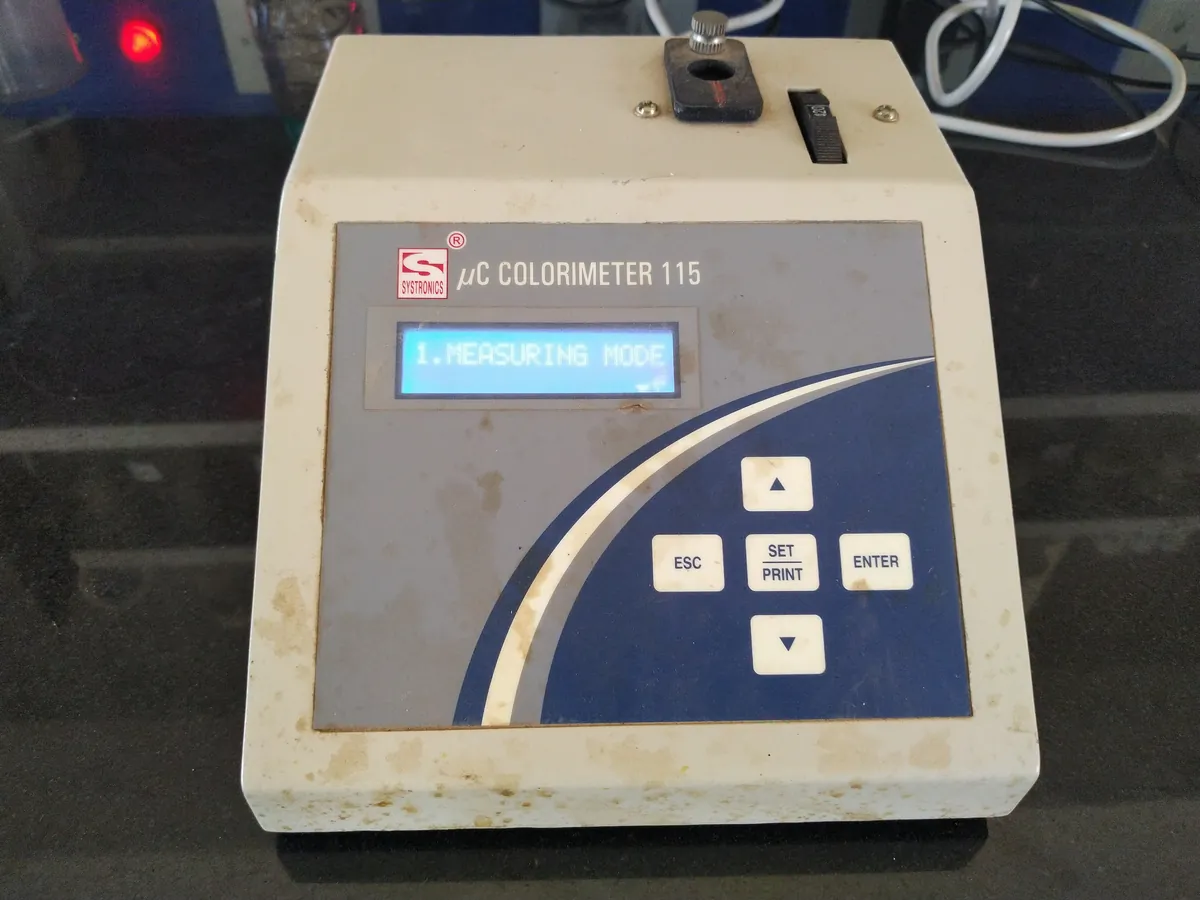
- Colorimeter
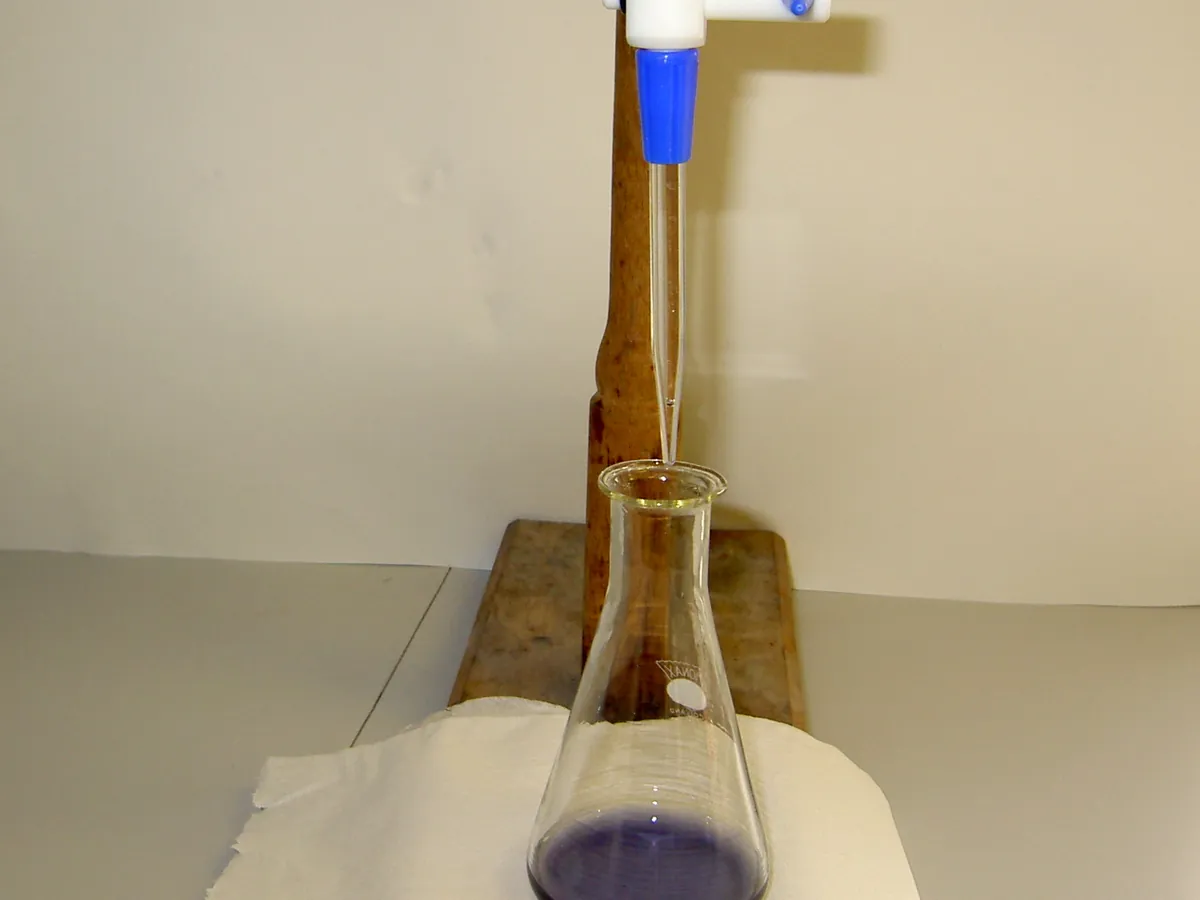
- Burette & glassware
- Analytical balance
Reference: Typical method based on ASTM D1209 and ISO 6271. The instrumental option uses a colour spectrophotometer that reports Pt-Co units.
Why this method works
Many 'water-white' chemicals turn faintly yellow as they age, oxidise or pick up contamination. The Pt-Co scale is a set of standards made from potassium chloroplatinate and cobalt(II) chloride in dilute hydrochloric acid. The 500-unit stock has 500 mg/L of platinum; each unit is equal to 1 mg Pt per litre. The sample is viewed down the length of a tube against a white background next to the standards, and the nearest match is reported. Instruments calculate the same number from transmittance measurements.
Instruments used

Reagents & standards
| Reagent | Grade / specification |
|---|---|
| Potassium chloroplatinate (K₂PtCl₆) | Analytical grade, 1.246 g per litre of 500-unit stock |
| Cobalt(II) chloride hexahydrate | Analytical grade, 1.000 g per litre of stock |
| Hydrochloric acid | Concentrated, 100 mL per litre of stock |
| Water | Purified water, also used as the 0-unit reference |
Preparing the sample
- 01
Prepare stock
Make the 500-unit Pt-Co stock solution, or use a certified commercial stock.
- 02
Dilute standards
Dilute the stock to a series of standards that bracket the expected colour.
- 03
Fill tubes
Fill matched Nessler tubes with sample and standards to the same mark.
- 04
Compare
Look down the tubes against a white background and pick the nearest standard.
Procedure
- 1Prepare the 500-unit stock: dissolve 1.246 g potassium chloroplatinate and 1.000 g cobalt(II) chloride hexahydrate in water with 100 mL hydrochloric acid and dilute to 1000 mL. Store in the dark.
- 2Prepare working standards in 100 mL volumetric flasks (for example 5, 10, 15, 20, 25 and 50 units) by diluting the stock with water.
- 3If the sample is hazy, let it settle or filter as the method allows; haze makes colour look darker.
- 4Fill a clean, matched 100 mL tall-form Nessler tube with sample to the mark, and fill tubes with the bracketing standards.
- 5Compare by looking vertically down the tubes against a white surface in good diffuse light.
- 6Report the matching standard. If between two, report the higher or the nearer as your method states.
- 7For the instrumental method, calibrate the colorimeter, blank with water in the specified cell and read the Pt-Co value directly.
Standard preparation
- 1Volume of 500-unit stock per 100 mL = required units × 100 ÷ 500 (for example 2.0 mL for 10 units, 10.0 mL for 50 units).
- 2Working standards are stable for a limited time; prepare fresh as your SOP states (often monthly) and keep them stoppered and dark.
Notes for analysts
- APHA, Hazen and Pt-Co are names for the same scale. The Gardner scale (darker, for resins and oils) and Saybolt scale (petroleum) are different and cannot be converted exactly.
- Only clear liquids with a yellowish hue suit this scale; samples of a different hue cannot be matched well.
- Diluting a dark sample assumes the colour is proportional to concentration; state the dilution in the report.
Method parameters (typical)
| Scale range | 0–500 Pt-Co units |
|---|---|
| Tubes | Matched tall-form Nessler tubes, 100 mL, with equal liquid height |
| Viewing | Vertically through the liquid column against a white background |
| Instrumental option | Transmission measurement in a colour spectrophotometer with Pt-Co scale (path length as the instrument requires, often 50 or 100 mm) |
System suitability & sequence
| Parameter | Limit |
|---|---|
| Standard check | A Pt-Co standard (for example 25 units) read on the instrument within about ±2 units, or as your SOP states |
| Tube match | Tubes filled with water look identical side by side |
Typical sequence
- 1Prepare or check standards
- 2Calibrate instrument (if used)
- 3Measure check standard
- 4Measure sample(s)
Calculation with a worked example
Where
- C
- Required standard colour (Pt-Co units)
- V
- Final volume of the standard (mL)
- 500
- Colour of the stock solution (Pt-Co units)
Given
- Standard needed
- 15 Pt-Co units in 100 mL
- Dark sample
- 10.0 mL diluted to 50.0 mL with water-white solvent; diluted reading 70 Pt-Co
Working
- 1Stock volume for 15 units = 15 × 100 ÷ 500 = 3.0 mL of stock made up to 100 mL
- 2Dark sample: dilution factor = 50.0 ÷ 10.0 = 5
- 3
Colour of sample = 70 × 5 = 350 Pt-Co units
Take 3.0 mL stock per 100 mL for the 15-unit standard; the diluted dark sample has a colour of about 350 Pt-Co
Try it with your numbersWhat result passes
- Compare with the product specification, for example ≤ 10 or ≤ 15 Pt-Co for many water-white solvents and glycols (check your specification).
Validation parameters (ICH Q2(R2))
| Parameter | Typical requirement |
|---|---|
| Precision | Repeatability between analysts and between visual and instrumental results |
| Accuracy | Instrumental readings on prepared Pt-Co standards across the range |
Run this method in LimsPulse: specifications and STPs under version control, results calculated and checked against limits, and a signed Certificate of Analysis.