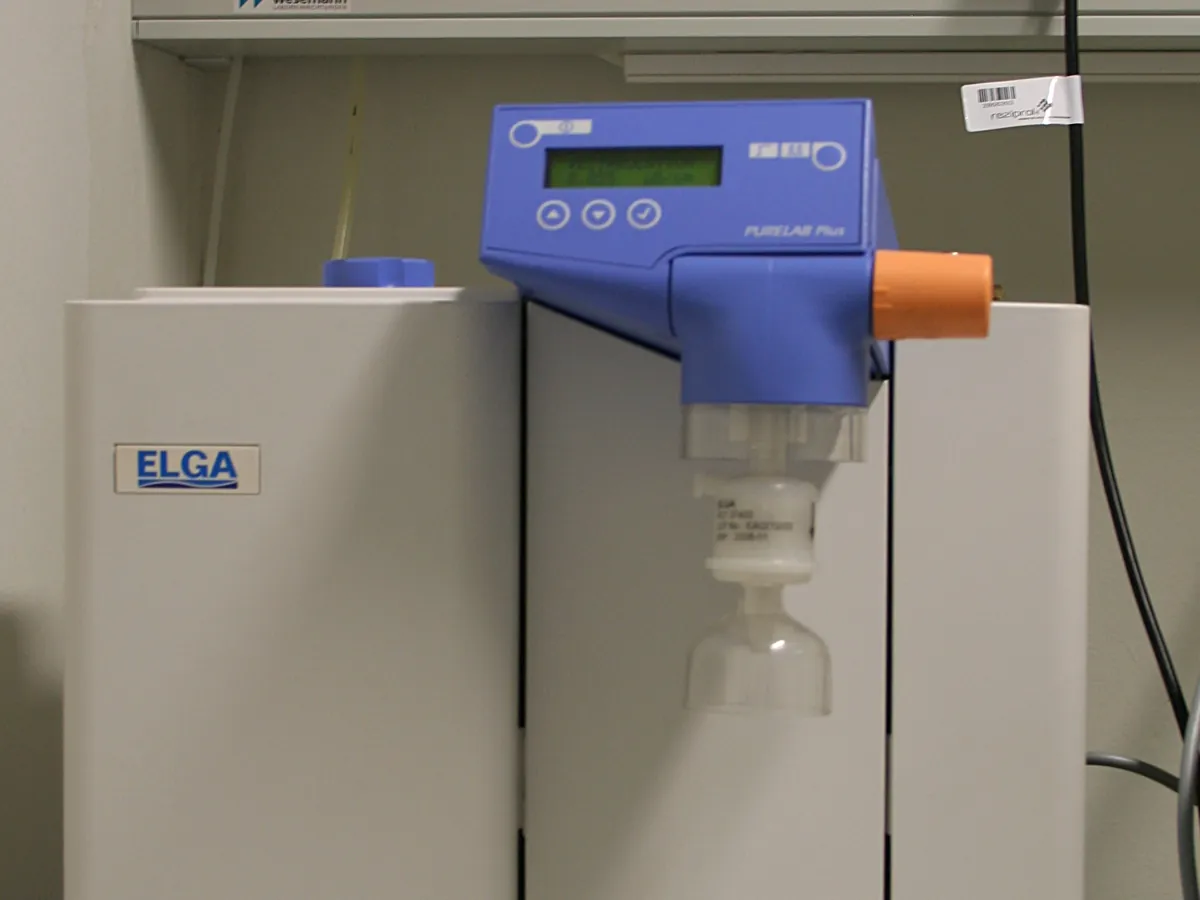
Laboratory Water Purification System
Produces purified and ultrapure water for the laboratory by combining pretreatment, reverse osmosis, ion exchange, UV and final filtration. Supplies water for HPLC mobile phases, standards, reagents and microbiology.
- Pharmaceutical
- Biotech
- Clinical labs
- Universities
- Environmental
- Food & beverage
Test your Lab water system knowledge
Multiple-choice questions
Pick an answer to see whether you are right and why.
Q1. What is the theoretical resistivity of ultrapure water at 25 °C?
basicQ2. Which step removes most dissolved salts in a typical lab water system?
basicQ3. Why is a UV lamp included in the polishing stage?
intermediateQ4. The system shows 18.2 MΩ·cm but HPLC blanks show ghost peaks. What might be wrong?
intermediateQ5. Which standard defines grades of water for analytical laboratory use?
basic
Viva questions
Think of your answer first, then open it to compare.
1. What is the difference between lab ultrapure water and pharmacopoeial purified water?
Lab ultrapure water is reagent water made at the point of use for analysis and specified by ISO 3696 or ASTM D1193. Purified water is a GMP utility made by a validated plant system and tested against the pharmacopoeial monograph for use in manufacturing.
2. What checks do you make before dispensing water for a mobile phase?
Check resistivity (for example 18.2 MΩ·cm) and TOC on the display, check no alarms are active and consumables are in date, discard the first portion if the system was idle, and dispense into a clean container rinsed with the same water.
Keep every Lab water system in control: usage logs, calibration and maintenance schedules, and automatic blocking of overdue instruments.