Physical testing
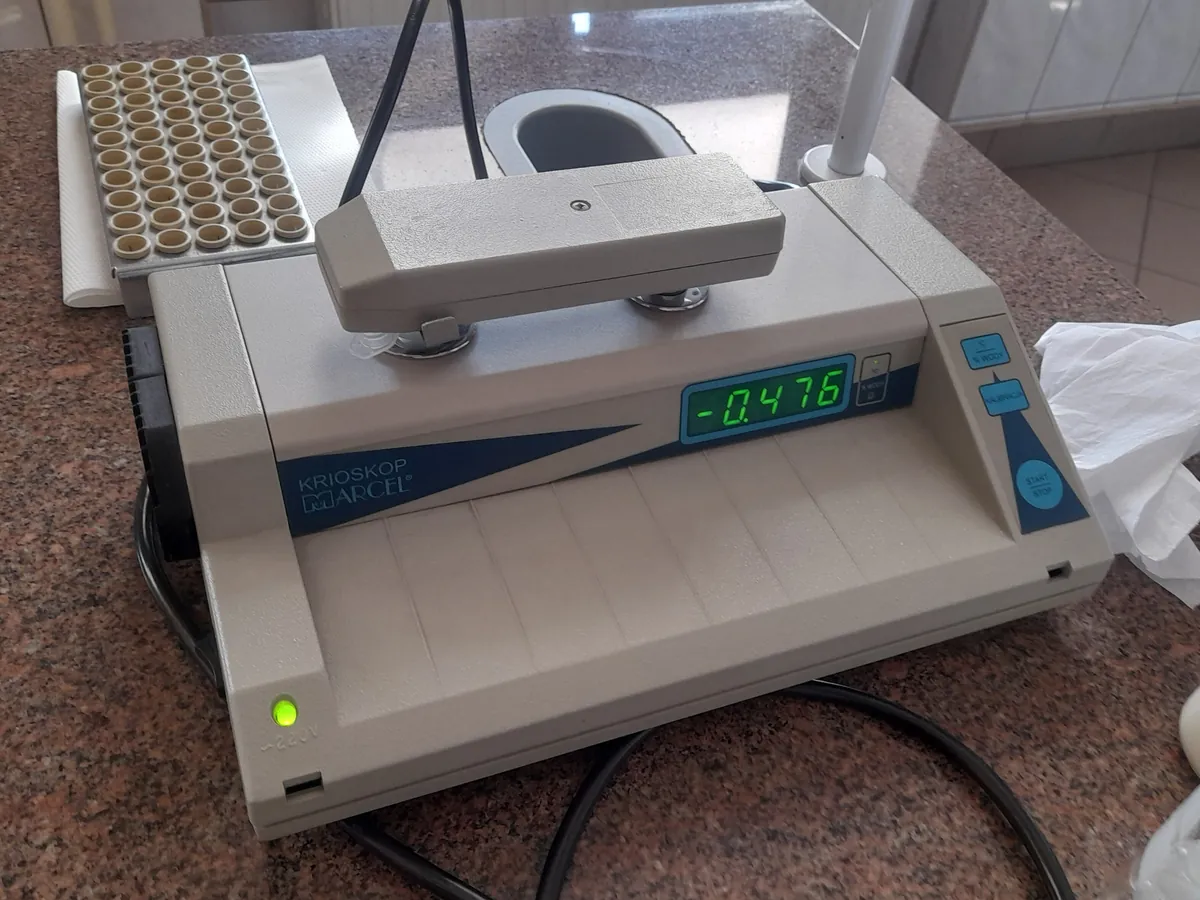
Osmometer
Measures the osmolality of a solution, the total concentration of dissolved particles, usually by how much the solution's freezing point is lowered. Used for injections, eye drops and infusion fluids.
- Pharmaceutical
- Biotech
- Clinical laboratories
- Food & beverage
- Academic research
Follow your site SOP
This is a typical operating sequence for learning. Your instrument model and approved SOP take precedence.
STAGE 1
Before you start
- 1Check the calibration status and run the reference (check) solution, often 290 mOsm/kg.
- 2Clean and dry the thermistor probe with a lint-free tissue.
- 3Allow the cooling system to reach its operating temperature.
- Do not touch the thermistor with fingers or bend it; it is fragile and easily contaminated.
STAGE 2
Measurement
- 1Mix the sample. Pipette the exact volume into a clean sample tube without bubbles.
- 2Place the tube on the probe and lower it into the cooling chamber as the instrument directs.
- 3Start the cycle and wait for the result.
- 4Record the osmolality. Repeat on fresh portions as your SOP requires (often duplicate or triplicate).
- 5Clean and dry the probe between samples.
- Droplets of a previous sample on the probe change the next result.
- Use a new sample tube for each measurement.
- If the sample freezes too early (pre-freeze), clean the probe and repeat.
STAGE 3
After use
- 1Clean the probe with purified water and dry it.
- 2Dispose of sample tubes properly.
- 3Complete the log.
In LimsPulse · Calibration Management
Keep every Osmometer in control: usage logs, calibration and maintenance schedules, and automatic blocking of overdue instruments.