Le Chatelier Soundness Apparatus
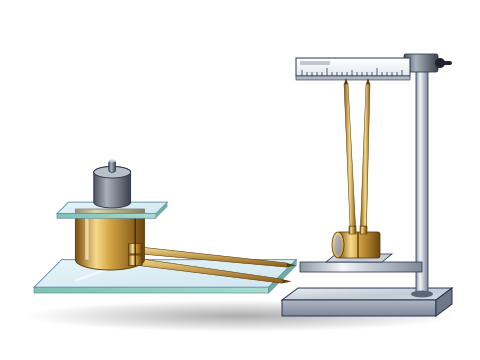
A split brass cylinder with two long indicator arms that magnifies the expansion of a cement paste after boiling. It checks that cement will not expand and crack after it has set (soundness).
- Cement manufacturing
- Construction materials testing
- Ready-mix concrete
- Academic labs
What is Le Chatelier?
Cement is 'unsound' if it expands noticeably after setting. This happens when it contains too much free lime (CaO) or magnesia (MgO), which hydrate slowly and increase in volume, cracking hardened concrete months or years later. The Le Chatelier test speeds up this hydration by boiling, so unsoundness from free lime shows within hours.
The mould is a small split cylinder (typically 30 mm internal diameter and 30 mm high) made of springy brass, with a long pointer (indicator) soldered on each side of the split. When the paste inside expands, the split opens and the tips of the pointers move apart. Because the pointers are long (typically about 165 mm to the tips), a small expansion gives an easily measured movement.
For OPC, IS 269 typically limits Le Chatelier expansion to not more than 10 mm. Expansion due to magnesia is checked separately with the autoclave test, which the Le Chatelier method does not detect well.
Used for
- Soundness of OPC, PPC, PSC and other cements (IS 4031 Part 3)
- Checking cement that has a high free-lime content
- Comparing soundness of cement before and after aeration
- Routine factory and site acceptance tests for cement
How it works
- 01
Paste
Cement paste is made with 0.78 times the standard-consistency water (IS 4031 Part 3).
- 02
Filling
The mould, on a lightly oiled glass plate, is filled with paste, covered with another glass plate and a small weight.
- 03
Moist curing
The assembly is submerged in water at about 27 ± 2 °C for 24 hours.
- 04
First reading
The distance between the indicator tips is measured (L1).
- 05
Boiling
The mould is placed in water that is brought to the boil in about 25 to 30 minutes and kept boiling for 3 hours.
- 06
Final reading
After cooling, the distance between the tips is measured again (L2). Expansion = L2 − L1, in mm.
Advantages
- Simple, cheap apparatus with no electronics
- Accelerated: result in about a day and a half
- Long indicators magnify very small expansions
- Standard method in IS and EN cement specifications
Limitations
- Detects mainly free-lime unsoundness, not magnesia (use the autoclave test for that)
- Moulds lose their springiness or get bent with use, giving wrong readings
- Needs a water bath that can be brought to the boil in a set time and held there
- Measurement with a rule to the nearest 0.5 mm limits precision
Methods that use Le Chatelier
Keep every Le Chatelier in control: usage logs, calibration and maintenance schedules, and automatic blocking of overdue instruments.