Soundness of cement by Le Chatelier method
Checks that hardened cement paste will not expand after setting. Excess free lime (CaO) or magnesia (MgO) hydrates slowly and expands, which can crack concrete months later. The Le Chatelier test accelerates this by boiling and measures the expansion between two indicator points.
- Construction materials
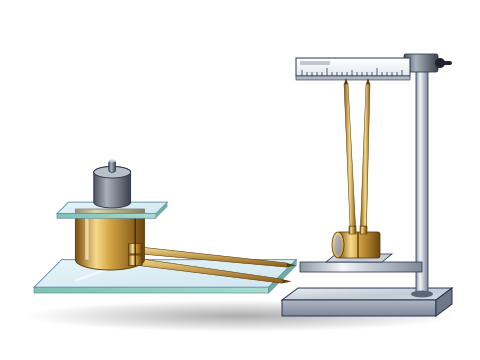
- Le Chatelier mould with boiling water bath
- Le Chatelier
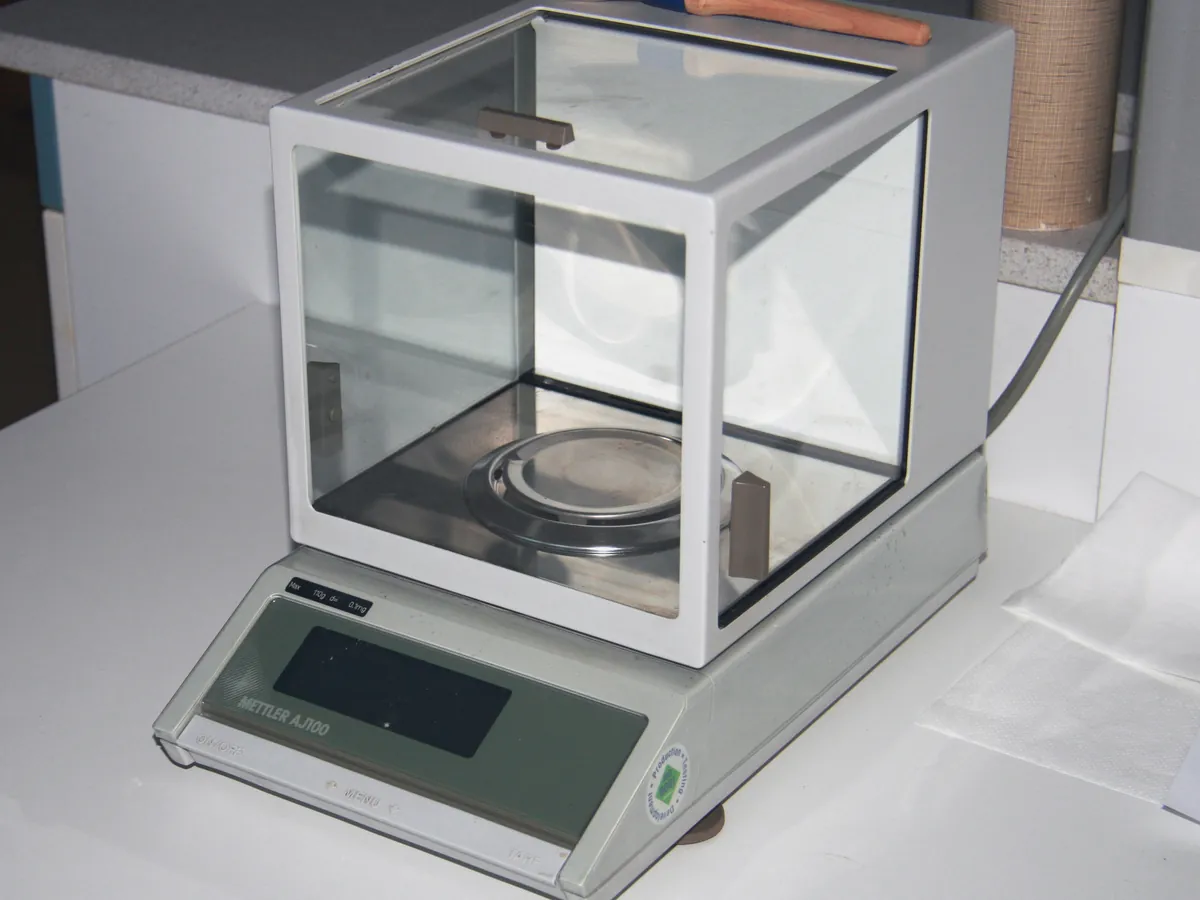
- Analytical balance
Reference: Based on IS 4031 (Part 3). The autoclave test (ASTM C151 / IS 4031 Part 3) is used for magnesia. Follow the current editions.
Why this method works
A split brass cylinder with two long indicator arms is filled with cement paste made at 0.78 times the normal-consistency water. After 24 hours in water at room temperature the distance between the indicator tips is measured. The mould is then boiled for 3 hours, which speeds up hydration of any free lime. Expansion of the paste opens the split in the mould, and the long arms magnify this movement so it can be read in millimetres.
Instruments used
Reagents & standards
| Reagent | Grade / specification |
|---|---|
| Cement sample | Representative, lump-free |
| Water | Clean potable or distilled water; 0.78P for the paste |
| Light oil | For mould and glass plates |
Preparing the sample
- 01
Paste
Gauge cement with 0.78P water for 3–5 minutes.
- 02
Fill mould
Fill the oiled mould on a glass plate, keep the split closed.
- 03
Cover
Cover with a glass plate and small weight.
- 04
24 h in water
Submerge at 27 ± 2 °C for 24 hours.
- 05
Measure L1
Measure distance between indicator points.
- 06
Boil & measure
Boil 3 h, cool, measure L2; expansion = L2 − L1.
Procedure
- 1Check the mould: the split should be closed and the indicator points should spring back when opened by a set load (as checked during calibration).
- 2Oil the mould lightly and place it on an oiled glass plate.
- 3Prepare paste with 0.78P water (commonly from about 100 g cement per mould — follow your SOP) and gauge for 3 to 5 minutes.
- 4Fill the mould, keeping its edges gently together with a rubber band or by hand so the split does not open. Smooth the top.
- 5Cover with a second glass plate and a small weight. Immediately submerge the whole assembly in water at 27 ± 2 °C for 24 hours.
- 6Remove the mould and measure the distance between the indicator points to the nearest 0.5 mm (L1).
- 7Submerge the mould in water again, bring to the boil in about 25–30 minutes, and keep boiling for 3 hours.
- 8Remove, allow to cool to room temperature, and measure the distance between the indicator points again (L2).
- 9Expansion = L2 − L1. Report the expansion in mm (average of moulds if more than one is tested).
Notes for analysts
- Unsound cement may pass after aeration because free lime slowly hydrates in air. A cement that fails can be retested after spreading it out for about 7 days in a controlled environment, if the specification allows.
- Handle hot moulds with tongs; let them cool in air before measuring to avoid errors from thermal expansion of the brass.
Method parameters (typical)
| Water | 0.78 × P |
|---|---|
| Mould | Split brass cylinder, about 30 mm diameter and 30 mm high, with indicator arms about 165 mm long |
| Initial curing | 24 h submerged in water at 27 ± 2 °C |
| Boiling | Brought to boil in about 25–30 min, boiled 3 h |
| Measurement | Distance between indicator points, nearest 0.5 mm |
System suitability & sequence
| Parameter | Limit |
|---|---|
| Mould spring check | Indicator separation increases by the specified amount under the standard load and returns when removed |
| Water bath | Able to reach boiling in the stated time; water level stays above the moulds |
Typical sequence
- 1Paste and fill mould
- 224 h water storage
- 3Measure L1
- 4Boil 3 h
- 5Cool and measure L2
Calculation with a worked example
Where
- L1
- Distance between indicator points after 24 h in water (mm)
- L2
- Distance between indicator points after boiling and cooling (mm)
Given
- L1
- 12.5 mm
- L2
- 15.0 mm
Working
- 1
Expansion = 15.0 − 12.5 = 2.5 mm
Le Chatelier expansion = 2.5 mm, well within the typical OPC limit of 10 mm.
What result passes
- For OPC to IS 269, Le Chatelier expansion is typically not more than 10 mm.
- Where the cement's MgO content is above about 3%, IS 269 typically also requires the autoclave expansion test, with a limit of not more than 0.8%. Check the current edition.
Validation parameters (ICH Q2(R2))
| Parameter | Typical requirement |
|---|---|
| Repeatability | Duplicate moulds typically agree within about 1 mm |
| Sensitivity | Mainly detects free lime; magnesia expansion needs the autoclave test |
Run this method in LimsPulse: specifications and STPs under version control, results calculated and checked against limits, and a signed Certificate of Analysis.