Le Chatelier Soundness Apparatus
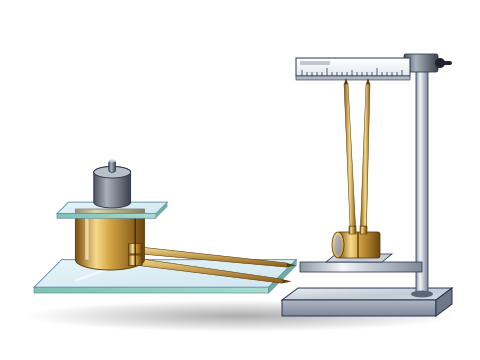
A split brass cylinder with two long indicator arms that magnifies the expansion of a cement paste after boiling. It checks that cement will not expand and crack after it has set (soundness).
- Cement manufacturing
- Construction materials testing
- Ready-mix concrete
- Academic labs
Test your Le Chatelier knowledge
Multiple-choice questions
Pick an answer to see whether you are right and why.
Q1. What property of cement does the Le Chatelier apparatus measure?
basicQ2. Indicator distance is 12.0 mm after 24 h in water and 16.5 mm after boiling. What is the expansion?
basicQ3. What is the typical maximum Le Chatelier expansion allowed for OPC under IS 269?
intermediateQ4. Which component of cement causes the unsoundness detected by the Le Chatelier test?
intermediateQ5. What water content is used for the Le Chatelier paste under IS 4031 Part 3?
intermediateQ6. Why are the indicators on the mould so long?
advanced
Viva questions
Think of your answer first, then open it to compare.
1. Outline the Le Chatelier soundness test.
Fill the oiled split mould with paste made at 0.78 P, cover with glass plates and a weight, and keep under water at about 27 °C for 24 h. Measure the indicator distance, boil the mould for 3 h (after bringing to the boil in about 25–30 min), cool and measure again. Expansion is the difference.
2. Why must the slit be held closed while filling the mould?
If the slit opens, paste squeezes into the gap and the mould starts the test already open. The initial reading is then wrong and the expansion measurement is unreliable.
3. Why is an autoclave test also needed for some cements?
Periclase (MgO) hydrates even more slowly than free lime and is not fully reacted by 3 hours of boiling. The autoclave test, using high-pressure steam, accelerates MgO hydration so magnesia unsoundness can be detected.
Keep every Le Chatelier in control: usage logs, calibration and maintenance schedules, and automatic blocking of overdue instruments.