Titration & electrochemistry
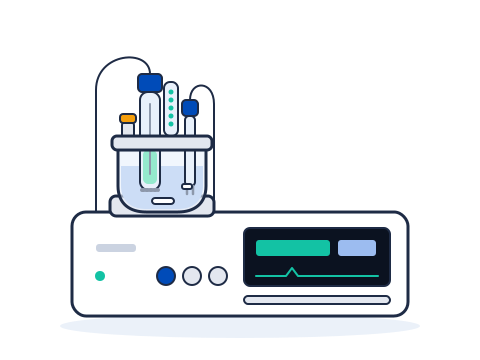
Karl Fischer Titrator (Coulometric)
Measures very small amounts of water by generating iodine electrically inside the cell and counting the charge needed to react with all the water. Suited to trace water, from ppm levels up to about 1–5%.
- Pharmaceutical
- Biotech
- Chemicals
- Petrochemicals
- Electronics / batteries
TROUBLESHOOTING
Common problems, causes and fixes
High or unstable drift
Likely causes
- • Worn septum or leaking joint
- • Exhausted molecular sieve
- • Wet glassware or electrodes after cleaning
- • Exhausted or contaminated anolyte
What to do
- • Replace the septum and grease or tighten joints
- • Replace the molecular sieve
- • Dry the glassware before filling
- • Replace the reagent
Low recovery of the water standard
Likely causes
- • Error in syringe weighing
- • Standard opened too long or past expiry
- • Reagent near the end of its capacity
- • Endpoint settings too loose
What to do
- • Weigh by difference on a calibrated balance
- • Use a fresh ampoule of standard
- • Replace the reagent
- • Review the endpoint and stop-drift settings
High recovery or results that keep increasing
Likely causes
- • Moisture picked up by the syringe or needle
- • Side reaction with the sample
- • Drift not correctly subtracted
What to do
- • Dry syringes and needles; rinse with sample
- • Use a KF oven or suitable reagent
- • Check drift correction
Error message about generator electrode
Likely causes
- • Catholyte exhausted or contaminated
- • Deposits on the diaphragm or electrode
- • Cable or connector fault
What to do
- • Replace the catholyte
- • Clean the generator electrode as advised by the supplier
- • Check connections; call service if the fault remains
Very long determination times
Likely causes
- • Sample contains too much water
- • Sample dissolves slowly
- • Reagent nearly exhausted
What to do
- • Reduce sample size or use volumetric KF
- • Use a co-solvent or a KF oven
- • Replace the reagent
In LimsPulse · Calibration Management
Keep every KF titrator (coulometric) in control: usage logs, calibration and maintenance schedules, and automatic blocking of overdue instruments.