Total Ash in Food by Dry Ashing
A weighed sample is charred and then ignited at about 550 °C until all organic matter has burnt off. The white or light grey residue is weighed and reported as total ash.
- Food & beverage
- Gravimetric, muffle furnace ignition
- Muffle furnace
- Analytical balance
- Hot air oven
Reference: Typical method based on AOAC 923.03 (ash of flour, 550 °C) and the FSSAI Manual of Methods of Analysis of Foods.
Why this method works
At high temperature the organic matter of food (carbohydrate, protein, fat) is oxidised to carbon dioxide, water and other gases. Minerals such as calcium, potassium, sodium, magnesium and phosphate remain as oxides, carbonates and salts. The mass of this residue, expressed as a percentage of the sample, is the total ash. It is a measure of mineral content and can also show adulteration with sand or soil.
Instruments used
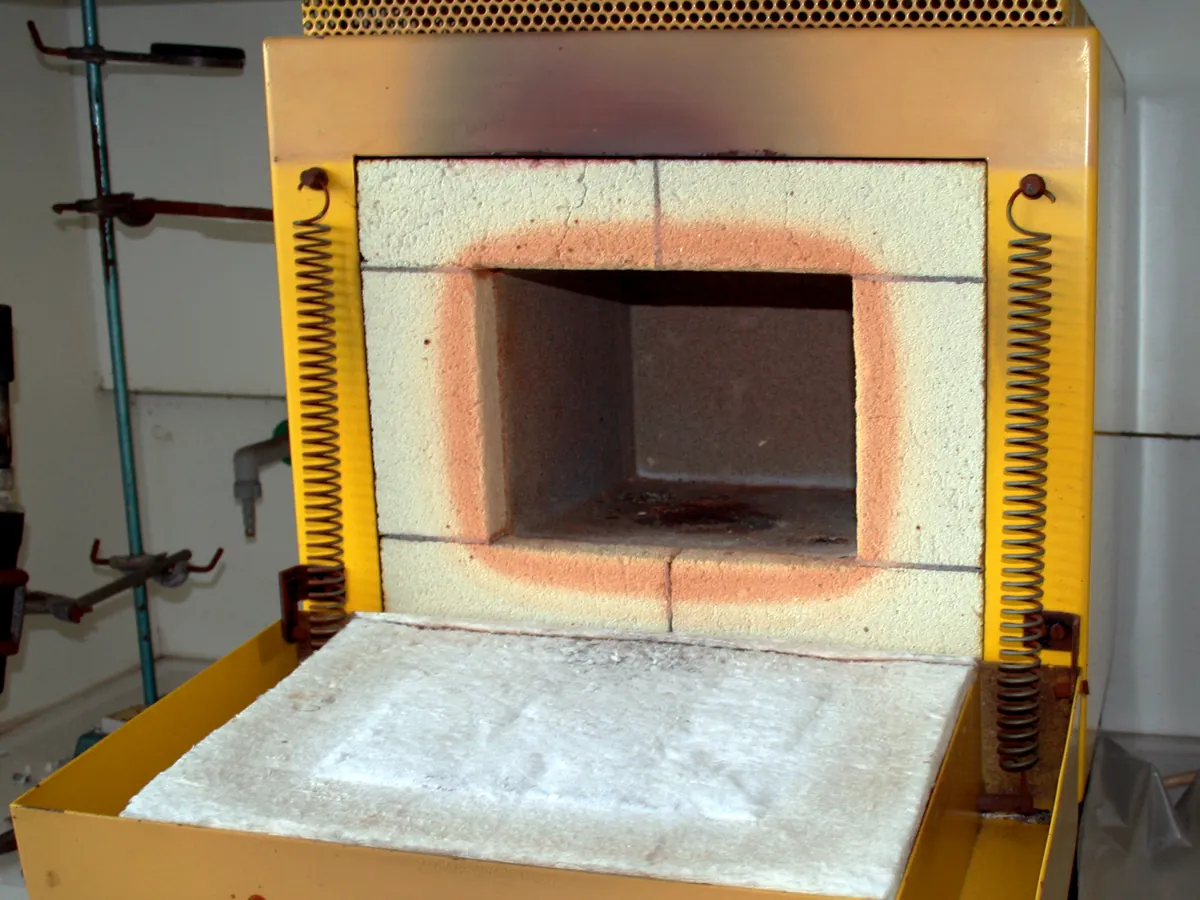
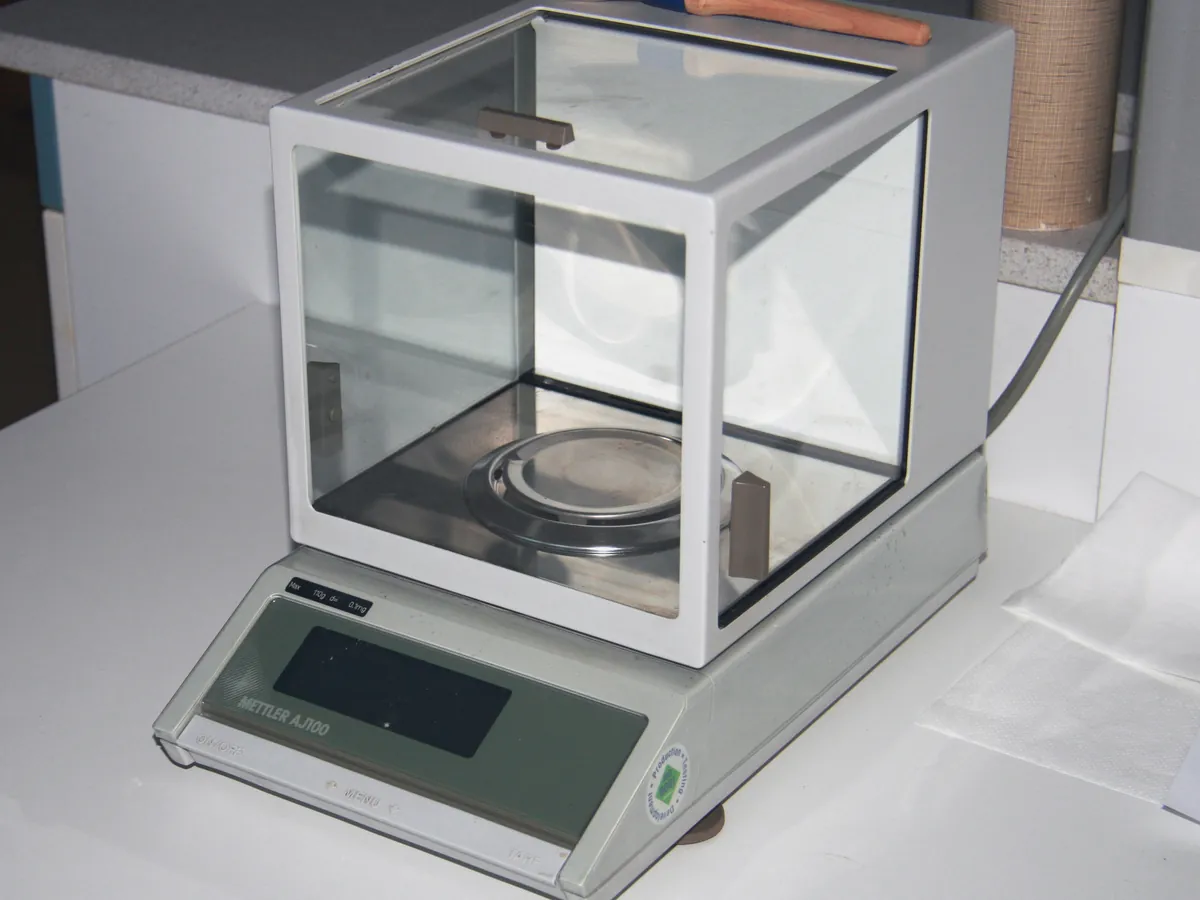
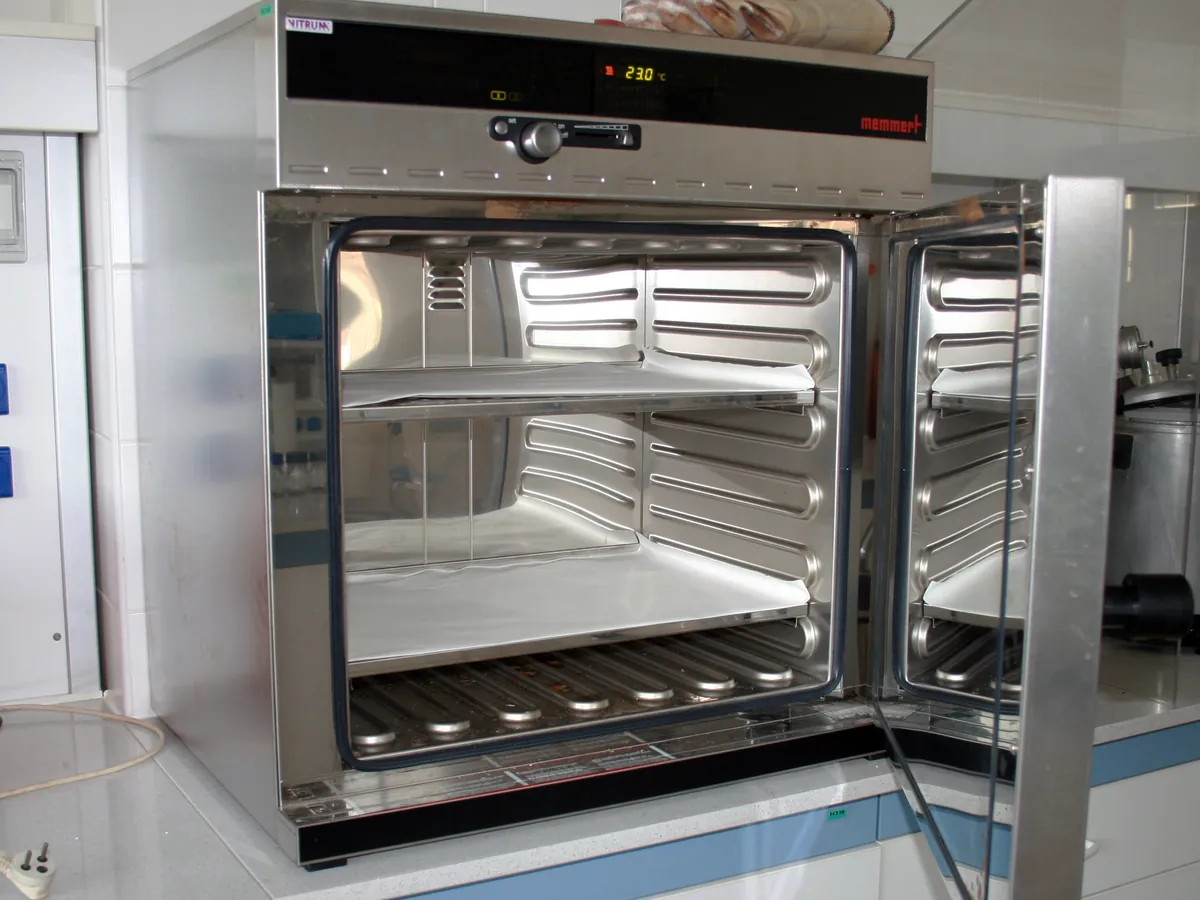
Preparing the sample
- 01
Prepare crucible
Ignite a silica or porcelain crucible at 550 °C, cool and weigh.
- 02
Weigh sample
Add about 2–5 g of homogenised sample.
- 03
Char
Char gently on a hot plate or burner until smoking stops.
- 04
Ignite
Ignite at about 550 °C until the ash is white or light grey.
- 05
Cool & weigh
Cool in a desiccator and weigh to constant mass.
Procedure
- 1Ignite a clean crucible at 550 °C for about 1 h, cool in a desiccator and weigh.
- 2Weigh about 3 g of the homogenised sample into the crucible. Wet samples are dried first (for example the residue from the moisture test).
- 3Char the sample slowly on a hot plate in a fume hood until it no longer smokes. This stops it catching fire in the furnace.
- 4Transfer to the furnace at 550 °C and ignite until the ash is free of black carbon (often 4–6 h, or overnight).
- 5If black particles remain, cool, moisten with a few drops of water, dry and ignite again.
- 6Cool in a desiccator to room temperature (about 1 h) and weigh. Repeat ignition and weighing until constant mass.
- 7Analyse in duplicate.
Notes for analysts
- Temperatures much above 550 °C can lose volatile chlorides and alkali salts, giving low results.
- Acid-insoluble ash (residue insoluble in dilute hydrochloric acid) is a separate test that indicates sand or silica.
- Sulphated ash, used for pharmaceuticals, is a different test where sulphuric acid is added before ignition.
- High-fat or sugary samples swell and spatter; char slowly.
Method parameters (typical)
| Ignition temperature | About 550 °C (525–600 °C in some methods) |
|---|---|
| Sample mass | About 2–5 g |
| Crucible | Silica, porcelain or platinum |
| End point | White or light grey ash; constant mass |
System suitability & sequence
| Parameter | Limit |
|---|---|
| Furnace temperature | Within calibrated range |
| Duplicate agreement | As per method repeatability (often within about 0.05% absolute at 1–2% ash) |
Typical sequence
- 1Ignite and weigh crucibles
- 2Weigh duplicate samples
- 3Char
- 4Ignite at 550 °C
- 5Cool and weigh to constant mass
Calculation with a worked example
Where
- W1
- Mass of empty ignited crucible (g)
- W2
- Mass of crucible + sample (g)
- W3
- Mass of crucible + ash (g)
Given
- W1
- 28.6412 g
- W2
- 31.6587 g
- W3
- 28.6893 g
- Moisture of sample
- 12.10%
Working
- 1
Sample mass = 31.6587 − 28.6412 = 3.0175 g
- 2
Ash mass = 28.6893 − 28.6412 = 0.0481 g
- 3Total ash = 0.0481 ÷ 3.0175 × 100 = 1.59%
- 4Dry basis = 1.594 × 100 ÷ (100 − 12.10) = 1.594 × 100 ÷ 87.90 = 1.81%
Total ash = 1.59% (as is), 1.81% on dry basis
What result passes
- Compare with the product specification or legal standard (ash limits are usually given on a dry-matter basis for flours and spices).
Validation parameters (ICH Q2(R2))
| Parameter | Typical requirement |
|---|---|
| Accuracy | Reference material of similar matrix within its certified range |
| Precision | Duplicates within the method repeatability limit |
| Robustness | Effect of ignition temperature and time |
Run this method in LimsPulse: specifications and STPs under version control, results calculated and checked against limits, and a signed Certificate of Analysis.