Fat in Milk by the Gerber Method
Milk is mixed with sulphuric acid and amyl alcohol in a graduated butyrometer. The acid dissolves the proteins, releasing the fat, which is separated by centrifuging and read directly as per cent fat on the butyrometer scale.
- Food & beverage
- Acid-butyrometric (Gerber centrifuge)
- Centrifuge
- Water bath
Reference: Typical method based on ISO 2446 and IS 1224 (Part 1), as described in the FSSAI Manual of Methods of Analysis of Foods — Milk and milk products.
Why this method works
Milk fat exists as tiny globules wrapped in a protein membrane. Concentrated sulphuric acid digests the casein and the membranes so the fat is freed. Amyl alcohol helps the fat separate cleanly and stops charring. Centrifuging in a warm butyrometer drives the lighter fat into the narrow graduated neck, where its column length gives the fat percentage directly, because the volume of milk and the scale are designed together.
Instruments used
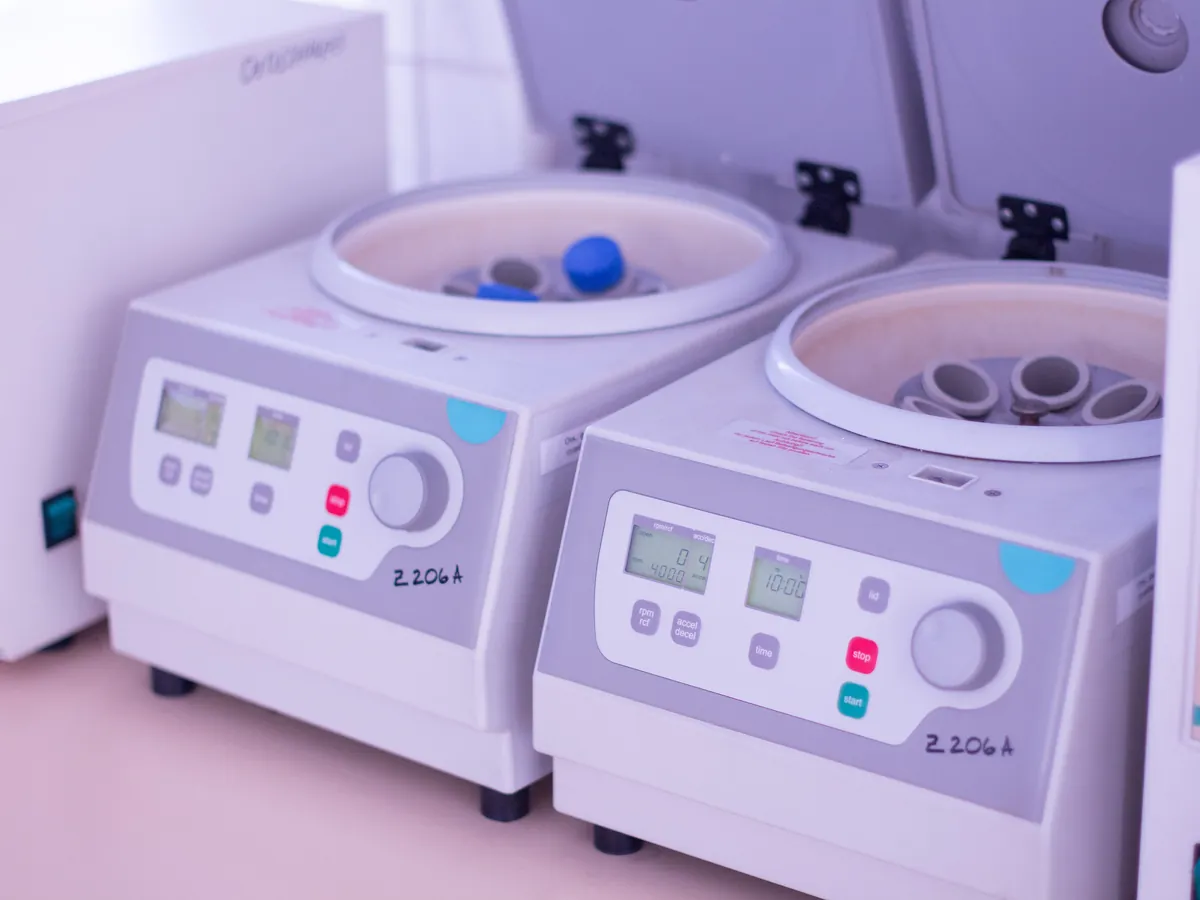
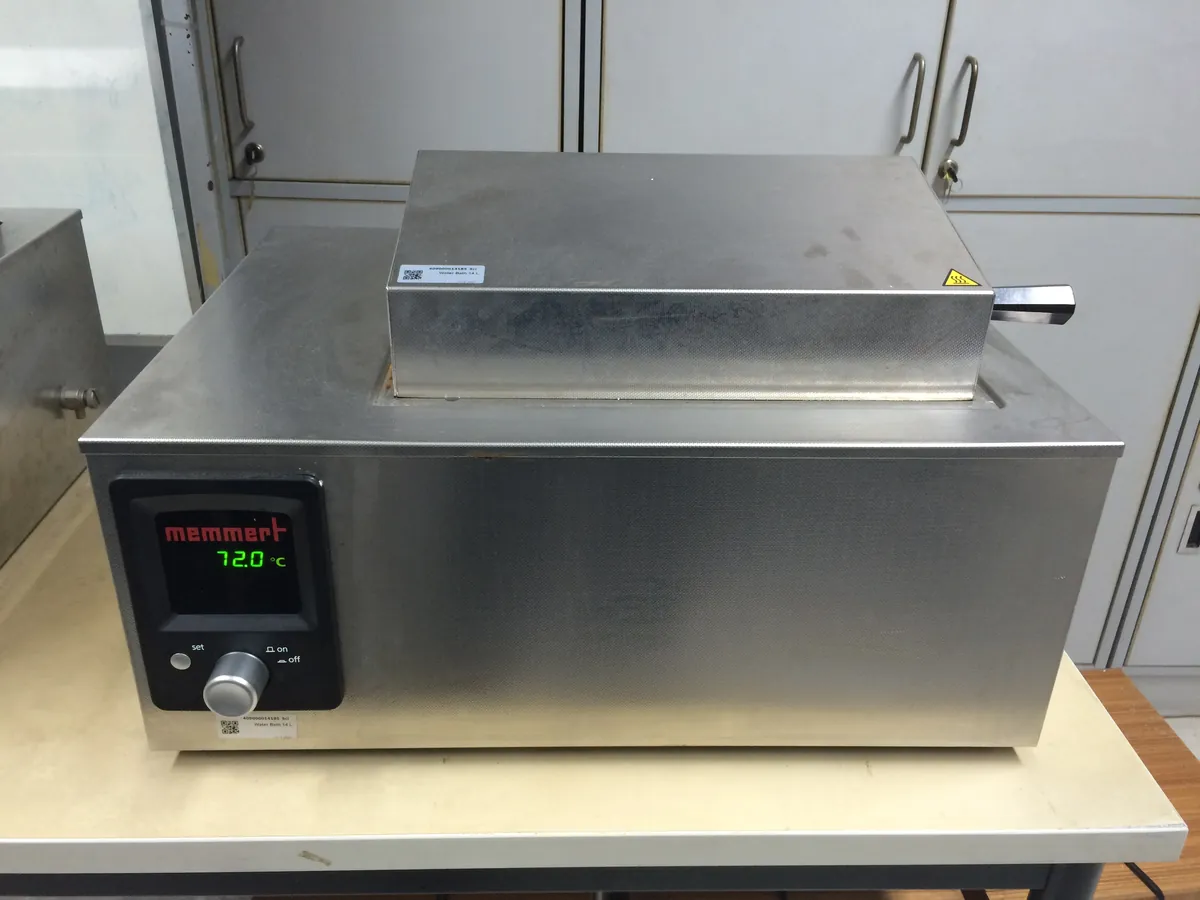
Reagents & standards
| Reagent | Grade / specification |
|---|---|
| Sulphuric acid | Gerber acid, density about 1.81–1.82 g/mL at 20 °C (as specified in your standard) |
| Amyl alcohol | Gerber grade iso-amyl alcohol, free from fat |
| Milk pipette | Gerber milk pipette, nominal 10.75 mL (as specified in your standard) |
Preparing the sample
- 01
Mix milk
Warm the sample to about 20 °C and mix gently to distribute the fat.
- 02
Add acid
Put 10 mL Gerber acid into the butyrometer.
- 03
Add milk
Run 10.75 mL of milk slowly down the side so it layers on the acid.
- 04
Add amyl alcohol
Add 1 mL amyl alcohol, stopper and shake until dissolved.
- 05
Centrifuge
Warm at 65 °C, centrifuge, then warm again at 65 °C.
- 06
Read
Adjust the fat column onto the scale and read.
Procedure
- 1Warm the milk to about 20 °C and mix by gently inverting the container several times. Avoid foaming. If cream has separated, warm to about 35–40 °C, mix and cool back to 20 °C.
- 2Measure 10 mL of Gerber sulphuric acid into a clean butyrometer.
- 3Pipette 10.75 mL of milk and let it run slowly down the inside wall so it forms a layer on top of the acid without mixing.
- 4Add 1 mL of amyl alcohol. Insert the lock stopper firmly.
- 5Wrap the butyrometer in a cloth and shake until the curd has completely dissolved, then invert several times.
- 6Place in a water bath at 65 ± 2 °C for about 5 min, stopper end down.
- 7Centrifuge for 4–5 min at the speed specified for the Gerber centrifuge (typically about 1100 rpm, giving roughly 350 g).
- 8Return to the 65 °C water bath for about 5 min.
- 9Adjust the stopper so the bottom of the fat column sits on a main graduation, then read the top of the fat column at the bottom of the meniscus.
- 10Run duplicates.
Notes for analysts
- Dark or charred fat columns mean the acid is too strong or the milk was too warm when mixed. White curd in the column means the acid is too weak or shaking was too short.
- Read the butyrometer quickly after taking it out of the water bath; the fat contracts as it cools.
- Use dedicated butyrometers (and pipettes) of the right type for cream or cheese, which have different scales.
- Milk fat by Gerber is the routine method in dairy procurement; Röse-Gottlieb is the reference method.
Method parameters (typical)
| Acid | 10 mL Gerber sulphuric acid |
|---|---|
| Milk | 10.75 mL |
| Amyl alcohol | 1 mL |
| Water bath | 65 ± 2 °C, about 5 min before and after centrifuging |
| Centrifuge | 4–5 min at the Gerber centrifuge speed (about 350 g) |
| Butyrometer scale | Typically 0–8% (or 0–6%), divisions of 0.1% |
System suitability & sequence
| Parameter | Limit |
|---|---|
| Fat column | Clear, golden and free of char or white curd |
| Duplicate agreement | Typically within 0.1% fat, or the repeatability limit in your standard |
| Control milk | Result agrees with its known value (for example a reference milk tested by Röse-Gottlieb) |
Typical sequence
- 1Control milk
- 2Sample duplicate 1
- 3Sample duplicate 2
Calculation with a worked example
Where
- Top reading
- Scale reading at the bottom of the upper meniscus of the fat column
- Bottom reading
- Scale reading at the lower edge of the fat column
Given
- Duplicate 1
- Bottom 1.00, top 5.10
- Duplicate 2
- Bottom 1.00, top 5.15
Working
- 1
Duplicate 1: 5.10 − 1.00 = 4.10%
- 2
Duplicate 2: 5.15 − 1.00 = 4.15%
- 3Mean = (4.10 + 4.15) ÷ 2 = 4.125% → reported as 4.1%
Milk fat = 4.1%
What result passes
- Compare with the legal minimum fat for the milk class (for example FSSAI standards for cow, buffalo, toned and standardised milk) or the procurement specification.
Validation parameters (ICH Q2(R2))
| Parameter | Typical requirement |
|---|---|
| Accuracy | Comparison with the Röse-Gottlieb reference method on control milks |
| Precision | Duplicates within the repeatability in ISO 2446 / IS 1224 |
| Robustness | Acid density, temperature and centrifuge speed all affect the reading |
Run this method in LimsPulse: specifications and STPs under version control, results calculated and checked against limits, and a signed Certificate of Analysis.